 LinkPeptide
The Next Big Leap in Skincare? Peptides with a Purpose
Blog 237
Abstract
The global skincare market is entering a new era defined by scientific innovation and consumer demand for efficacy. Among the most promising breakthroughs are peptides, biomimetic molecules that deliver regenerative benefits by stimulating collagen, repairing the skin barrier, and supporting a balanced microbiome. Unlike traditional actives, peptides work in harmony with the body’s natural processes, offering a safe and versatile solution for multiple concerns—from fine lines and wrinkles to acne and inflammation. Advances in peptide technologies, such as encapsulation and micelle delivery systems, are enhancing their stability and performance, making them powerful tools for cosmetic companies seeking to differentiate their products. As consumer expectations rise for evidence-backed, multifunctional skincare, peptides provide brands with an opportunity to combine science, trust, and innovation. This blog explores why peptides are poised to become the cornerstone of next-generation skincare solutions.
From Market Growth to Science-Backed Beauty: Why Peptides Matter Now
The skincare industry is evolving at remarkable speed, with the UK market alone valued at nearly $18 billion in 2022 and forecast to exceed $28 billion by 2031. This growth reflects more than just rising demand—it signals a shift in consumer mindset. Today’s customers are highly informed, selective, and increasingly invested in products that combine visible results with long-term skin health.
One of the most influential forces driving this change is the rise of “clean beauty.” While the term lacks a strict definition, it represents a movement toward products perceived as safe, effective, and rooted in science. Consumers are no longer satisfied with simple hydration or temporary fixes; they want active ingredients that can deliver measurable improvements and align with their wellness-focused lifestyles.
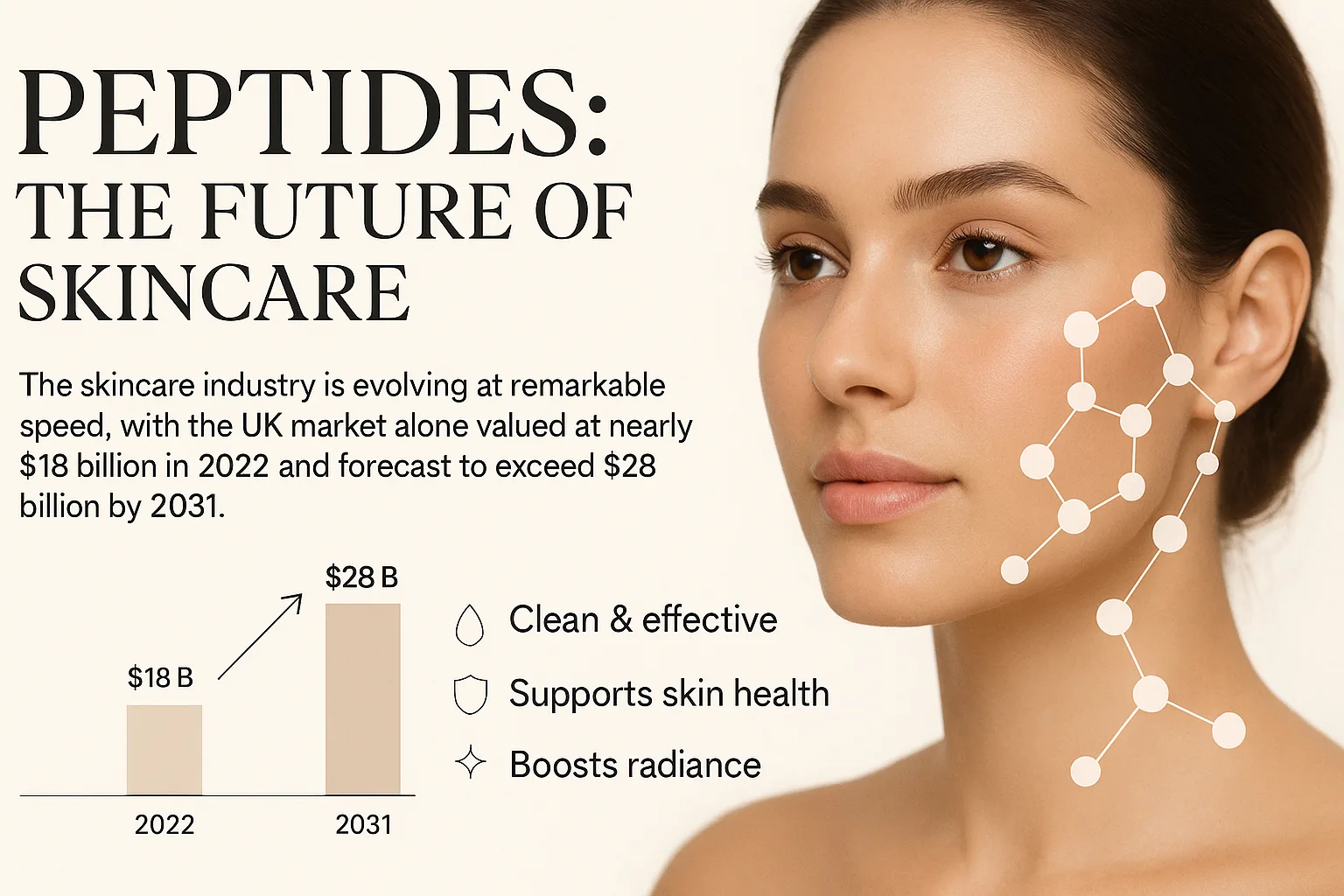
This is where peptides are reshaping the future of skincare. Already vital to the body’s natural processes, peptides are now being harnessed in advanced formulations to regenerate, repair, and protect the skin. Their multifunctional properties present cosmetic companies with a powerful opportunity to bridge scientific innovation with aesthetic appeal, offering products that inspire trust and loyalty.
In this blog, we’ll explore why peptides are poised to become the cornerstone of next-generation skincare—and how they can help brands meet the rising expectations of today’s discerning customers.
Peptides 101: Small Molecules with Transformative Power
At the heart of today’s most innovative skincare solutions are peptides—short chains of amino acids that act as the building blocks of proteins such as collagen, elastin, and keratin. While small in size, peptides deliver powerful biological signals that regulate skin function, repair damage, and stimulate regeneration. Their unique ability to “communicate” with skin cells makes them one of the most exciting and versatile categories of cosmetic ingredients available today.
Unlike many traditional skincare actives, peptides are biomimetic, meaning they replicate processes the body already performs naturally. This gives them two distinct advantages: high compatibility with the skin and the potential for targeted results. Whether it’s triggering new collagen production, supporting wound healing, or strengthening the skin barrier, peptides work with the body rather than against it.
For cosmetic companies, this presents a rare opportunity. Modern consumers are no longer swayed by vague claims or flashy packaging; they are searching for clinically credible ingredients that deliver real results. Peptides align perfectly with this demand. Backed by scientific research, they embody the balance of performance, safety, and innovation that brands need to thrive in a competitive market.
In essence, peptides are more than just another trend. They represent a paradigm shift in skincare formulation, offering a way to combine the elegance of nature with the precision of science. For companies looking to differentiate their products and meet the growing expectations of discerning customers, peptides provide a compelling answer.
The Peptide Toolbox: Five Types Every Cosmetic Brand Should Know
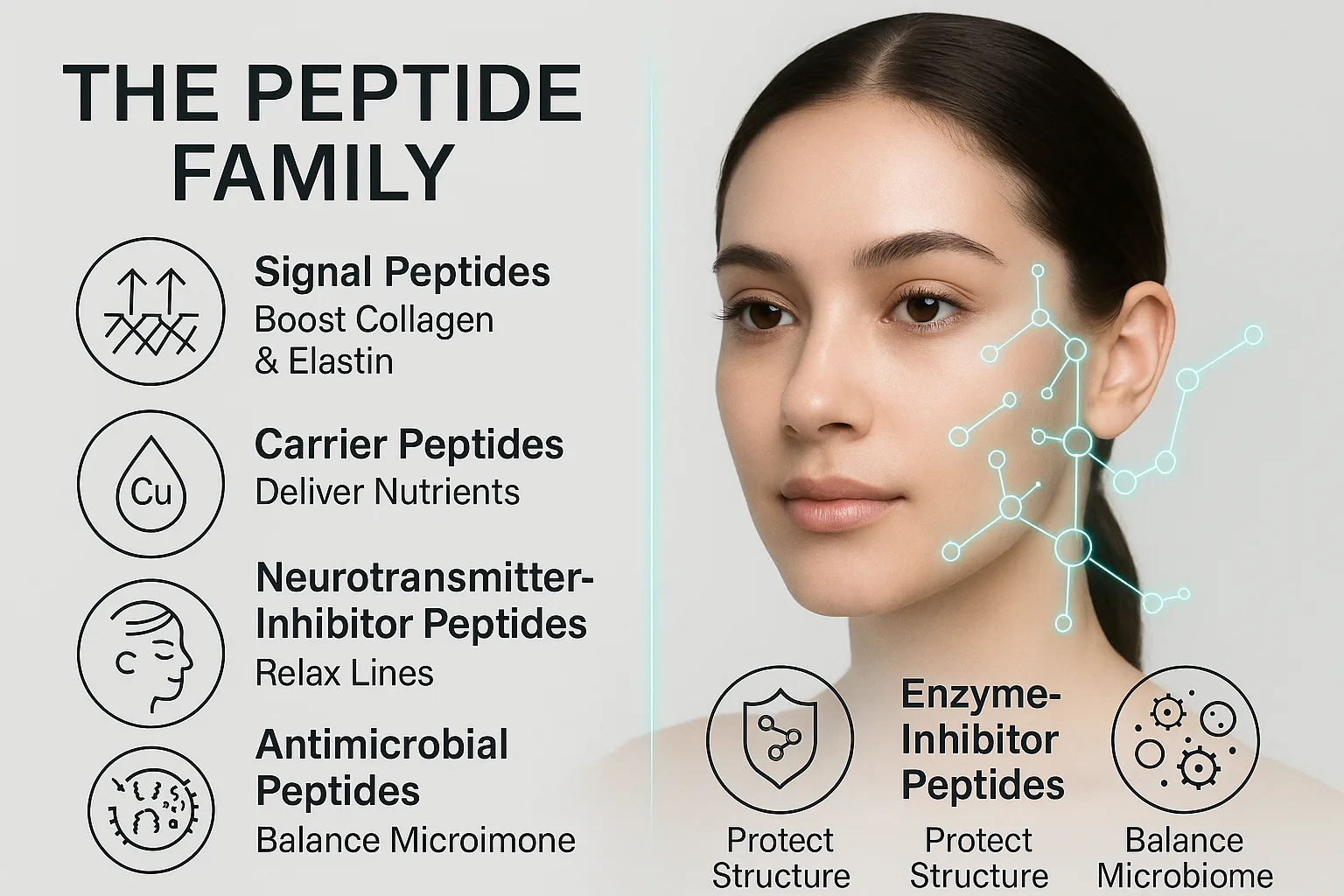
Peptides are not a single ingredient but a diverse family of molecules, each with distinct roles in supporting skin health. Understanding their categories helps cosmetic companies design formulations that target multiple concerns and appeal to a wide range of consumers.
1. Signal Peptides: Boosting Collagen and Elastin
Signal peptides act as biological messengers, stimulating fibroblasts to produce more collagen, elastin, and other extracellular matrix proteins. The result is firmer, smoother skin with reduced fine lines and improved resilience. Well-known examples include Palmitoyl peptides and Tripeptide-5, which enhance collagen synthesis while slowing its breakdown.
2. Carrier Peptides: Delivering Essential Nutrients
Carrier peptides transport trace minerals—such as copper and manganese—directly into the skin. These minerals are vital cofactors for enzymatic processes that support wound healing, antioxidant defense, and collagen production. For instance, the copper tripeptide Cu-GHK is widely recognized for its regenerative properties, making it a valuable addition to formulations aimed at repair and recovery.
3. Neurotransmitter-Inhibitor Peptides: Softening Expression Lines
Sometimes referred to as “topical Botox alternatives,” these peptides reduce micro-contractions in facial muscles by limiting the release of acetylcholine. The most prominent example is Acetyl Hexapeptide-3 (Argireline®), which visibly smooths expression lines and enhances hydration without injections—an attractive selling point for consumers seeking non-invasive anti-ageing solutions.
4. Enzyme-Inhibitor Peptides: Protecting Skin Structure
These peptides work defensively, blocking enzymes like matrix metalloproteinases (MMPs) that degrade collagen and elastin. By preserving the skin’s structural proteins, enzyme inhibitors help maintain elasticity and density, slowing the progression of wrinkles and sagging.
5. Antimicrobial Peptides: Supporting a Healthy Microbiome
Antimicrobial peptides (AMPs) play a natural role in defending the skin against harmful bacteria, fungi, and viruses. In skincare, synthetic AMPs such as Myristoyl Tetrapeptide-13 have shown promise in balancing the microbiome and improving acne-prone skin, often working synergistically with established actives like benzoyl peroxide or salicylic acid.
By combining different peptide types in a single formulation, brands can deliver multifunctional benefits that address ageing, barrier repair, and microbiome health simultaneously. This versatility positions peptides as a cornerstone ingredient for next-generation cosmetic products.
Beyond Basics: Cutting-Edge Peptide Technologies Driving Results
While peptides hold immense promise, their effectiveness depends heavily on formulation science. One of the greatest challenges is stability—peptides can degrade quickly when exposed to light, heat, or enzymatic activity, reducing their impact in topical applications. To overcome this, researchers have developed advanced strategies such as cyclization (reshaping peptide chains for resistance), fatty acid conjugation (enhancing penetration), and encapsulation (using lipid vesicles or nanoparticles to protect and deliver actives).
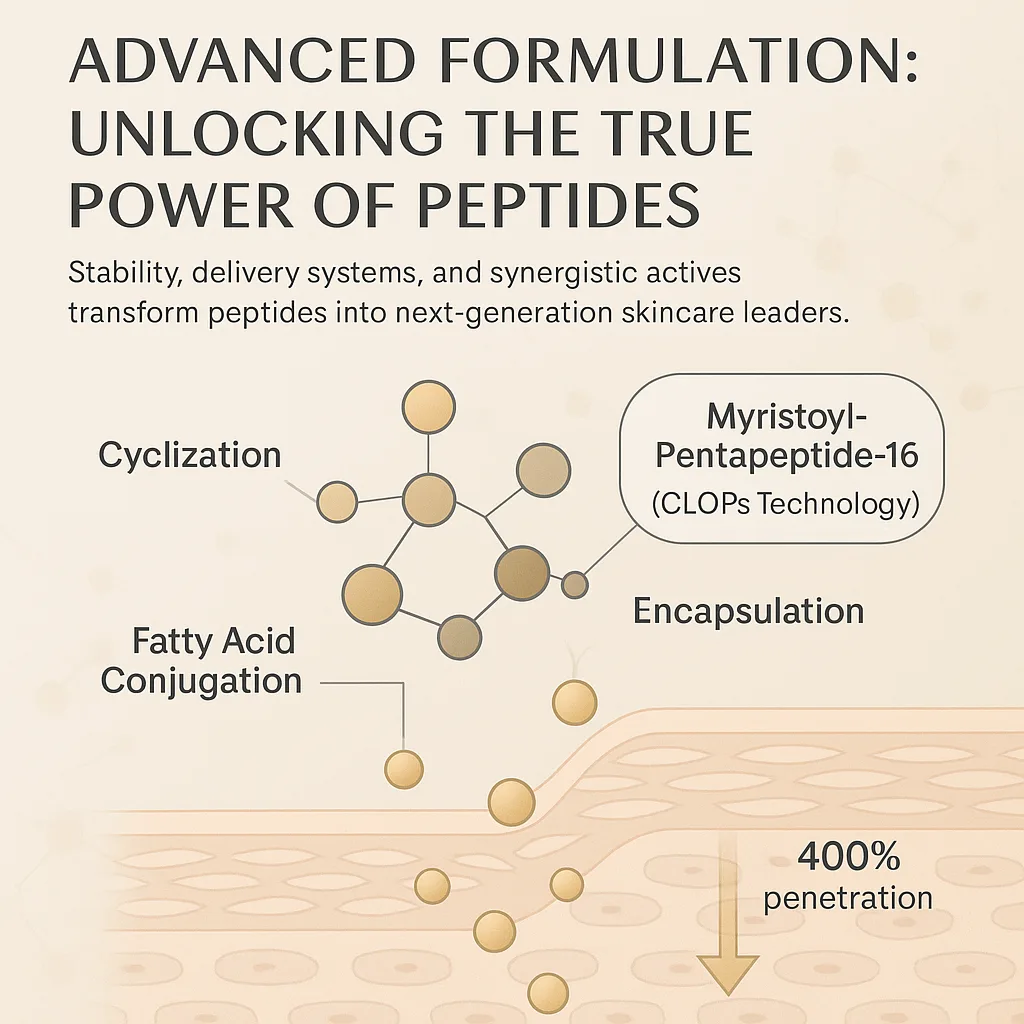
A standout example of innovation is Myristoyl-Pentapeptide-16, a patented peptide that uses cationic lipo-oligopeptides (CLOPs) to form micelles capable of penetrating the skin up to 400% more effectively than conventional delivery methods. This breakthrough technology not only stimulates collagen IV, VI, and VII for improved skin structure, but also enhances barrier function, increases moisture retention, and reduces transepidermal water loss (TEWL). It even promotes gene expression linked to inflammation control and antimicrobial defense—delivering a truly holistic skincare benefit.
Equally important is the synergy between peptides and other active ingredients. When combined with antioxidants like green tea extract or vitamins such as C and niacinamide, peptides are better able to combat oxidative stress and drive visible results. Pairing with ceramides strengthens the skin barrier, creating a powerful, multi-layered approach to skin rejuvenation.
For cosmetic companies, these innovations represent more than science—they are market differentiators. By embracing advanced delivery systems and synergistic formulations, brands can create products that not only meet but exceed consumer expectations for performance, safety, and innovation.
The Business Case for Peptides: A Cornerstone of Next-Gen Skincare
Peptides are no longer niche ingredients reserved for specialist formulations—they are fast becoming the cornerstone of modern skincare innovation. Their ability to address multiple consumer concerns simultaneously—whether it’s smoothing fine lines, repairing barrier function, supporting the microbiome, or providing antioxidant protection—makes them uniquely valuable in an increasingly competitive market.
For cosmetic companies, investing in peptide-based formulations is not just about keeping up with trends; it’s about aligning with consumer expectations for science-driven, effective, and safe products. Peptides are biomimetic and biocompatible, which means they work in harmony with the skin’s natural biology, offering benefits across all skin types and demographics.
The market growth is clear: customers are actively seeking products that deliver visible results backed by credible science. By integrating peptides into product portfolios—whether through stand-alone hero ingredients or synergistic blends—brands can secure a reputation for innovation, efficacy, and trustworthiness.
As the beauty industry continues to evolve, peptides offer companies a strategic edge: they embody the perfect balance of regenerative science and consumer appeal. For forward-looking cosmetic brands, the message is simple—peptides are not just the future of skincare; they are the key to unlocking the next era of growth and differentiation.
Reference
Baker, A. (2025). Peptides in skincare: their regenerative benefits. Journal of Aesthetic Nursing, 14(1), 6-14.
https://doi.org/10.12968/joan.2024.0056
Ledwoń, P., Errante, F., Papini, A. M., Rovero, P., & Latajka, R. (2021). Peptides as active ingredients: a challenge for cosmeceutical industry. Chemistry & Biodiversity, 18(2), e2000833.
https://doi.org/10.1002/cbdv.202000833
Pittayapruek, P., Meephansan, J., Prapapan, O., Komine, M., & Ohtsuki, M. (2016). Role of matrix metalloproteinases in photoaging and photocarcinogenesis. International journal of molecular sciences, 17(6), 868.
https://doi.org/10.3390/ijms17060868
Zhang, Y., Zhang, H., Jiang, B., Yan, S., & Lu, J. (2020). A promising therapeutic target for psoriasis: Neuropeptides in human skin. International Immunopharmacology, 87, 106755.