 LinkPeptide
Harnessing Bioactive Peptides in Cosmetics: Innovations and Mechanisms for Advanced Skin Care
Blog 200
Abstract
Bioactive peptides have become essential in the cosmetic industry due to their multifunctional properties that promote skin health and rejuvenation. These peptides, composed of short amino acid chains, exhibit diverse biological activities, including antioxidant, anti-inflammatory, collagen-stimulating, and enzyme-inhibitory effects. They are classified into signal peptides, carrier peptides, neurotransmitter-inhibitory peptides, and enzyme-inhibitory peptides, each targeting specific skin concerns such as aging, wrinkles, pigmentation, and skin elasticity. Advances in delivery systems—such as nanocarriers and encapsulation—have improved peptide stability and skin penetration, enhancing their effectiveness in topical formulations. Furthermore, the discovery of novel peptides from marine, plant, and microbial sources expands their potential applications in cosmetic products. Despite challenges related to stability, permeability, and production scalability, ongoing research is driving innovations in peptide-based skincare solutions. Bioactive peptides continue to lead the development of safe, targeted, and effective cosmetic products that meet the growing demand for science-driven and natural skincare solutions.
The Rise of Bioactive Peptides: Transforming Modern Skincare
The cosmetic industry has undergone a significant transformation in recent years, shifting its focus towards incorporating bioactive compounds to meet the growing consumer demand for safe, natural, and effective skincare solutions. Among these bioactive ingredients, peptides have emerged as a promising category due to their diverse biological functions and compatibility with human skin. Peptides are short chains of amino acids that serve as essential signaling molecules in various physiological processes, including skin repair, collagen synthesis, and immune responses[1]. Their small molecular size allows for efficient skin penetration, making them ideal candidates for topical applications in anti-aging, moisturizing, and skin-repair products.
Bioactive peptides offer multifunctional benefits, including antioxidant, anti-inflammatory, antimicrobial, and anti-wrinkle properties, contributing to overall skin health and protection against environmental stressors. These peptides can stimulate fibroblasts to enhance collagen and elastin production, improve skin elasticity, and reduce fine lines and wrinkles. Their ability to modulate cellular activities[2] makes them highly effective in targeting specific skin concerns, such as pigmentation, hydration loss, and premature aging.
Moreover, there is an increasing preference for natural ingredients derived from sustainable sources. Bioactive peptides extracted from plants, marine organisms, and animal proteins align with this trend, providing consumers with eco-friendly and scientifically validated cosmetic products[3]. As the cosmetic industry continues to innovate, bioactive peptides are expected to play a central role in developing advanced skincare formulations that combine efficacy with safety.
Decoding Bioactive Peptides: Functional Categories and Skin Benefits
Bioactive peptides are categorized based on their primary biological activities and mechanisms of action in cosmetic formulations. These classifications include[4] signal peptides, carrier peptides, neurotransmitter-inhibitory peptides, and enzyme-inhibitory peptides, each playing a distinct role in enhancing skin health and appearance.
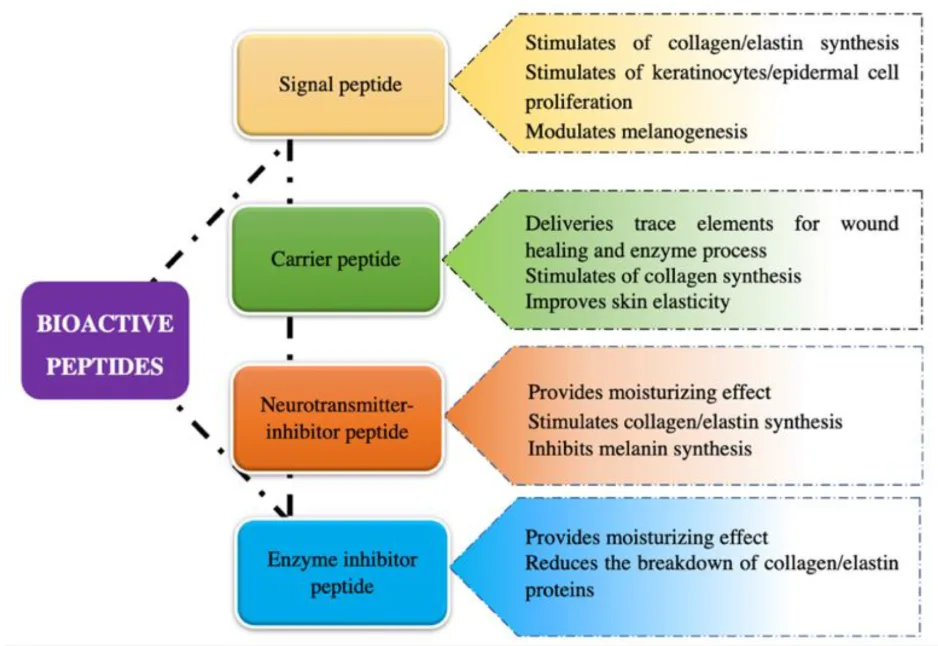
Signal peptides function by stimulating the production of essential skin components such as collagen, elastin, and other extracellular matrix proteins. These peptides activate fibroblasts to promote skin regeneration and repair, making them highly effective in anti-aging and skin-firming treatments. Notable examples include palmitoyl pentapeptide-4 and palmitoyl tripeptide-5, which enhance collagen synthesis and improve skin elasticity.
Carrier peptides are designed to transport trace elements like copper and manganese, which are vital for skin healing and enzymatic activities. For example, the copper tripeptide Cu–GHK delivers copper ions to damaged skin, facilitating wound healing, collagen production, and tissue remodeling[5]. These peptides also help protect the skin from oxidative damage and inflammation.
Neurotransmitter-inhibitory peptides work by mimicking natural proteins that interfere with the release of neurotransmitters responsible for muscle contraction. By inhibiting acetylcholine release at neuromuscular junctions, peptides like acetyl hexapeptide-8 (Argireline®) reduce facial tension and the formation of wrinkles, offering a non-invasive alternative to botulinum toxin treatments.
Enzyme-inhibitory peptides prevent the degradation of skin proteins by blocking the activity of enzymes such as collagenase, elastase, and hyaluronidase[5]. This inhibition protects the skin’s structural integrity, helping to maintain firmness and elasticity while reducing signs of aging.
These classifications highlight the multifunctionality of bioactive peptides in cosmetic formulations, making them indispensable components in the development of advanced skincare products.
How Bioactive Peptides Work: Mechanisms Driving Skin Health and Repair
Bioactive peptides exert their effects through various mechanisms that contribute to skin health, repair, and rejuvenation. Their multifunctional properties[6] make them essential components in cosmetic formulations designed to combat aging, improve skin texture, and protect against environmental damage.
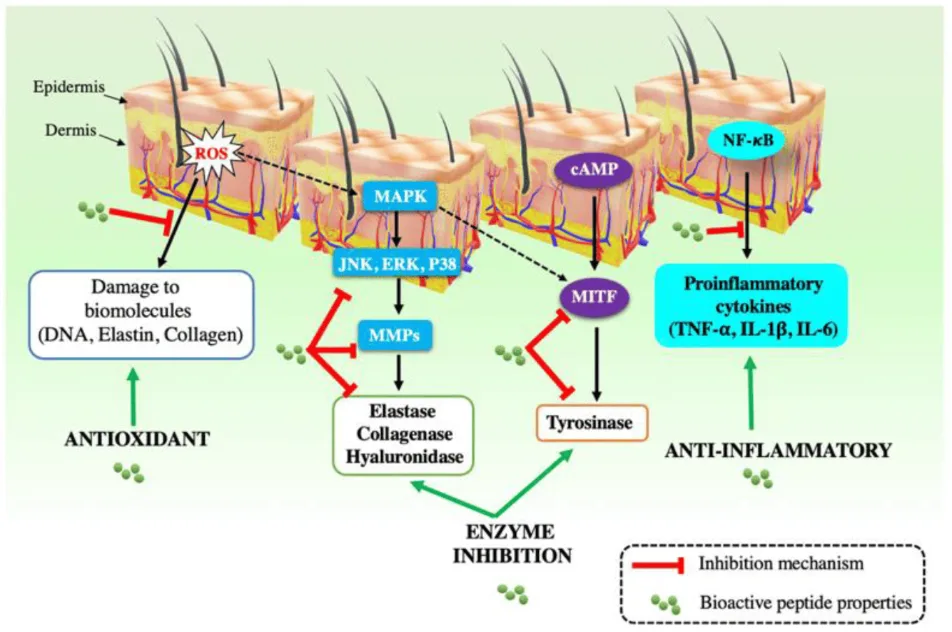
One key mechanism is their antioxidant activity, where bioactive peptides neutralize reactive oxygen species (ROS) and reduce oxidative stress in skin cells. This action protects skin proteins, lipids, and DNA from damage caused by UV radiation and pollution, thereby slowing the aging process[7]. Peptides derived from marine sources and plant proteins have shown significant antioxidant capacities, making them ideal for anti-aging skincare products.
Additionally, bioactive peptides demonstrate anti-inflammatory effects by modulating inflammatory pathways and reducing the production of pro-inflammatory cytokines such as interleukin-1 (IL-1), interleukin-6 (IL-6), and tumor necrosis factor-alpha (TNF-α)[8]. This property helps soothe irritated skin, making peptides beneficial for sensitive and acne-prone skin types.
Bioactive peptides also play a crucial role in stimulating collagen synthesis and inhibiting matrix metalloproteinases (MMPs), enzymes responsible for degrading collagen and elastin in the skin. By enhancing fibroblast activity and preventing collagen breakdown, peptides help maintain skin firmness and elasticity, effectively reducing the appearance of wrinkles and fine lines.
Furthermore, some peptides can regulate melanin production by inhibiting the enzyme tyrosinase, which controls melanin synthesis. This mechanism[7] is particularly valuable in managing hyperpigmentation and achieving a more even skin tone.
Collectively, these mechanisms underscore the versatility of bioactive peptides in addressing multiple skin concerns, solidifying their role as vital ingredients in advanced skincare formulations.
Innovations and Future Trends in Bioactive Peptide Skincare
The future of cosmetic peptide research holds significant promise as scientific advancements continue to expand the applications and efficacy of these bioactive compounds. One of the most promising directions is the innovation in peptide delivery systems. Traditional peptide formulations often face challenges related to skin permeability and stability. Emerging technologies, such as nanocarriers, liposomes, and microencapsulation, offer solutions to these limitations by protecting peptides from degradation and enhancing their penetration into deeper skin layers[9]. These advanced delivery systems ensure sustained release and targeted action, improving the overall effectiveness of peptide-based skincare products.
Another growing area of interest is the exploration of novel peptide sources. Researchers are increasingly investigating unconventional sources such as marine organisms, fungi, and even microorganisms for peptides with unique bioactivities[10]. These novel peptides may offer multifunctional benefits, including enhanced antioxidant, anti-inflammatory, and antimicrobial properties, contributing to more diverse and effective cosmetic applications.
Additionally, customization of peptides for targeted skincare is a key trend shaping the future of cosmetic science. Advances in synthetic biology and peptide engineering allow for the design of peptides tailored to address specific skin concerns, such as hyperpigmentation, loss of elasticity, or acne. Personalized skincare products[11] containing designer peptides could revolutionize the cosmetic industry by offering solutions that align with individual skin types and conditions.
Bioactive Peptides: Shaping the Future of Advanced Skincare Solutions
Bioactive peptides have revolutionized the cosmetic industry by offering scientifically backed solutions for skin health and rejuvenation. Their multifunctional properties—including antioxidant, anti-inflammatory, collagen-stimulating, and enzyme-inhibitory activities—make them indispensable in addressing common skin concerns such as aging, pigmentation, and environmental damage[12]. The ability of bioactive peptides to target specific cellular mechanisms has led to the development of advanced skincare products that promote skin repair, improve elasticity, and reduce the appearance of fine lines and wrinkles, providing both preventative and corrective benefits.
Despite these advancements, challenges related to peptide stability, skin permeability, and large-scale production remain. Continued research is essential to overcome these limitations and to ensure the safety and efficacy of peptide-based formulations. Innovations in delivery systems, sustainable sourcing of novel peptides, and personalized skincare solutions are expected to drive the future growth of this field.
As the demand for safe, natural, and effective skincare products rises, bioactive peptides will remain at the forefront of cosmetic innovation. Ongoing scientific exploration will unlock new potentials, enabling the development of highly targeted and multifunctional skincare products that cater to diverse consumer needs.
Reference
- Aguilar-Toalá, J. E., Hernández-Mendoza, A., González-Córdova, A. F., Vallejo-Cordoba, B., & Liceaga, A. M. (2019). Potential role of natural bioactive peptides for development of cosmeceutical skin products. Peptides, 122, 170170. DOI
- Zhang, L., & Falla, T. J. (2009). Cosmeceuticals and peptides. Clinics in Dermatology, 27(5), 485–494. DOI
- Lima, T. N., & Pedriali Moraes, C. A. (2018). Bioactive peptides: applications and relevance for cosmeceuticals. Cosmetics, 5(1), 21. DOI
- Pai, V. V., Bhandari, P., & Shukla, P. (2017). Topical peptides as cosmeceuticals. Indian Journal of Dermatology, Venereology and Leprology, 83, 9. DOI
- Siméon, A., Emonard, H., Hornebeck, W., & Maquart, F. X. (2000). The tripeptide-copper complex glycyl-L-histidyl-L-lysine-Cu2+ stimulates matrix metalloproteinase-2 expression by fibroblast cultures. Life Sciences, 67(18), 2257–2265. DOI
- Fields, K., Falla, T. J., Rodan, K., & Bush, L. (2009). Bioactive peptides: signaling the future. Journal of Cosmetic Dermatology, 8(1), 8–13. DOI
- Borrajo, P., Pateiro, M., Barba, F. J., Mora, L., Franco, D., Toldrá, F., & Lorenzo, J. M. (2019). Antioxidant and antimicrobial activity of peptides extracted from meat by-products: a review. Food Analytical Methods, 12, 2401–2415. DOI
- Kim, S. K., & Wijesekara, I. (2010). Development and biological activities of marine-derived bioactive peptides: A review. Journal of Functional Foods, 2(1), 1–9. DOI
- Labouta, H. I., & Schneider, M. (2013). Interaction of inorganic nanoparticles with the skin barrier: current status and critical review. Nanomedicine: Nanotechnology, Biology and Medicine, 9(1), 39–54. DOI
- Martins, J., & Vasconcelos, V. (2015). Cyanobactins from cyanobacteria: Current genetic and chemical state of knowledge. Marine Drugs, 13(11), 6910–6946. DOI
- Adessi, C., & Soto, C. (2002). Converting a peptide into a drug: strategies to improve stability and bioavailability. Current Medicinal Chemistry, 9(9), 963–978. DOI
- Ngoc, L. T. N., Moon, J. Y., & Lee, Y. C. (2023). Insights into bioactive peptides in cosmetics. Cosmetics, 10(4), 111. DOI