 LinkPeptide
Inside the Peptide Boom: A Scientific Look at Modern Cosmetic Actives
Blog 279
Abstract
Cosmetic peptides have rapidly shifted from niche actives to headline ingredients in modern skincare, yet the evidence behind their claims is often fragmented. This blog explores a recent scientific review that mapped more than 100 commercially used cosmetic peptides and evaluated the in vitro, ex vivo, and in silico data available for each sequence. The article organizes peptides into functional families—signal, pigmentation-modulating, antimicrobial, hair-growth, neuromodulating, antioxidant, immunomodulatory, enzyme- and lipid-modulating, and carrier peptides—and highlights how many are multifunctional, acting on several biological pathways at once. At the same time, it stresses major evidence gaps: heterogeneous models, inconsistent dosing, limited clinical data, and confounding formulation effects. Finally, the blog argues for a more mechanism-driven, evidence-based approach to peptide design and testing, outlining how rigorous screening and transparent data can help companies like LinkPeptide deliver truly differentiated, scientifically credible cosmetic peptide solutions.
From Hype to Evidence: Why Peptides Dominate Modern Skincare
Cosmetic peptides have moved from niche actives to center stage in modern skincare. From “Botox-like” serums to microbiome-balancing creams, these short amino acid chains are promoted as smart messengers that can tell skin cells to make more collagen, fade dark spots, calm inflammation, or even refine facial contours. The language often sounds closer to biotech than beauty—yet the data behind those claims are not always clear.
A recent scientific review tackled this head-on by systematically analyzing over 100 commercially used cosmetic peptides. Instead of focusing on hypothetical or experimental sequences, the authors mapped real market ingredients—tracing their amino acid structures, proposed mechanisms, and the in vitro, ex vivo, and in silico studies that support (or sometimes complicate) their claimed benefits. The result is a rare, evidence-focused snapshot of what cosmetic peptides are truly doing at the cellular level.
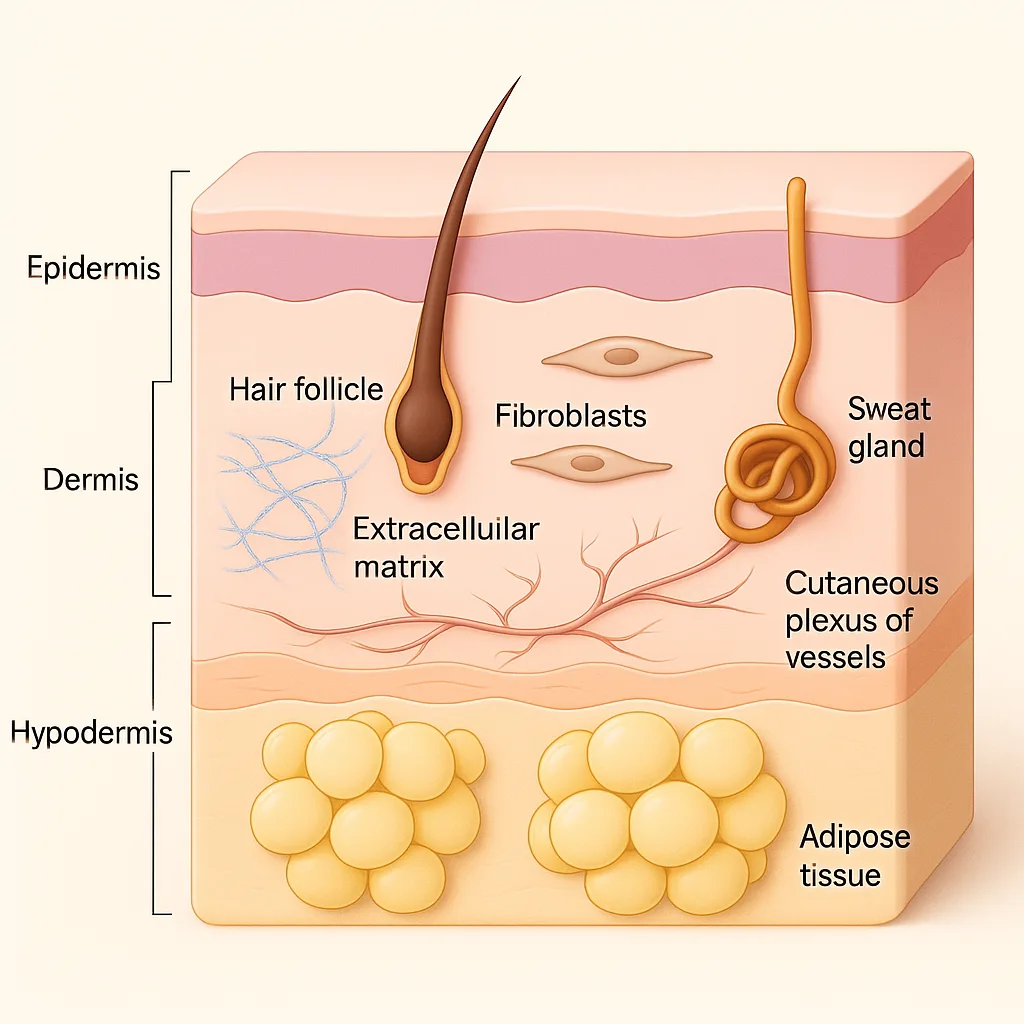
For a peptide-focused company like LinkPeptide, this kind of rigorous overview is more than academic. It highlights where peptide science is already strong—such as ECM-mimicking “signal” peptides and antimicrobial host-defense–inspired sequences—and where the field still needs better models, standardized methods, and clearer dose–response data. This blog will unpack the main findings of that review, explore how different peptide families act on skin and hair, and reflect on what a more mechanism-driven, evidence-based approach means for the next generation of peptide-powered skincare solutions.
A New Map of Cosmetic Peptides: Classes, Targets, and Functions
One of the most useful aspects of the review is that it doesn’t start from theory—it starts from the actual peptide ingredients already on the market. The authors identified 102 cosmetic peptides from 43 suppliers, then classified them by both origin (e.g., ECM fragments, host-defense–like sequences, synthetic designs) and intended function in skin or hair care.
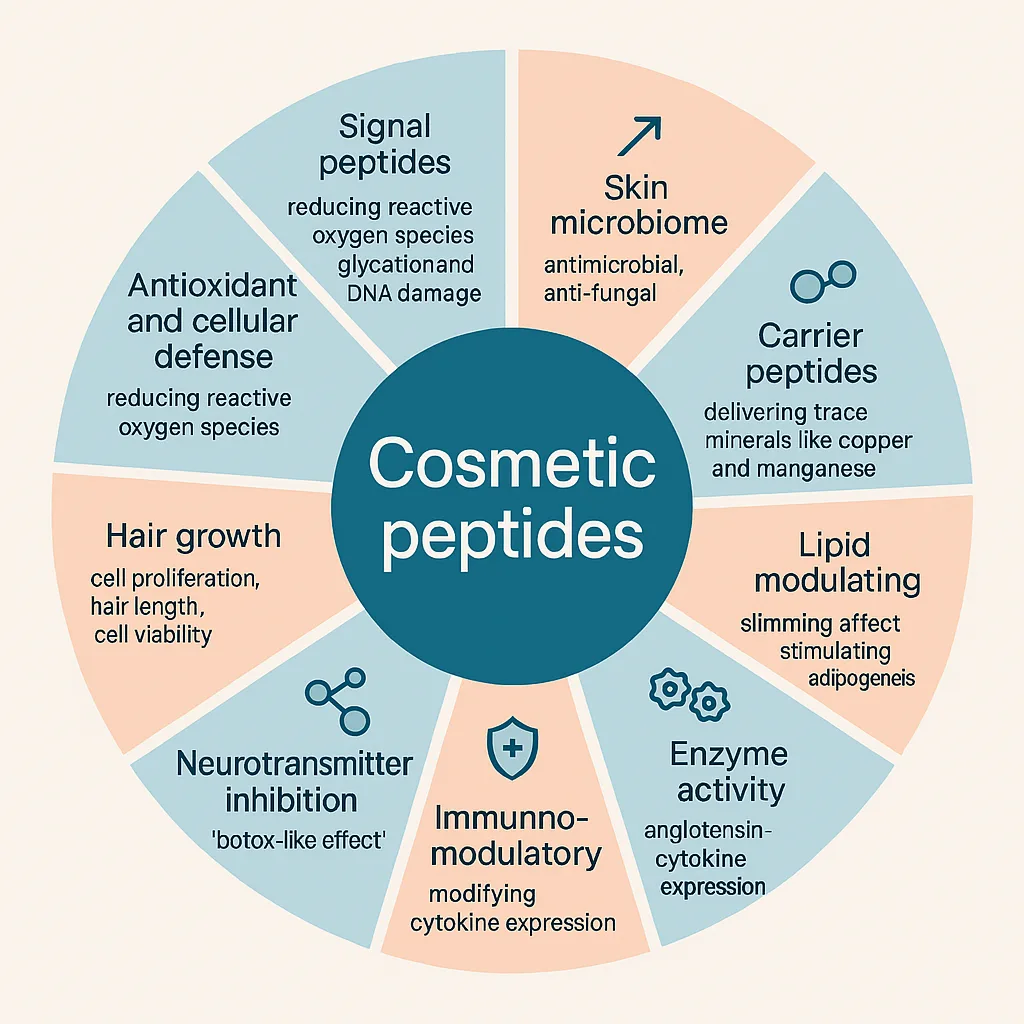
At the highest level, today’s cosmetic peptides fall into several overlapping families:
- Signal peptides that mimic fragments of collagen, elastin, laminin, or decorin and are designed to stimulate ECM synthesis and dermal remodeling.
- Pigmentation-modulating peptides that target tyrosinase, melanogenesis genes, or the α-MSH / MC1R axis, used for brightening or tanning claims.
- Hair-growth peptides that act on dermal papilla cells and the follicular environment to encourage thicker, longer hair.
- Antimicrobial and microbiome-focused peptides derived from innate immunity (cathelicidins, defensins, dermcidin) or simplified synthetic AMPs aimed at acne, odor, or barrier-compromised skin.
- Antioxidant and “cellular defense” peptides that scavenge ROS, inhibit glycation, or activate protective pathways such as Nrf2.
- Immunomodulatory peptides that dampen pro-inflammatory cytokines and support recovery from UV or pollution stress.
- Neurotransmitter-modulating (“Botox-like”) peptides designed to interfere with SNARE complex function and reduce expression lines.
- Enzyme- and lipid-modulating peptides, which target MMPs, elastase, ACE, or adipogenesis/lipolysis for anti-aging, de-puffing, contouring, or sebum-control benefits.
- Carrier peptides that chelate metals like Cu²⁺ or Mn²⁺ to enhance delivery and sometimes confer additional biological activity.
Crucially, many sequences do double or triple duty—a signal peptide can also be anti-inflammatory and antioxidant, for example. For formulators and partners working with LinkPeptide, this multifunctionality is both an advantage (richer claim space) and a scientific challenge, because it becomes essential to understand which mechanism is driving the observed effect in a given assay or formula.
Inside the Data: How Today’s Peptides Really Act on Skin and Hair
If marketing copy is where cosmetic peptides promise, this review is where they’re asked to perform. By looking only at studies on the exact commercial sequences, the authors provide a clearer view of which claims are mechanistically supported—and how.
3.1 Signal and ECM-Mimicking Peptides
Signal peptides are the largest and best-documented group. Many are matrikine-inspired fragments of collagen, elastin, laminin, or decorin, often palmitoylated for better skin penetration. Classic examples include Pal-KTTKS (from type I procollagen), GHK/Cu-GHK, hexapeptide-12 (VGVAPG, elastin motif), hexapeptide-10 (SIKVAV, laminin), and tripeptide-10 citrulline (decorin-mimetic).
Across fibroblast cultures and 3D skin models, these peptides have repeatedly been shown to:
- Increase collagen I, III, IV, VI, elastin, fibronectin, laminin, and hyaluronic acid.
- Stimulate fibroblast and keratinocyte proliferation and migration, supporting repair and remodeling.
- Improve collagen fiber organization in ex vivo skin, not just total amount—suggesting a more “youthful” dermal architecture.
However, the review also highlights that these effects are dose- and time-sensitive. Some copper peptides, for instance, show strong benefits at moderate concentrations but lose or alter activity at higher levels. For developers, including partners of LinkPeptide, this underscores the importance of proper dose–response curves rather than relying on a single “hero concentration.”
3.2 Pigmentation, Microbiome & Neuromodulating Peptides
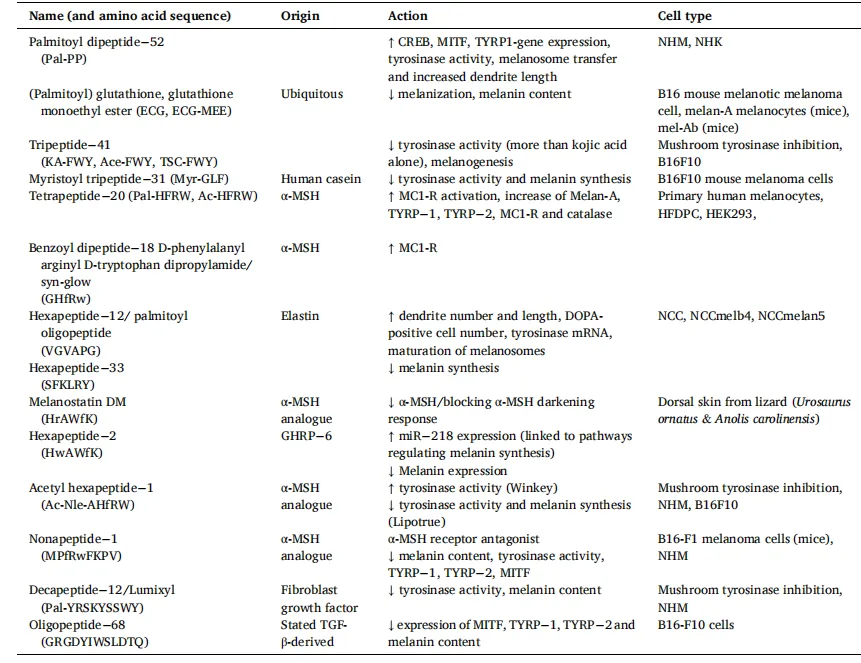
Pigmentation-modulating peptides act along two main axes:
- Tyrosinase and melanogenesis – Several sequences directly inhibit tyrosinase or downregulate key melanogenic genes (TYR, TYRP-1, TYRP-2, MITF), reducing melanin in melanocyte cultures.
- α-MSH / MC1R pathway – Other peptides are engineered as analogs or antagonists of α-MSH, shifting signaling at the melanocortin receptor to either enhance tanning or reduce hyperpigmentation.
A key caveat flagged by the authors: many studies still use mushroom tyrosinase instead of human tyrosinase, and mouse melanoma lines instead of human melanocytes. This is acceptable for screening, but limits how directly results translate to human skin.
On the microbiome front, antimicrobial peptides (AMPs) derived from host defense systems or simplified cationic sequences show promising activity against acne- and infection-associated bacteria (Cutibacterium acnes, Staphylococcus aureus, Pseudomonas aeruginosa, and others). Some data even suggest selective effects, where beneficial commensals are less affected than pathogens—an attractive angle for next-generation, microbiome-aware formulations.
Neuromodulating “Botox-like” peptides, such as Argireline-style SNAP-25 mimetics, are tested in neuron cultures and muscle contraction models. In silico work supports their ability to bind components of the SNARE complex or synaptotagmin, potentially reducing neurotransmitter release and softening expression lines. Yet independent studies have also reported cytotoxicity at higher doses and variable efficacy, reminding formulators that these actives need careful concentration control and realistic claim language.
3.3 Stress, Inflammation & Enzyme-Modulating Peptides
The review also covers a diverse group of peptides targeting oxidative stress, inflammation, and tissue-degrading enzymes.
- Antioxidant and anti-glycation peptides, including carnosine-like dipeptides, demonstrate ROS scavenging, protection against protein glycation, and activation of Nrf2-driven defense pathways in cell models.
- Immunomodulatory peptides lower levels of inflammatory mediators such as IL-1, IL-6, TNF-α, and PGE2 in keratinocytes, fibroblasts, or endothelial cells under UV, LPS, or cytokine stress.
- Enzyme-modulating peptides influence MMPs, elastase, and ACE, helping preserve ECM integrity and supporting claims around wrinkle reduction, firmness, de-puffing, or microcirculation.
Importantly, many of these peptides overlap with other categories: a single sequence might function as a signal peptide, antioxidant, and MMP modulator at once. For a platform like LinkPeptide’s, that multifunctionality is a powerful design lever—but it also demands carefully structured assays to separate and quantify each contribution rather than relying on one broad “anti-aging” label.
Mind the Gap: Limits, Biases, and Blind Spots in Peptide Research
For all the excitement around cosmetic peptides, the review makes it clear that the science is uneven. Methods vary widely from study to study: different cell lines (mouse vs human, neonatal vs adult), different stress models, and different endpoints (mRNA expression, protein levels, tissue histology, or just visual scoring). That heterogeneity makes it difficult to compare actives or to say which peptide is truly “better” for a given claim.
Most data are also preclinical, based on in vitro or ex vivo models. These are essential tools, but they don’t always capture the complexities of human skin—barrier function, long-term exposure, formulation interactions, and patient-to-patient variability. Well-designed clinical studies exist for some hero peptides, but they are still the exception rather than the rule.
The review also highlights frequent issues with dose reporting and study design. Concentrations might be expressed in ppm, %, or μg/mL without a clear molar reference, and dose–response curves are often missing. Peptides are frequently tested in combination with lipophilic tags or potent co-actives (like kojic acid or vitamin C derivatives), making it hard to know how much of the effect belongs to the peptide backbone itself.
For companies developing or sourcing peptides, including LinkPeptide and its partners, these gaps are not obstacles but opportunities—to design cleaner experiments, choose more relevant models, and generate data that genuinely support differentiated claims.
Designing Smarter Peptides: A Roadmap for Evidence-Based Innovation at LinkPeptide
Taken together, the review paints cosmetic peptides as powerful, tunable tools rather than magic bullets. Properly designed, they can speak the language of the skin’s own biology—mimicking ECM fragments, host-defense peptides, neurotransmitter interfaces, or metabolic signals. But unlocking that potential requires moving beyond slogans into mechanism-driven, evidence-based development.
For the industry, the next step is clear:
- Use relevant human cell and tissue models for screening, with consistent controls and statistics.
- Build structured in vitro panels that track multiple endpoints—ECM production, pigmentation, inflammation, microbiome balance, enzyme activity—so multifunctional peptides can be profiled systematically.
- Translate preclinical findings into focused clinical studies that test realistic concentrations in real formulations, with transparent protocols and endpoints.
This is exactly where a specialist platform like LinkPeptide can contribute most value. By starting from biology—identifying meaningful targets in ECM, pigmentation, microbiome, or neurocosmetics—and then designing peptide sequences around those mechanisms, it becomes possible to offer partners more than just ingredients. Instead, you offer well-characterized tools, backed by coherent data packages and claims that stand up to scrutiny.
As peptide science continues to mature, the brands that will stand out are those that treat peptides not as trendy buzzwords, but as precision-designed bioactives. With thoughtful design, rigorous testing, and honest storytelling, the next generation of peptide-based skincare can be smarter, more targeted, and more trustworthy—for scientists, formulators, and consumers alike.
Reference
van Walraven, N., FitzGerald, R. J., Danneel, H. J., & Amigo-Benavent, M. (2025). Bioactive peptides in cosmetic formulations: Review of current in vitro and ex vivo evidence. Peptides, 171440.
https://doi.org/10.1016/j.peptides.2025.171440
Krutmann, J., Bouloc, A., Sore, G., Bernard, B. A., & Passeron, T. (2017). The skin aging exposome. Journal of dermatological science, 85(3), 152-161.
https://doi.org/10.1016/j.jdermsci.2016.09.015
Michalak, M., Pierzak, M., Kręcisz, B., & Suliga, E. (2021). Bioactive compounds for skin health: A review. Nutrients, 13(1), 203.
https://doi.org/10.3390/nu13010203
Burke, K. E. (2018). Mechanisms of aging and development—A new understanding of environmental damage to the skin and prevention with topical antioxidants. Mechanisms of ageing and development, 172, 123-130.