 LinkPeptide
Legume-Derived Bioactive Peptides: A Natural Approach to Cardiovascular Disease Prevention and Therapy
Blog 233
Abstract
Cardiovascular diseases (CVDs) remain a leading cause of mortality worldwide, necessitating alternative strategies for prevention and management. Bioactive peptides derived from legumes have emerged as promising natural agents due to their ability to regulate blood pressure, improve endothelial function, and modulate lipid metabolism. These peptides exert cardioprotective effects by inhibiting angiotensin-converting enzyme (ACE), enhancing nitric oxide (NO) production, and targeting novel lipid regulators such as proprotein convertase subtilisin/kexin 9 (PCSK9) and angiopoietin-like protein 3 (ANGPTL3). Despite their therapeutic potential, challenges such as bioavailability, stability, and cost-effective production must be addressed for clinical application. Advances in proteomics, peptide encapsulation, and functional food development offer pathways to enhance their efficacy. This blog explores the mechanisms, benefits, and challenges of legume-derived peptides, highlighting their potential role in cardiovascular health. As research progresses, these peptides could serve as natural alternatives to synthetic drugs, bridging the gap between nutrition and cardiovascular medicine.
Introduction: Unlocking the Cardioprotective Potential of Legume-Derived Peptides
Cardiovascular diseases (CVDs) remain the leading cause of mortality worldwide, with conditions such as hypertension, atherosclerosis, and stroke contributing significantly to global health burdens. Current pharmacological treatments primarily focus on managing symptoms and preventing disease progression. However, these interventions often come with side effects and high costs, highlighting the need for alternative or complementary approaches.
In recent years, bioactive peptides derived from legumes have emerged as promising natural agents for CVD prevention. These peptides, produced through enzymatic hydrolysis, fermentation, or gastrointestinal digestion, have demonstrated potential in modulating key physiological processes related to cardiovascular health. Unlike synthetic drugs, legume-derived peptides offer a food-based strategy that aligns with dietary interventions aimed at reducing CVD risk.
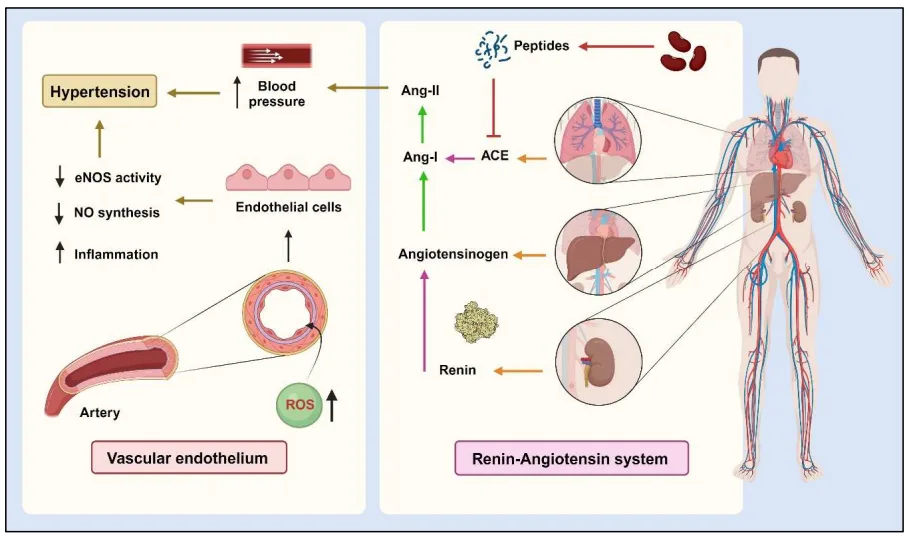
The cardioprotective effects of these peptides are primarily linked to their ability to regulate blood pressure, reduce oxidative stress, and modulate lipid metabolism. Specific peptides act by inhibiting angiotensin-converting enzyme (ACE), enhancing nitric oxide (NO) production, and modulating inflammatory markers like vascular adhesion molecules. Additionally, novel targets such as proprotein convertase subtilisin/kexin 9 (PCSK9) and angiopoietin-like protein 3 (ANGPTL3) have been identified as key regulators of cholesterol metabolism that may be influenced by bioactive peptides. Understanding these mechanisms could lead to innovative therapeutic applications, bridging the gap between nutrition and cardiovascular medicine.
Targeting Cardiovascular Risk: How Bioactive Peptides Regulate Hypertension and Vascular Function
Hypertension Management
Hypertension is a major risk factor for cardiovascular diseases, often leading to complications such as heart failure and stroke. One of the primary mechanisms regulating blood pressure is the renin-angiotensin-aldosterone system (RAAS), where angiotensin-converting enzyme (ACE) plays a crucial role in converting angiotensin I into angiotensin II, a potent vasoconstrictor. Many bioactive peptides derived from legumes exhibit ACE-inhibitory properties, thereby reducing angiotensin II levels and promoting vasodilation.
Recent research has identified several legume-derived peptides, such as LPRL and YADLVE from mung beans, which have shown significant ACE inhibition and renin-blocking activity in both in vitro assays and animal models. Studies on spontaneously hypertensive rats (SHR) demonstrate that these peptides effectively lower systolic and diastolic blood pressure, suggesting their potential as functional food ingredients or nutraceuticals for hypertension management. Additionally, the small molecular size of these peptides enhances their bioavailability, making them promising candidates for therapeutic applications.
Endothelial Dysfunction and Vascular Health
Endothelial dysfunction is a critical early event in CVD progression, characterized by impaired nitric oxide (NO) production and increased vascular inflammation. NO, synthesized by endothelial nitric oxide synthase (eNOS), is essential for vasodilation and maintaining vascular homeostasis. However, oxidative stress and inflammation disrupt NO bioavailability, contributing to hypertension and atherosclerosis.
Legume-derived peptides have been shown to enhance NO production and reduce oxidative stress. For instance, bioactive fractions from common beans and chickpeas have demonstrated the ability to upregulate eNOS expression while suppressing inflammatory markers such as intercellular adhesion molecule-1 (ICAM-1) and vascular cell adhesion molecule-1 (VCAM-1). These findings indicate that dietary peptides may help restore endothelial function, reducing the risk of vascular complications associated with CVDs.
Breaking the Cycle of Atherosclerosis: Novel Peptide Interventions in Lipid Metabolism
Hypercholesterolemia and Lipid Regulation
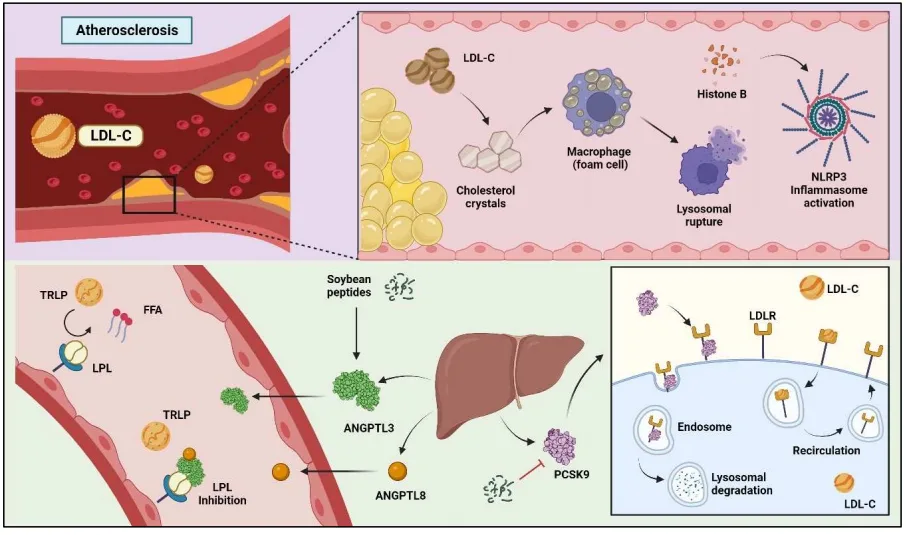
Hypercholesterolemia, characterized by elevated levels of low-density lipoprotein cholesterol (LDL-C), is a major driver of atherosclerosis and cardiovascular diseases. Traditional lipid-lowering therapies, such as statins, effectively reduce LDL-C but can cause adverse effects, necessitating alternative strategies. Legume-derived bioactive peptides have emerged as promising candidates for cholesterol modulation due to their ability to regulate lipid metabolism. Studies have shown that chickpea and common bean hydrolysates can lower plasma cholesterol and triglyceride levels in animal models by enhancing hepatic LDL receptor (LDLR) expression and promoting cholesterol excretion. Additionally, soybean peptides have demonstrated hypolipidemic effects by modulating cholesterol esterification and very-low-density lipoprotein (VLDL) secretion, highlighting their potential as functional ingredients in cardiovascular health management.
Inflammasome and Inflammatory Pathways
Chronic inflammation is a key contributor to atherosclerosis, where pro-inflammatory cytokines and oxidative stress exacerbate vascular damage. The NLRP3 inflammasome, a central regulator of inflammatory responses, is activated by oxidized LDL and contributes to plaque formation. Emerging evidence suggests that certain legume-derived peptides exhibit anti-inflammatory properties by inhibiting NLRP3 activation and reducing interleukin (IL)-1β and IL-18 levels. These findings underscore the potential of bioactive peptides in mitigating inflammation-driven atherosclerosis, paving the way for novel dietary interventions.
ANGPTL3 and PCSK9 as Therapeutic Targets
Recent advancements in lipid research have identified angiopoietin-like protein 3 (ANGPTL3) and proprotein convertase subtilisin/kexin 9 (PCSK9) as critical regulators of cholesterol homeostasis. ANGPTL3 inhibits lipoprotein lipase (LPL), reducing triglyceride clearance, while PCSK9 promotes LDLR degradation, leading to elevated LDL-C levels. Peptides derived from soybean hydrolysates have shown the ability to downregulate ANGPTL3 and PCSK9 expression, enhancing lipid clearance and reducing circulating LDL-C. These findings suggest that dietary peptides could serve as cost-effective, natural alternatives to current lipid-lowering therapies, offering a new avenue for personalized nutrition and drug development in cardiovascular disease prevention.
From Lab to Clinic: Overcoming Challenges in Peptide-Based Cardiovascular Therapy
Despite the promising cardioprotective effects of legume-derived bioactive peptides, several challenges hinder their translation into clinical applications. One of the major obstacles is bioavailability, as peptides are susceptible to enzymatic degradation during digestion, limiting their systemic absorption. The small size of certain peptides allows them to be readily absorbed, but many are broken down before exerting their full physiological effects. To address this, researchers are exploring encapsulation techniques, including nano- and microencapsulation, to protect peptides from gastrointestinal breakdown and enhance their stability.
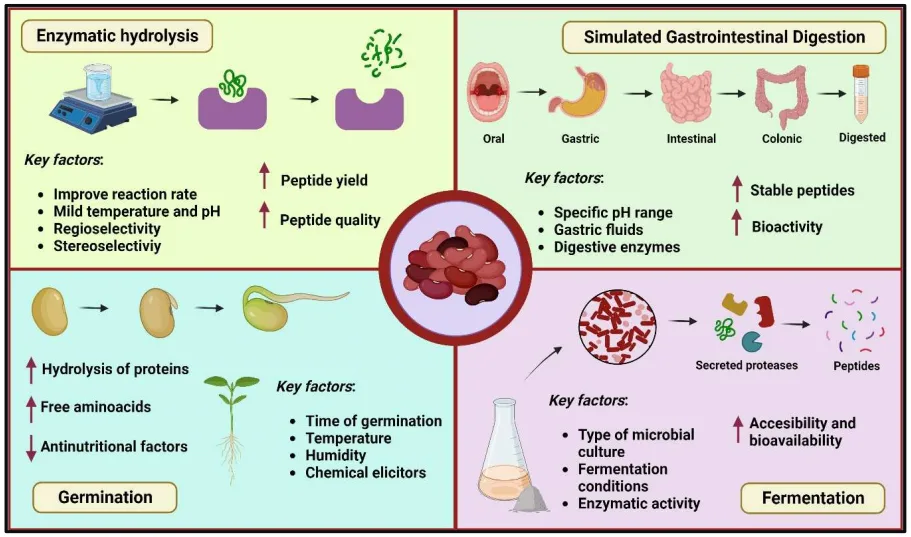
Another critical challenge is the chemical stability and functional integration of peptides in food matrices. Factors such as pH, temperature, and interactions with other food components can alter peptide structure and reduce efficacy. Innovative food processing technologies, such as controlled enzymatic hydrolysis and fermentation, are being investigated to maintain peptide integrity while optimizing their functional properties.
Furthermore, cost-effective production and scalability remain significant hurdles. Producing bioactive peptides with high purity requires complex fractionation and purification techniques, which can be expensive. The development of biotechnological advancements, such as enzymatic hydrolysis optimization and recombinant peptide synthesis, could improve cost efficiency and make peptide-based functional foods more commercially viable.
Lastly, regulatory approval and consumer acceptance pose challenges in bringing bioactive peptides to market. Functional food and nutraceutical products must undergo rigorous safety assessments, and regulatory frameworks for bioactive peptides vary across different regions. Addressing these challenges through clinical validation, improved formulation strategies, and industry collaboration will be essential for advancing legume-derived peptides as viable therapeutic agents for cardiovascular disease prevention.
The Road Ahead: Future Innovations and Clinical Applications of Legume Peptides
Legume-derived bioactive peptides hold significant potential for cardiovascular disease prevention, yet their full clinical application remains limited. While in vitro and in vivo studies have demonstrated their effectiveness in regulating blood pressure, improving endothelial function, and modulating lipid metabolism, clinical trials in humans are still scarce. More well-designed studies are needed to confirm their efficacy, determine optimal dosages, and assess long-term safety.
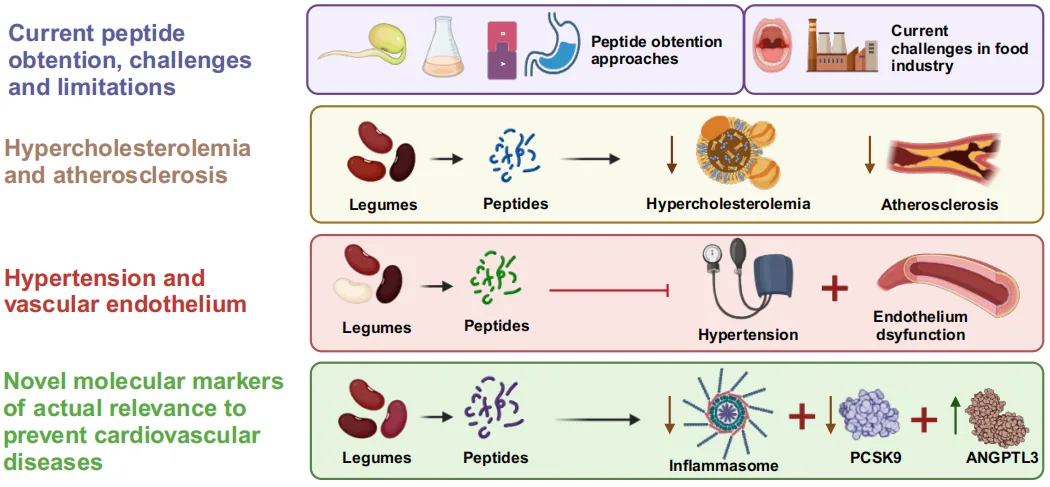
Advancements in proteomics, bioinformatics, and computational modeling are accelerating peptide discovery and characterization. Molecular docking simulations and in silico screening allow researchers to predict peptide interactions with cardiovascular targets, streamlining the identification of highly bioactive compounds. These technologies can enhance peptide design, improving their stability and bioavailability.
Looking ahead, the commercialization of peptide-enriched functional foods and nutraceuticals could provide natural alternatives to synthetic drugs. However, overcoming production, regulatory, and formulation challenges will be crucial. Continued research and collaboration between scientists, industry, and regulatory bodies will pave the way for the integration of legume-derived peptides into mainstream cardiovascular health strategies.
Reference
- Hernandez, D. F., Mojica, L., & de Mejia, E. G. (2024). Legume-derived bioactive peptides: Role in cardiovascular disease prevention and control. Current Opinion in Food Science, 56, 101132. DOI
- Semba, R. D., Ramsing, R., Rahman, N., Kraemer, K., & Bloem, M. W. (2021). Legumes as a sustainable source of protein in human diets. Global Food Security, 28, 100520. DOI
- Hayes, M. (2021). Bioactive peptides in preventative healthcare: An overview of bioactivities and suggested methods to assess potential applications. Current Pharmaceutical Design, 27(11), 1332-1341. DOI
- Jiang, Y., Sun, J., Chandrapala, J., Majzoobi, M., Brennan, C., Zeng, X. A., & Sun, B. (2024). Recent progress of food‐derived bioactive peptides: Extraction, purification, function, and encapsulation. Food Frontiers, 5(3), 1240-1264. DOI