 LinkPeptide
Metal-Coordinated Peptide Nanomaterials: A New Frontier in Cancer Theranostics
Cancer therapy has advanced rapidly, but many traditional treatment strategies still face major limitations. Chemotherapy, radiotherapy, and surgery remain important clinical tools, yet they often suffer from low tumor specificity, systemic toxicity, prolonged treatment cycles, and damage to healthy tissues. These challenges have driven growing interest in nanomedicine platforms that can combine targeted delivery, controlled release, imaging, and therapy in a single system.
Among emerging nanomedicine strategies, metal-coordinated amino acid, peptide, and protein-based supramolecular nanomaterials are attracting increasing attention. These systems use biomolecules as natural building blocks and metal ions as coordination centers to form self-assembled nanostructures. When combined with anticancer drugs, photosensitizers, or photothermal agents, they can create multifunctional platforms for cancer diagnosis and therapy.
This field is especially important for peptide science because peptides offer unique advantages: they are structurally programmable, biocompatible, chemically modifiable, and capable of self-assembly. By coordinating with metal ions, peptide-based nanomaterials can gain enhanced stability, imaging capability, reactive oxygen species generation, photothermal conversion, and tumor-responsive drug release.
What Are Metal-Coordinated Supramolecular Nanomaterials?
Supramolecular nanomaterials are structures formed through reversible noncovalent interactions rather than permanent covalent bonds. These interactions may include hydrogen bonding, electrostatic attraction, π–π stacking, hydrophobic interactions, cation–π interactions, and metal–ligand coordination.
In metal-coordinated peptide nanomaterials, metal ions act as organizing centers. Functional groups on amino acids, peptides, proteins, or drug molecules bind to these metal ions and guide the formation of nanostructures. Common metal-binding groups include:
- Carboxyl groups
- Amino groups
- Thiol groups
- Imidazole groups
- Aromatic residues
- Hydroxyl groups
This coordination-driven assembly can generate nanofibers, nanospheres, vesicles, hydrogels, nanoclusters, or hybrid nanoparticles.
Unlike purely inorganic nanoparticles, peptide- or protein-based supramolecular systems can offer improved biodegradability and biological compatibility. At the same time, the metal component can provide functions that biomolecules alone may not achieve, such as magnetic resonance imaging, photothermal conversion, chemodynamic therapy, or catalytic reactive oxygen species generation.
Why Peptides Are Valuable Building Blocks
Peptides are ideal candidates for supramolecular nanomedicine because their sequence can be precisely designed. Small changes in amino acid composition can dramatically alter assembly behavior, metal-binding strength, hydrophobicity, charge, and biological activity.
Peptides also support multiple roles in one nanomaterial system. They can function as:
- Structural building blocks
- Metal-binding ligands
- Tumor-targeting ligands
- Cell-penetrating motifs
- Enzyme-responsive elements
- Drug carriersSelf-assembling scaffolds
For example, histidine-containing peptides can coordinate strongly with zinc or manganese ions through the imidazole group. Cysteine-containing peptides can bind metal ions through thiol groups. Aromatic peptide motifs, such as Fmoc-modified peptides or diphenylalanine sequences, can support π–π stacking and hydrophobic assembly.
This modularity makes peptide-based systems highly tunable for cancer theranostics.
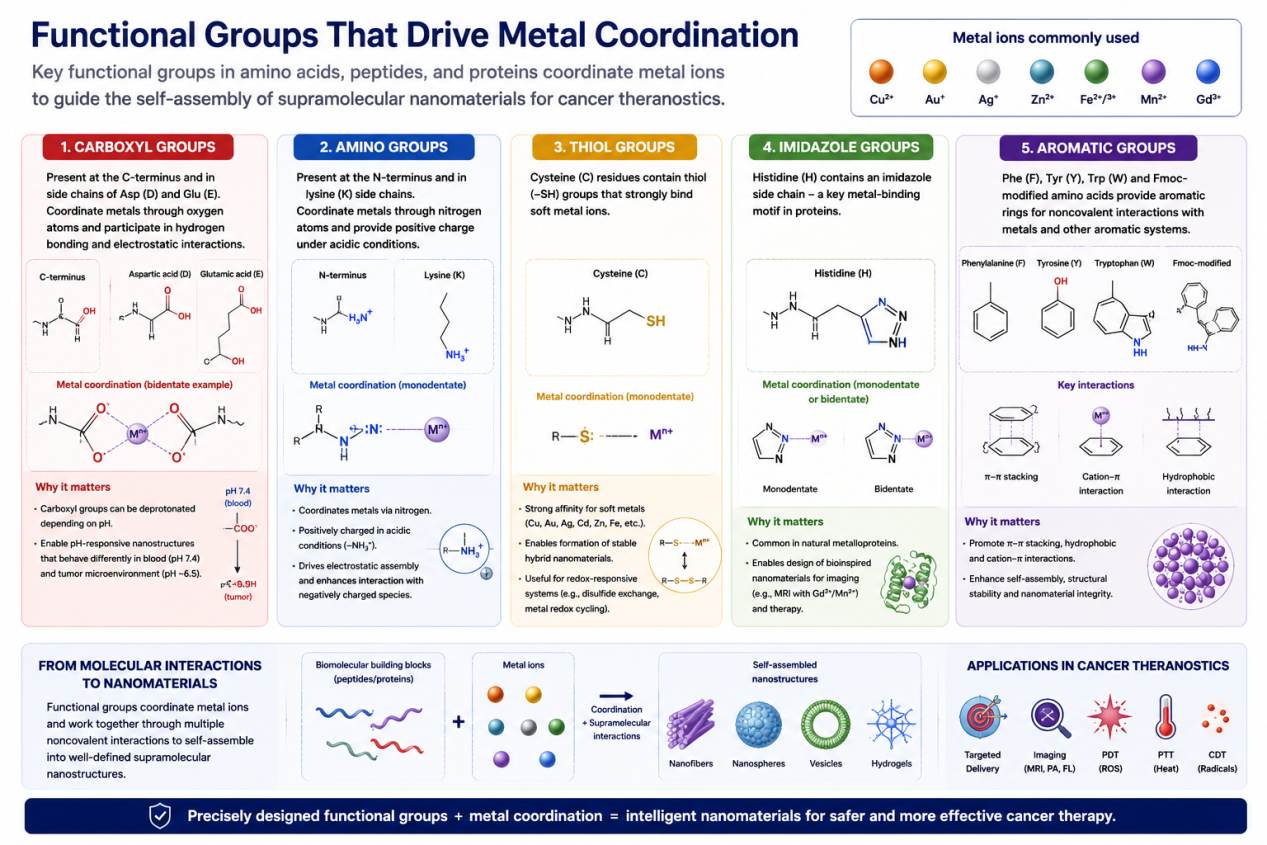
Functional Groups That Drive Metal Coordination
The design of metal-coordinated peptide nanomaterials starts with functional chemistry.
Carboxyl Groups
Carboxyl groups are present at the C-terminus of amino acids and in side chains such as aspartic acid and glutamic acid. These groups can coordinate metal ions through oxygen atoms and also participate in hydrogen bonding and electrostatic interactions.
Because carboxyl groups can be deprotonated depending on pH, they are useful for designing pH-responsive nanostructures that behave differently in blood circulation and the tumor microenvironment.
Amino Groups
Amino groups are present at the N-terminus of peptides and in lysine side chains. They can coordinate metal ions through nitrogen atoms and also provide positive charge under acidic conditions. This allows amino groups to participate in both metal coordination and electrostatic assembly.
Thiol Groups
Cysteine residues contain thiol groups, which can strongly bind metals such as copper, gold, silver, cadmium, zinc, and iron. Thiol-metal coordination is especially useful for constructing stable hybrid nanomaterials and controlling redox-responsive behavior.
Imidazole Groups
Histidine contains an imidazole side chain, one of the most important metal-binding groups in peptide and protein chemistry. Histidine-metal coordination is common in natural metalloproteins and can be used to design bioinspired nanomaterials for imaging and therapy.
Aromatic Groups
Phenylalanine, tyrosine, tryptophan, and Fmoc-modified amino acids can contribute aromatic interactions. These groups support π–π stacking, hydrophobic interactions, and cation–π interactions with metal ions. Aromatic motifs often improve self-assembly and structural stability.
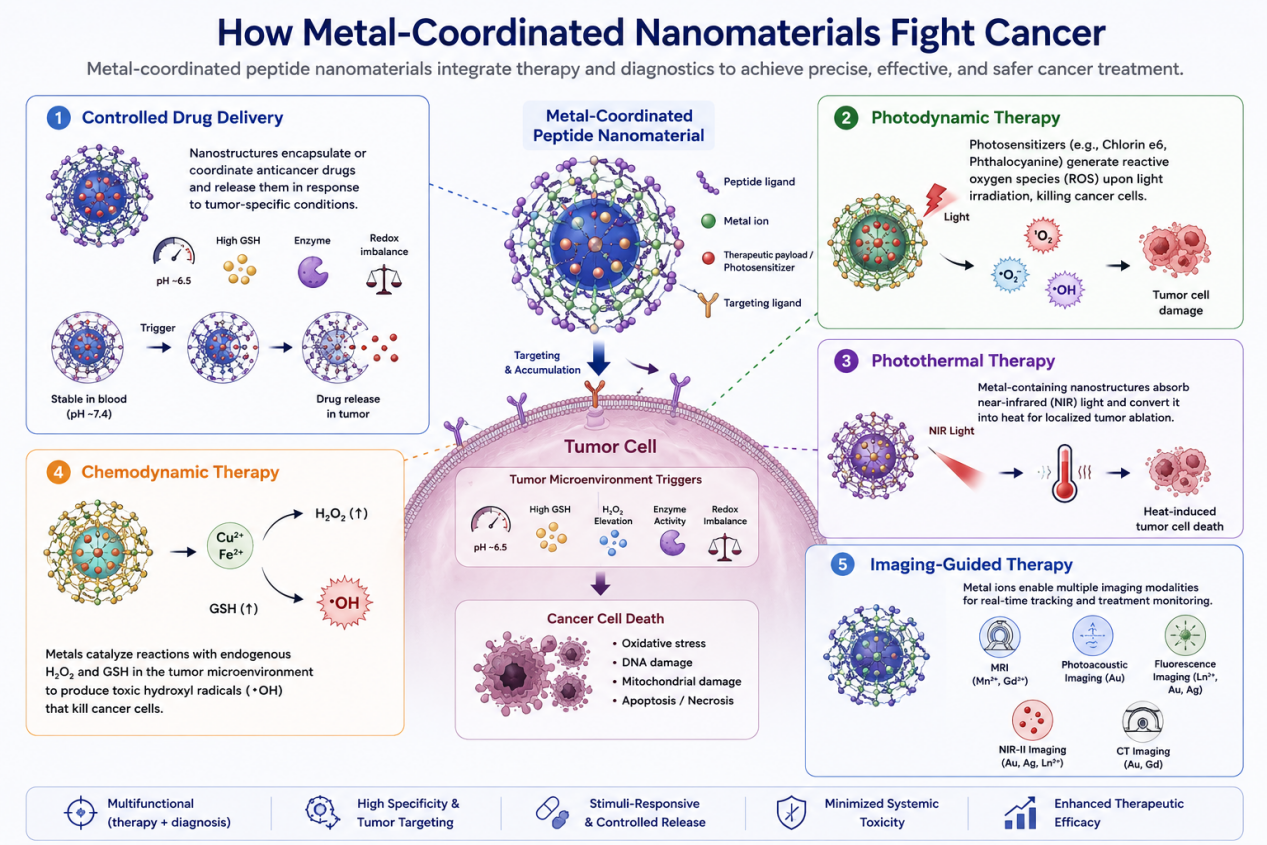
How Metal-Coordinated Nanomaterials Fight Cancer
Metal-coordinated peptide nanomaterials can support several anticancer mechanisms.
1. Controlled Drug Delivery
Nanostructures can encapsulate or coordinate anticancer drugs and release them in response to tumor-specific conditions such as acidic pH, high glutathione concentration, enzyme activity, or redox imbalance.
2. Photodynamic Therapy
Photosensitizers such as chlorin e6 or phthalocyanine can be integrated into metal-peptide nanomaterials. After light irradiation, these systems generate reactive oxygen species that damage tumor cells.
3. Photothermal Therapy
Some metal-containing nanostructures absorb near-infrared light and convert it into heat. This localized heating can destroy tumor cells while minimizing damage to surrounding tissue.
4. Chemodynamic Therapy
Metals such as copper and iron can catalyze reactions that generate toxic hydroxyl radicals in the tumor microenvironment. This approach takes advantage of elevated hydrogen peroxide and glutathione levels in cancer cells.
5. Imaging-Guided Therapy
Metals such as manganese, gadolinium, lanthanides, gold, and silver can support imaging modalities including MRI, photoacoustic imaging, fluorescence imaging, and NIR-II imaging. This allows researchers to track delivery and monitor treatment response.
Iron-Coordinated Amino Acid Nanomaterials
Iron ions are attractive for cancer nanomedicine because they can participate in redox reactions, support magnetic properties, and catalyze oxygen or radical generation.
One example discussed in the review involves Fmoc-cysteine coordinated with iron ions to form hollow nanovesicles. These structures behave like supramolecular nanozymes. When loaded with photosensitizers, they can improve photodynamic therapy by using tumor hydrogen peroxide to generate oxygen, helping overcome hypoxia in tumors.
This is important because tumor hypoxia often reduces the effectiveness of photodynamic therapy. Iron-based coordination systems offer a way to improve oxygen availability and enhance reactive oxygen species production during treatment.
Zinc-Based Supramolecular Nanoagents
Zinc is biologically relevant and can coordinate strongly with histidine-containing peptides. Zinc-based supramolecular nanoagents have been used to improve the delivery of curcumin, a natural compound with anticancer potential but poor stability and low bioavailability.
Through zinc coordination and molecular stacking, curcumin-based nanoagents can be protected from rapid degradation and delivered more efficiently to tumors. These systems can also achieve high drug loading and tumor-responsive release.
This example shows how metal coordination can solve practical drug delivery challenges for bioactive compounds that are otherwise difficult to translate.
Manganese-Coordinated Nanomaterials for Imaging and Therapy
Manganese ions are valuable because they can act as MRI contrast agents. When coordinated with amphiphilic amino acids and photosensitizers such as chlorin e6, manganese-based nanomaterials can combine diagnosis and therapy.
These systems can accumulate in tumors, respond to glutathione, and generate reactive oxygen species under light irradiation. The manganese component supports imaging, while the photosensitizer supports photodynamic therapy.
This type of integrated platform is often called a theranostic system because it combines therapy and diagnostics in one nanomedicine.
Copper-Cysteine Nanoparticles for Chemodynamic Therapy
Copper ions can coordinate with cysteine to form self-assembled Cu-mercaptide nanoparticles. In the tumor microenvironment, high glutathione levels can reduce Cu2+ to Cu+, which then reacts with hydrogen peroxide to generate hydroxyl radicals.
These radicals damage tumor cells through oxidative stress and DNA damage. Because cancer cells often contain higher levels of glutathione and hydrogen peroxide than normal cells, copper-cysteine nanomaterials may offer tumor-selective chemodynamic therapy.
This strategy highlights the value of using tumor chemistry itself as the trigger for anticancer activity.
Gold-Peptide Nanomaterials for Photothermal Therapy
Gold nanomaterials are well known for strong optical and photothermal properties. However, traditional gold nanoparticle synthesis may involve complex processes or toxic reagents. Peptide-guided assembly provides a more biocompatible route.
Fmoc-diphenylalanine nanogels containing gold nanoparticles have been investigated for controlled drug release and photothermal therapy. Under near-infrared irradiation, gold components generate heat, while the peptide nanogel helps control drug delivery.
Other systems combine gold/platinum nanoparticles with tumor-homing peptides and immune-modulating peptide components. These platforms can provide photothermal tumor ablation and stimulate antitumor immune responses.
Lanthanide-Peptide Nanoclusters
Lanthanide materials are useful for imaging because of their optical and magnetic properties. Peptide-lanthanide nanoclusters can protect peptide drugs from degradation, enhance tumor accumulation, and provide real-time tracking.
In one strategy, lanthanide-doped nanoparticles were assembled with anticancer peptides and a tumor-targeting cyclic peptide. The resulting nanoclusters improved peptide delivery and reduced systemic toxicity.
This is particularly relevant because many peptide drugs have short half-lives and are easily degraded in biological environments. Nanocluster formation can improve their delivery and therapeutic window.
Ruthenium-Peptide Supramolecular Systems
Ruthenium complexes have long been studied as anticancer metallodrugs. Their photophysical properties and anticancer activity make them attractive for supramolecular theranostics.
One example uses a ruthenium complex functionalized with cyclodextrin and a tumor-targeting cyclic RGD peptide. This host–guest system forms stable nanostructures that selectively accumulate in integrin-rich cancer cells. The system induces cancer cell death through lysosomal damage, reactive oxygen species elevation, and caspase activation.
Such ruthenium-peptide systems demonstrate how supramolecular chemistry can improve selectivity and reduce damage to healthy cells.
Protein-Based Metal Nanomaterials
Proteins can also act as templates for metal-coordinated nanomaterials. Their multiple functional groups allow them to reduce, stabilize, cap, and assemble metal nanoparticles.
For example, collagen can interact electrostatically with gold salts to form injectable self-healing hydrogels containing gold nanoparticles. These hydrogels can support localized drug delivery and photothermal/photodynamic therapy.
Albumin-based systems have also been used to synthesize silver sulfide nanodots for NIR-II fluorescence imaging, photoacoustic imaging, and photothermal therapy. Albumin nanocages provide a biocompatible environment for controlled nanoparticle growth.
Gadolinium-protein nanodots represent another theranostic approach, combining MRI capability with NIR-II fluorescence and photothermal treatment.
Advantages of Metal-Coordinated Peptide Nanomaterials
Metal-coordinated peptide/protein nanomaterials offer several advantages for cancer research:
- Biocompatible building blocks
- Simple coordination-driven preparation
- Tunable size and morphology
- High drug-loading potential
- Stimuli-responsive release
- Combination of imaging and therapy
- Improved tumor accumulation
- Reduced systemic toxicity
- Ability to integrate photodynamic, photothermal, and chemodynamic therapy
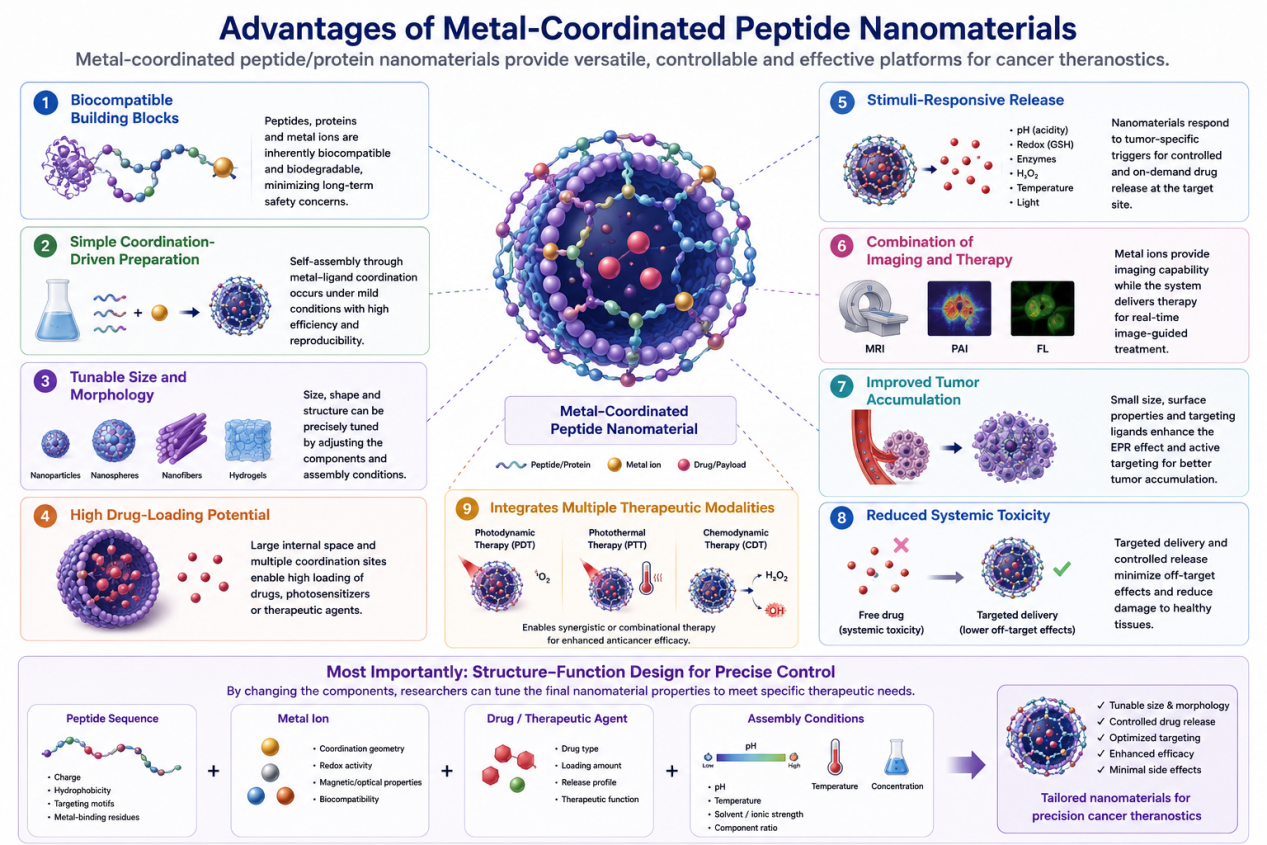
Most importantly, these materials allow structure-function design. By changing the peptide sequence, metal ion, drug molecule, or assembly condition, researchers can tune the final nanomaterial properties.
Current Challenges
Despite their promise, metal-coordinated supramolecular nanomaterials still face important challenges.
The first issue is long-term stability. Because supramolecular materials rely on reversible interactions, premature disassembly in vivo may reduce therapeutic efficacy or cause off-target effects.
The second issue is clinical translation. Although many systems show strong performance in cell and animal studies, more work is needed to evaluate long-term toxicity, biodistribution, metabolism, immune response, and reproducible large-scale manufacturing.
The third issue is formulation complexity. Multicomponent systems contain metals, biomolecules, and drug molecules, so their stability and behavior can be influenced by concentration, pH, ionic strength, solvent, temperature, and biological fluids.
The fourth issue is safety. Even when biomolecules are biocompatible, metal ions must be carefully selected and controlled to avoid accumulation or toxicity.
Future Outlook
The future of metal-coordinated peptide nanomaterials will likely focus on precision design. Researchers will increasingly design peptide sequences with specific metal-binding residues, tumor-targeting motifs, enzyme-responsive domains, and self-assembling structures.
Next-generation systems may combine:
- Tumor-targeting peptides
- Imaging metals
- Photosensitizers
- Chemotherapeutic drugs
- Immune-modulating agents
- Stimuli-responsive release mechanisms
These multifunctional platforms could support personalized cancer nanomedicine by enabling simultaneous diagnosis, targeted delivery, real-time monitoring, and localized therapy.
For peptide companies and research suppliers, this trend creates growing demand for custom peptides with precise functional modifications, including histidine-rich sequences, cysteine-containing ligands, Fmoc-modified peptides, cyclic targeting peptides, and amphiphilic peptide building blocks.
How LinkPeptide Supports This Research Area
LinkPeptide supports peptide-based nanomaterial research by providing custom peptide synthesis and peptide modification services for advanced biomedical applications. Researchers working on metal-coordinated supramolecular nanomaterials may require peptides with carefully designed sequences, functional groups, and purity profiles.
Relevant peptide design needs may include:
- Metal-binding peptide sequences
- Cysteine- and histidine-containing peptides
- Fmoc-modified amino acid or peptide motifs
- Tumor-targeting peptides such as RGD derivatives
- Amphiphilic self-assembling peptides
- Cyclic peptides
- Fluorescent or functional peptide conjugates
- Peptides for nanogel, nanofiber, vesicle, or nanoparticle formation
As cancer nanomedicine becomes more sophisticated, peptide quality and molecular precision will be essential for reproducible assembly, predictable biological performance, and reliable experimental outcomes.
Conclusion
Metal-coordinated amino acid, peptide, and protein-based supramolecular nanomaterials represent a rapidly developing platform for cancer theranostics. By combining biomolecular self-assembly with the functional properties of metal ions and anticancer agents, these systems can support targeted delivery, controlled release, imaging-guided therapy, photodynamic therapy, photothermal therapy, and chemodynamic therapy.
Peptides are especially valuable in this field because they are programmable, modifiable, biocompatible, and capable of forming diverse nanostructures. When paired with appropriate metals and therapeutic agents, peptide-based supramolecular nanomaterials may help overcome key limitations of conventional cancer therapy, including low specificity, poor bioavailability, drug resistance, and systemic toxicity.
Although clinical translation remains challenging, continued progress in peptide design, coordination chemistry, and nanomedicine engineering will likely drive the development of safer, smarter, and more effective anticancer platforms.
Reference
Shabbir, M., Atiq, A., Wang, J., Atiq, M., Saeed, N., Yildiz, I., … & Abbas, M. (2025). Metal‐coordinated amino acid/peptide/protein‐based supramolecular self‐assembled nanomaterials for anticancer applications. Aggregate, 6(1), e672.
https://doi.org/10.1002/agt2.672
Siegel, R. L., Miller, K. D., Wagle, N. S., & Jemal, A. (2023). Cancer statistics, 2023. CA: a cancer journal for clinicians, 73(1), 17-48.
https://doi.org/10.3322/caac.21763
Neophytou, C. M., Panagi, M., Stylianopoulos, T., & Papageorgis, P. (2021). The role of tumor microenvironment in cancer metastasis: molecular mechanisms and therapeutic opportunities. Cancers, 13(9), 2053.
https://doi.org/10.3390/cancers13092053
Manzari, M. T., Shamay, Y., Kiguchi, H., Rosen, N., Scaltriti, M., & Heller, D. A. (2021). Targeted drug delivery strategies for precision medicines. Nature Reviews Materials, 6(4), 351-370.