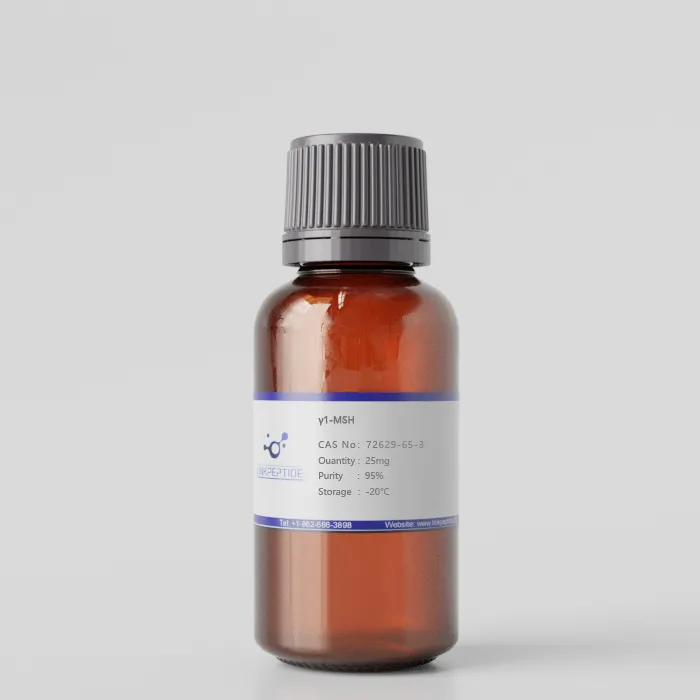
Product Name:γ1-MSH
CAS No:72629-65-3
Purity:95%
Molar Mass:1512.76
Chemical Formula:C72H97N21O14S
Storage:Store at -20 degrees Celsius
Sequence:YVMGHFRWDRF
Target:melanocortin MC3
Application:
γ1-MSH, or gamma-1-melanocyte-stimulating hormone, is a peptide hormone involved in regulating pigmentation, appetite, and energy homeostasis. It is a member of the melanocyte-stimulating hormone (MSH) family, which also includes alpha-MSH and beta-MSH. γ1-MSH acts on melanocortin receptors, particularly the MC1 receptor, influencing skin pigmentation by stimulating melanin production. Additionally, it has roles in modulating appetite and energy expenditure. Research into γ1-MSH focuses on its potential therapeutic applications in skin disorders, obesity, and metabolic syndrome. Its diverse physiological effects make it a significant peptide in both dermatological and metabolic research.
Current Research:
γ₁-Melanocyte-Stimulating Hormone (γ₁-MSH), a bioactive peptide derived from the proopiomelanocortin (POMC) precursor, plays a critical role in regulating various physiological processes. With its selective agonistic activity toward the melanocortin 3 receptor (MC3-R), γ₁-MSH has become a focus of research in neurobiology, cardiovascular regulation, and metabolic studies.
Biological Activity
γ₁-MSH exhibits strong affinity for MC3-R (pKᵢ = 7.46) and demonstrates approximately 40-fold selectivity over melanocortin 4 receptor (MC4-R). Through MC3-R activation, it modulates renal sodium handling, a crucial determinant of blood pressure regulation. Recent studies suggest that γ₁-MSH contributes to sodium homeostasis by promoting natriuresis, providing protective effects against hypertension. Additionally, γ₁-MSH has been linked to behavioral modulation, as it increases extracellular dopamine release, influencing grooming and exploratory behaviors in animal models.
Current Research Areas
Cardiovascular Health: Researchers are investigating the role of γ₁-MSH in blood pressure regulation, focusing on its potential as a therapeutic agent for sodium-sensitive hypertension and cardiovascular diseases.
Neurobehavioral Studies: The impact of γ₁-MSH on dopamine signaling and neurobehavioral processes is under exploration. Studies aim to elucidate its role in stress responses, motivation, and reward-related behaviors.
Metabolic Disorders: Emerging research examines the peptide’s involvement in energy balance and metabolic regulation, highlighting its potential influence on obesity and related disorders.
Clinical Potential
Given its selectivity for MC3-R and roles in physiological regulation, γ₁-MSH is being explored as a lead compound for novel therapeutics targeting cardiovascular and metabolic disorders. Its effects on sodium balance and behavioral modulation make it a promising candidate for addressing complex conditions involving these systems.
Conclusion
γ₁-MSH is a pivotal peptide with diverse physiological roles. Ongoing research continues to reveal its mechanisms of action, offering insights into its therapeutic potential for cardiovascular and neurobehavioral disorders.
Reference:
Get a Quote


 LinkPeptide