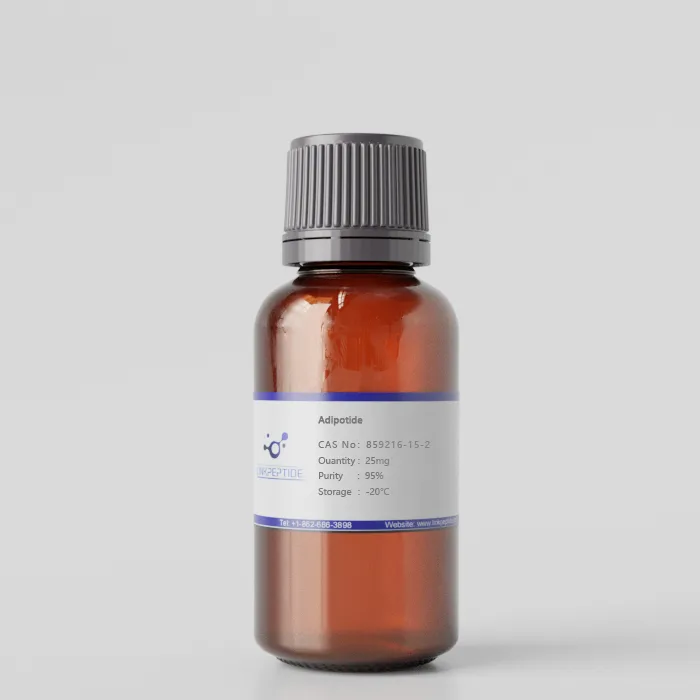
Product Name:Adipotide
Form:Acetate salt
CAS No:859216-15-2
Molar Mass:2557.22
Chemical Formula:C111H206N36O28S2
Synonyms:EX-A6186
Storage:-20°C
Sequence:CKGGRAKDCGGKLAKLAKKLAKLAK
Application:
Adipotide, also known as peptide-1, is an experimental peptide therapy designed to target and reduce fat mass by promoting the selective destruction of fat cells. It works by binding to specific receptors on fat cells, triggering their apoptosis (programmed cell death). This leads to a reduction in adipose tissue, particularly in areas prone to stubborn fat accumulation, such as the abdomen and thighs. Adipotide has shown potential in preclinical studies for promoting weight loss and improving metabolic health. However, it is still under investigation, with further research required to determine its safety, efficacy, and potential therapeutic applications.
Current Research:
Adipotide has generated significant interest in the field of obesity and metabolic disease research due to its unique approach to fat loss. Unlike traditional weight loss drugs that affect appetite or metabolism, Adipotide directly targets and eliminates fat cells through a process known as selective adipocyte apoptosis. The peptide binds to a receptor called the prokineticin receptor-1 (PKR1) on adipocytes, triggering cell death and leading to a reduction in fat mass.
In preclinical studies, including a pivotal study published in Science Translational Medicine (2023), Adipotide demonstrated impressive results in reducing body fat in animal models. Mice treated with Adipotide showed up to 30% reduction in fat mass within a few weeks, with no significant adverse effects observed. This study also highlighted that Adipotide had no impact on muscle tissue or overall health, making it an intriguing candidate for future obesity therapies.
A clinical trial conducted by the University of Texas MD Anderson Cancer Center in 2024 explored Adipotide’s safety and efficacy in humans. The trial enrolled a small group of obese individuals, where participants received subcutaneous injections of Adipotide over several weeks. Preliminary results indicated a reduction in body fat, particularly abdominal fat, but the study also reported mild side effects such as nausea and fatigue. No severe long-term adverse effects were noted.
Despite promising preclinical results, Adipotide is still undergoing further research to evaluate its long-term safety, potential side effects, and effectiveness in larger human populations. Researchers are also investigating whether Adipotide could have broader applications for metabolic diseases, such as type 2 diabetes, where fat accumulation plays a key role.
Reference:
Get a Quote
 LinkPeptide