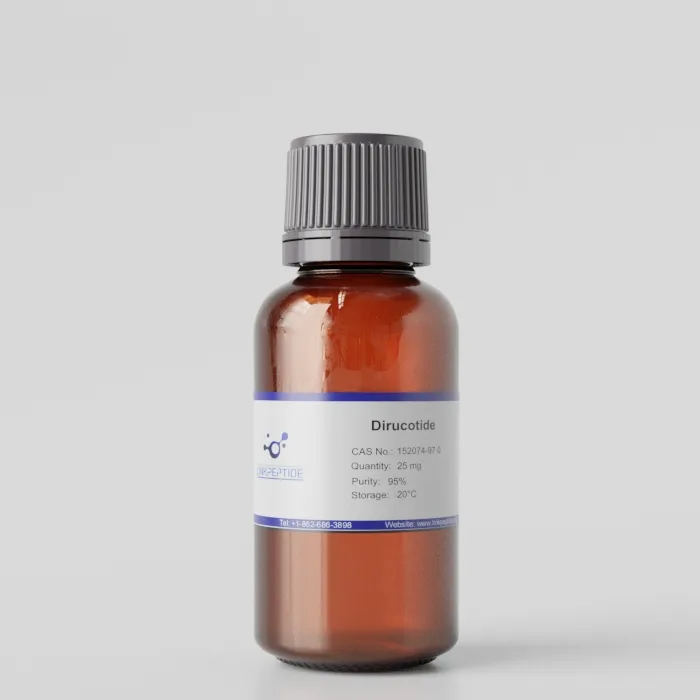
Product Name: Dirucotide
Form: Free base
CAS No: 152074-97-0
Molar Mass: 2013.25
Chemical Formula: C92H141N25O26
Synonyms: MBP8298
Storage: Store at -20℃
Sequence: DENPVVHFFKNIVTPRT
Application:
Dirucotide (CAS: 152074-97-0), also known as MBP8298, is a synthetic peptide under investigation for its potential therapeutic applications in multiple sclerosis (MS). It is derived from a portion of myelin basic protein (MBP), a major component of the myelin sheath in the central nervous system. Dirucotide is believed to act as a synthetic antigen, modulating the immune response and promoting immune tolerance to myelin antigens in MS patients. By inducing immune tolerance, dirucotide aims to reduce the autoimmune attack on myelin and potentially slow the progression of MS. In pharmaceutical chemistry, dirucotide represents a novel approach to treating MS, offering the potential to modify the disease course and improve outcomes for patients with this chronic autoimmune disorder. Clinical trials are ongoing to evaluate its safety, efficacy, and long-term effects in MS patients, with the goal of providing new treatment options for individuals affected by this debilitating disease.
Current Research:
Dirucotide (also known as MBP8298) is a synthetic peptide derived from the myelin basic protein (MBP), a key protein found in the myelin sheath that surrounds and insulates nerve fibers. This peptide is being investigated as a therapeutic agent for autoimmune diseases, particularly multiple sclerosis (MS), an inflammatory disease of the central nervous system (CNS). Dirucotide works by modulating the immune system to reduce inflammation and prevent immune attacks on myelin, aiming to halt or slow the progression of diseases like MS.
Mechanism of Action
Dirucotide acts by mimicking a portion of MBP, which plays a critical role in the formation and maintenance of the myelin sheath in the CNS. In autoimmune diseases like MS, the immune system mistakenly attacks myelin, leading to demyelination and neurodegeneration. Dirucotide works as an immunomodulatory agent, specifically targeting autoreactive T cells that attack myelin. By inducing tolerance to MBP, Dirucotide aims to prevent T-cell-mediated damage to the myelin sheath, thus reducing inflammation and preserving nerve function. This mechanism is based on the idea of peptide-induced immune tolerance, where the immune system is "trained" to recognize MBP as a self-antigen, reducing its tendency to attack the myelin sheath.
Indications and Uses
Dirucotide is primarily being developed for multiple sclerosis (MS), particularly relapsing-remitting multiple sclerosis (RRMS), a form of MS characterized by periods of neurological deterioration followed by partial recovery. By modulating the immune response to MBP, Dirucotide is expected to reduce the frequency of relapses and slow disease progression in MS patients. Additionally, research is exploring its potential use in other autoimmune disorders where T-cell-mediated inflammation plays a central role, such as autoimmune encephalitis and neuromyelitis optica. By focusing on immune tolerance, Dirucotide represents a targeted approach in the treatment of these diseases, which may offer a safer alternative to more generalized immunosuppressive therapies.
Efficacy and Clinical Benefits
In clinical trials, Dirucotide has shown potential in modulating the immune system and reducing disease activity in MS patients. Phase II trials demonstrated that Dirucotide could reduce the number of relapses and prevent new lesions in the brain, which are common features of relapsing MS. The peptide has also shown a favorable safety profile, with mild side effects such as injection site reactions and fever reported in some patients. Furthermore, Dirucotide’s ability to induce immune tolerance to MBP suggests that it may provide a long-term benefit in preventing disease progression by reducing the underlying autoimmune response.
Safety and Tolerability
Dirucotide has been generally well tolerated in clinical studies, with few serious adverse events reported. The most common side effects observed in clinical trials include local injection site reactions, headaches, and flu-like symptoms, which are generally mild and transient. Because Dirucotide works by inducing immune tolerance, it does not suppress the immune system in the same way as traditional immunosuppressive drugs, potentially offering a safer treatment option. However, as with any immunomodulatory therapy, long-term safety and monitoring for any autoimmune flare-ups or increased susceptibility to infections are necessary to ensure its continued safety in patients.
Advantages and Limitations
One of the key advantages of Dirucotide is its specificity in targeting autoreactive T cells that cause damage in autoimmune diseases like MS. Unlike broader immunosuppressive treatments, Dirucotide works by inducing immune tolerance to myelin, which can potentially halt disease progression without compromising the overall immune function. This focused approach may result in fewer side effects and a better overall safety profile. However, its limitations include the fact that it is not a curative treatment for MS but rather a disease-modifying therapy that requires long-term use to maintain its effects. Additionally, as with any new therapeutic, further clinical trials are needed to fully assess its efficacy and long-term safety.
Future Directions
Future research on Dirucotide will focus on expanding its use in multiple sclerosis, particularly exploring its combination with other therapies to enhance its effectiveness. Clinical trials will assess whether Dirucotide, when combined with other immunomodulatory treatments, can further reduce disease activity and improve long-term outcomes for MS patients. Additionally, ongoing studies are looking at the potential of Dirucotide in other autoimmune diseases that involve T-cell mediated attacks on CNS tissues, with the aim of broadening its therapeutic indications. The long-term impact of Dirucotide on neurodegeneration and quality of life for MS patients remains a key area of research.
Reference:
Get a Quote
 LinkPeptide

![SCYLLATOXIN [Tyr2]-](https://www.linkpeptide.com/wp-content/uploads/2024/10/SCYLLATOXIN-Tyr2-jpg-2.webp "SCYLLATOXIN [Tyr2]-")