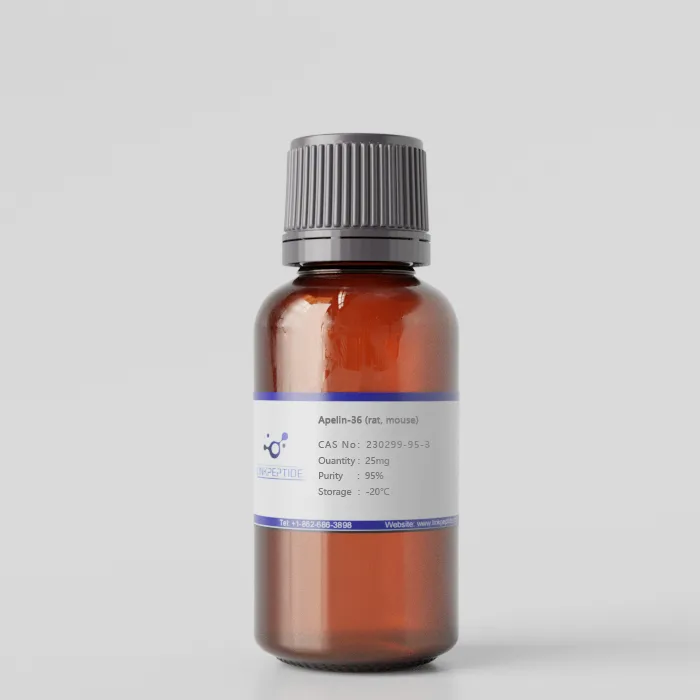
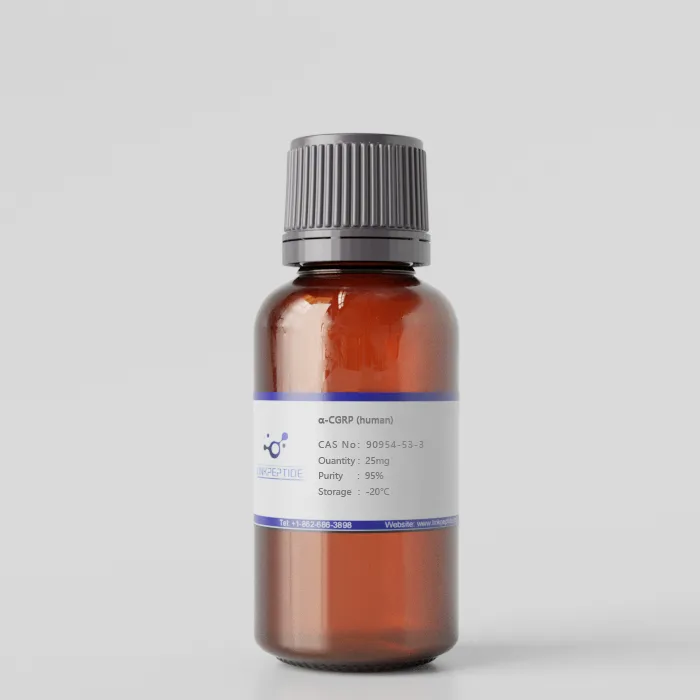
Product Name:Apelin-36 (rat, mouse)
CAS No:230299-95-3
Purity:95%
Molar Mass:4200.93
Chemical Formula:C185H304N68O43S
Storage:Store at -20 degrees Celsius
Sequence:LVKPRTSRTGPGAWQGGRRKFRRQRPRLSHKGPMPF
Target:APJ receptor agonist
Application:
Apelin-36 (rat, mouse) is a peptide derived from the apelin precursor, highly conserved across species, including rats and mice. It plays a critical role in regulating cardiovascular function, fluid balance, and metabolic processes by interacting with the APJ receptor. Apelin-36 is particularly valuable in preclinical studies using rodent models to investigate its effects on heart contractility, blood pressure regulation, and vasodilation. Researchers also explore its potential in addressing metabolic disorders, neuroprotection, and inflammation. Its use in animal studies provides essential insights into the therapeutic potential of modulating the apelin signaling pathway for cardiovascular and metabolic diseases.
Current Research:
Apelin-36, a 36-amino acid peptide, serves as an endogenous ligand for the G protein-coupled apelin receptor (APJ). In rodent models, Apelin-36 exhibits high affinity for APJ, with an IC₅₀ of 5.4 nM, and effectively inhibits cyclic AMP (cAMP) production, demonstrating an EC₅₀ of 0.52 nM.
Recent studies have illuminated the multifaceted physiological roles of Apelin-36 in rats and mice, particularly its neuroprotective effects. Administration of low-dose Apelin-36 post-ischemic stroke in rats significantly reduced infarct volume and attenuated apoptosis. This neuroprotection is associated with the suppression of endoplasmic reticulum stress (ERS) and the unfolded protein response (UPR), as evidenced by decreased levels of CHOP and GRP78 proteins.
Further research using the oxygen-glucose deprivation/reperfusion (OGD/R) model in HT22 cells, a murine hippocampal neuronal cell line, demonstrated that Apelin-36 enhances cell viability and inhibits apoptosis. The peptide mitigates oxidative stress and preserves mitochondrial function by promoting SIRT1-mediated PINK1/Parkin-dependent mitophagy.
In the cardiovascular domain, Apelin-36 has been shown to exert positive inotropic effects in isolated perfused rat hearts. This action is accompanied by increased expression of endothelial nitric oxide synthase (eNOS) and sarco/endoplasmic reticulum Ca²⁺-ATPase (SERCA) mRNA, suggesting a role in enhancing cardiac contractility and function.
Collectively, these findings underscore the therapeutic potential of Apelin-36 in modulating neuroprotective and cardiovascular pathways in rodent models. Ongoing research aims to further elucidate its mechanisms of action and explore its applicability in clinical settings.
Reference:
Get a Quote
 LinkPeptide