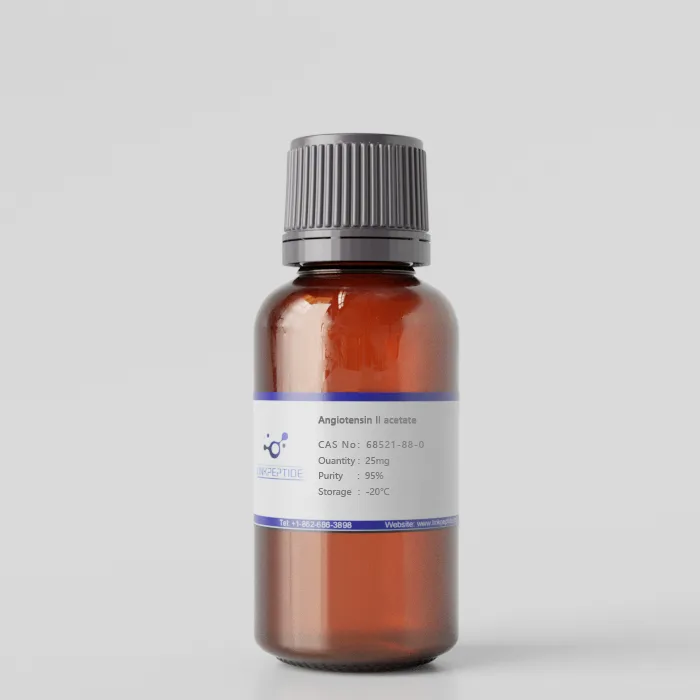
Product Name:Angiotensin II acetate
CAS No:68521-88-0
Purity:95%
Molar Mass:1106.23
Chemical Formula:C52H75N13O14
Storage:Store at -20 degrees Celsius
Sequence:DRVYIHPF
Target:AT2 Receptor
Application:Angiotensin II acetate is a synthetic form of the naturally occurring peptide hormone angiotensin II, which plays a critical role in regulating blood pressure and fluid balance. It binds to angiotensin receptors, particularly the AT1 receptor, causing vasoconstriction, increased blood pressure, and stimulation of aldosterone release, which promotes sodium and water retention. Angiotensin II acetate is widely used in research to study cardiovascular function, blood pressure regulation, and the renin-angiotensin system. It is also used clinically to treat conditions like septic shock by restoring blood pressure in critically ill patients when standard treatments are ineffective.
Current Research:
Angiotensin II acetate is a synthetic form of angiotensin II, a potent vasoconstrictor and key component of the renin-angiotensin system (RAS), which plays a central role in regulating blood pressure and fluid balance. The peptide sequence of angiotensin II is Asp-Arg-Val-Tyr-Ile-His-Pro-Phe.
Mechanism of Action
Angiotensin II exerts its effects primarily through binding to angiotensin II type 1 receptors (AT1R), which are G protein-coupled receptors located on various cell types, including vascular smooth muscle cells and adrenal gland cells. Activation of AT1R leads to vasoconstriction, increased aldosterone secretion, and enhanced sympathetic nervous system activity, collectively contributing to elevated blood pressure.
Clinical Applications
In clinical settings, synthetic angiotensin II acetate is utilized to manage conditions such as septic or distributive shock, where it serves as a vasopressor to elevate blood pressure in critically ill patients. Its administration is carefully monitored due to the potent effects on vascular tone and potential for adverse reactions.
Research Implications
Angiotensin II acetate is extensively used in research to study cardiovascular physiology, renal function, and the pathophysiology of hypertension. It serves as a tool to investigate the RAS and to develop therapeutic agents targeting this system.
Safety and Handling
Due to its potent biological activity, angiotensin II acetate should be handled with caution in laboratory settings, following appropriate safety protocols to prevent unintended exposure.
Conclusion
Angiotensin II acetate is a critical agent in both clinical and research domains, aiding in the understanding and management of cardiovascular and renal disorders. Its role in modulating blood pressure underscores the importance of the RAS in human health.
Reference:
Get a Quote
 LinkPeptide