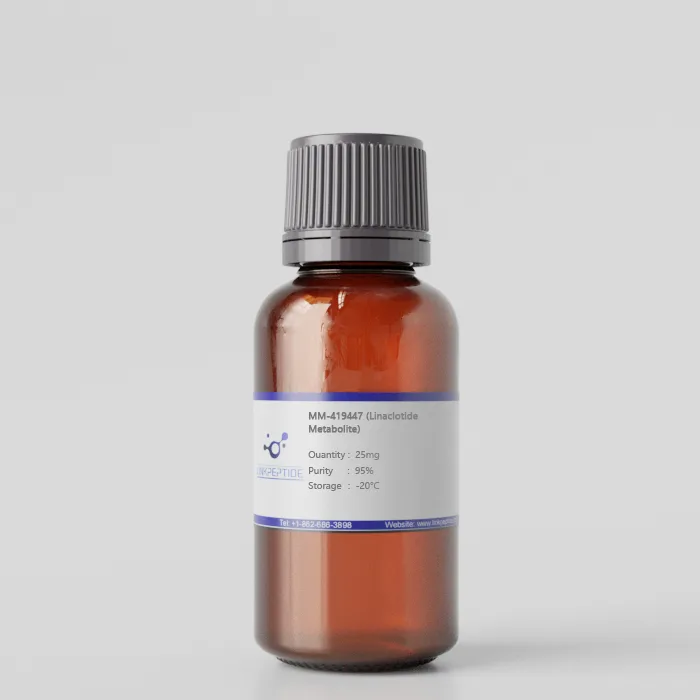
Product Name:MM-419447 (Linaclotide Metabolite)
Purity:95%
Molar Mass:1363.56
Chemical Formula:C50H70N14O19S6
Storage:Store at -20 degrees Celsius
Sequence:CCEYCCNPACTGC
Target:guanylate cyclase-C
Application:
MM-419447 is a metabolite of Linaclotide, a guanylate cyclase-C (GC-C) agonist used primarily to treat conditions such as irritable bowel syndrome with constipation (IBS-C) and chronic idiopathic constipation (CIC). MM-419447 retains the bioactivity of the parent compound by stimulating the GC-C receptor on the luminal surface of the intestinal epithelium. This action leads to increased levels of cyclic guanosine monophosphate (cGMP), promoting fluid secretion and accelerating intestinal transit, which helps relieve constipation. As a key metabolite, MM-419447 is studied for its pharmacokinetics, efficacy, and safety profiles in the context of Linaclotide's therapeutic effects.
Current Research:
MM-419447 is the principal active metabolite of linaclotide, a guanylate cyclase-C (GC-C) agonist approved for treating irritable bowel syndrome with constipation (IBS-C) and chronic idiopathic constipation (CIC). Upon oral administration, linaclotide undergoes enzymatic cleavage in the small intestine, resulting in the loss of its C-terminal tyrosine residue to form MM-419447.
Pharmacological Activity
Similar to its parent compound, MM-419447 exhibits high-affinity binding to GC-C receptors on the luminal surface of intestinal epithelial cells. This binding stimulates the production of cyclic guanosine monophosphate (cGMP), leading to increased intestinal fluid secretion and accelerated gastrointestinal transit. In vitro studies using T84 cells have demonstrated that MM-419447 induces a significant, concentration-dependent accumulation of intracellular cGMP.
Metabolism and Disposition
Linaclotide is stable in the acidic environment of the stomach and is converted to MM-419447 in the small intestine. Both linaclotide and MM-419447 are minimally absorbed into the systemic circulation, with low systemic and portal vein concentrations observed in animal studies. Subsequent reduction of their disulfide bonds in the intestinal lumen leads to proteolytic degradation into smaller peptides and amino acids. After oral administration of linaclotide, less than 1% of the dose is excreted as active peptide in rat feces, and a mean of 3-5% in human feces, with MM-419447 being the predominant peptide recovered.
Clinical Implications
The formation of MM-419447 contributes significantly to the therapeutic effects of linaclotide. By activating GC-C receptors, both linaclotide and MM-419447 enhance intestinal fluid secretion and motility, alleviating symptoms associated with IBS-C and CIC. The minimal systemic absorption of these peptides reduces the likelihood of systemic side effects, supporting their safety profiles.
Conclusion
MM-419447 plays a crucial role in mediating the pharmacological actions of linaclotide. Its ability to activate GC-C receptors and promote cGMP accumulation underpins the efficacy of linaclotide in treating constipation-related disorders. Understanding the metabolism and activity of MM-419447 provides valuable insights into the therapeutic mechanisms of linaclotide.
Reference:
Get a Quote
 LinkPeptide

![Lys-[Des-Arg9]Bradykinin](https://www.linkpeptide.com/wp-content/uploads/2024/10/Lys-Des-Arg9Bradykinin-jpg-3.webp "Lys-[Des-Arg9]Bradykinin")