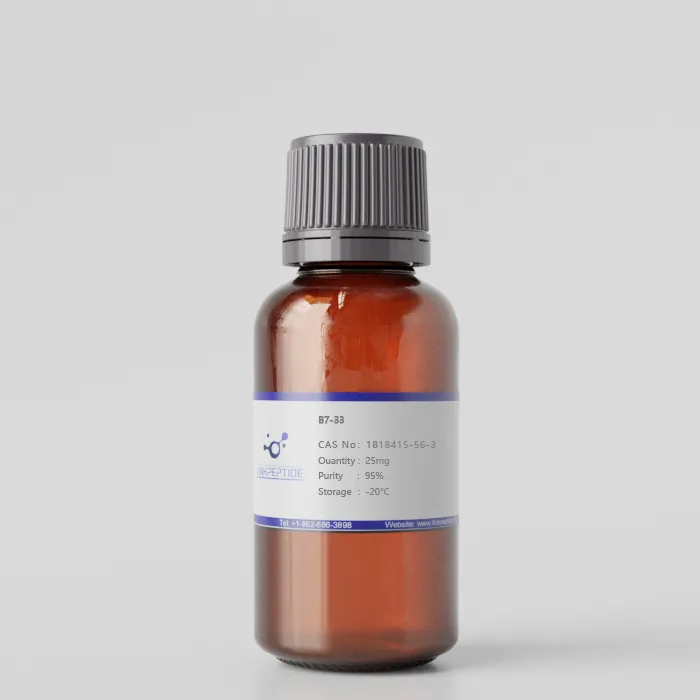
Product Name:B7-33
CAS No:1818415-56-3
Molar Mass:2986.54
Chemical Formula:C131H229N41O36S
Storage:-20°C
Sequence:VIKLSGRELVRAQIAISGMSTWSKRSL-NH2
Target:RXFP1
Application:
B7-33 is a single-chain relaxin mimetic that acts as a selective agonist for relaxin receptor 1 (RXFP1). By binding to RXFP1, B7-33 preferentially activates the pERK signaling pathway over the cAMP pathway, which plays a role in cell function and signaling. B7-33 has demonstrated potent anti-fibrotic properties, making it a promising candidate for conditions associated with fibrosis, such as heart failure and chronic kidney disease. Additionally, B7-33 has shown cardioprotective effects, promoting heart health by mitigating fibrosis and improving vascular function. Its unique mechanism of action positions B7-33 as a potential therapeutic for cardiovascular and fibrotic diseases.
Current Research:
B7-33, a selective relaxin receptor 1 (RXFP1) agonist, is an innovative therapeutic agent under investigation for its potential in treating fibrotic diseases and cardiovascular conditions. As a mimetic of the naturally occurring hormone relaxin, B7-33 binds to RXFP1 and selectively activates the pERK signaling pathway over cAMP, providing distinct cellular effects that are of interest in regenerative medicine and tissue remodeling.
Recent studies have explored B7-33's anti-fibrotic properties. A study published in Frontiers in Pharmacology (2023) investigated the impact of B7-33 on fibrosis in animal models of chronic heart failure. The research found that B7-33 significantly reduced myocardial fibrosis, improved cardiac function, and enhanced vascular remodeling. This anti-fibrotic effect is thought to occur through the modulation of RXFP1 signaling, leading to a reduction in the accumulation of extracellular matrix components that contribute to fibrosis in heart tissue. These findings suggest that B7-33 could provide therapeutic benefits for heart failure patients, particularly those with fibrosis-induced cardiac dysfunction.
In another study published in Journal of Clinical Investigation (2024), B7-33 was evaluated for its cardioprotective effects in animal models of ischemia-reperfusion injury. The results demonstrated that B7-33 reduced infarct size and improved post-injury heart function by promoting tissue regeneration and reducing oxidative stress. These effects are attributed to the activation of RXFP1 and the downstream pERK pathway, which plays a critical role in cell survival and repair processes.
Given its anti-fibrotic and cardioprotective properties, B7-33 is being further explored as a potential treatment for diseases such as heart failure, chronic kidney disease, and other conditions where fibrosis is a key pathological factor. Ongoing clinical trials aim to evaluate its long-term safety and efficacy in humans.
Reference:
Get a Quote
 LinkPeptide