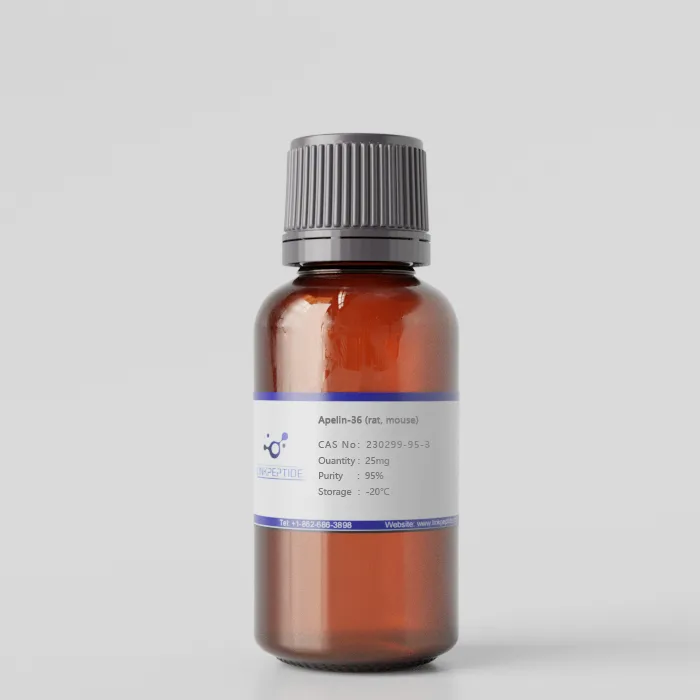
Product Name: Bradykinin
CAS No: 58-82-2
Purity: 95%
Molar Mass: 1060.2
Chemical Formula: C50H73N15O11
Storage: Store at -20 degrees Celsius
Sequence: RPPGFSPFR
Target: bradykinin
Application:
Bradykinin is a peptide that plays a crucial role in the regulation of blood pressure, inflammation, and pain. It functions by binding to B1 and B2 receptors, leading to vasodilation, increased vascular permeability, and the activation of pain pathways. Bradykinin is involved in various physiological and pathological processes, including the inflammatory response, smooth muscle contraction, and the regulation of blood flow. Its effects on vascular tone and permeability make it a key mediator in conditions such as angioedema, hypertension, and chronic pain. Bradykinin's broad range of actions makes it an important target for research and therapeutic interventions in cardiovascular and inflammatory diseases.
Current Research:
Bradykinin, a nine-amino-acid peptide, is a critical mediator in the kallikrein-kinin system and plays a pivotal role in various physiological and pathological processes. It acts through two primary receptors, bradykinin receptor B1 (B1R) and bradykinin receptor B2 (B2R), both of which are G-protein-coupled receptors. While B2R mediates most of the constitutive effects of bradykinin, such as vasodilation and smooth muscle relaxation, B1R is upregulated during tissue injury or inflammation, driving pro-inflammatory responses.
In cardiovascular research, bradykinin has been extensively studied for its vasodilatory effects mediated through endothelial nitric oxide and prostacyclin release. This action contributes to its antihypertensive properties and protective roles in ischemic preconditioning, where it limits myocardial injury during reperfusion.
Bradykinin also plays a significant role in inflammation, promoting vascular permeability and pain signaling. It contributes to the pathophysiology of conditions such as hereditary angioedema, where excessive bradykinin production leads to recurrent swelling episodes. Targeted therapies, including B2R antagonists and kallikrein inhibitors, have been developed to mitigate these effects, providing effective management of bradykinin-mediated disorders.
In oncology, bradykinin's influence on the tumor microenvironment has garnered attention. It enhances vascular permeability, facilitating tumor angiogenesis and metastasis. Understanding its role in cancer progression may lead to novel therapeutic approaches targeting bradykinin signaling pathways.
Recent studies also explore bradykinin’s involvement in neurological conditions, including stroke and neuroinflammation. By modulating blood-brain barrier permeability and inflammatory responses, bradykinin signaling is implicated in both protective and pathological processes, depending on the context.
In summary, bradykinin serves as a crucial modulator in inflammation, cardiovascular health, and beyond. Its diverse effects on vascular, inflammatory, and neural systems highlight its potential as a therapeutic target across multiple disciplines. Ongoing research continues to uncover its multifaceted roles and applications in drug discovery.
Reference:
Get a Quote
 LinkPeptide

![[Orn5]-URP](https://www.linkpeptide.com/wp-content/uploads/2024/10/Orn5-URP-jpg-3.webp "[Orn5]-URP")