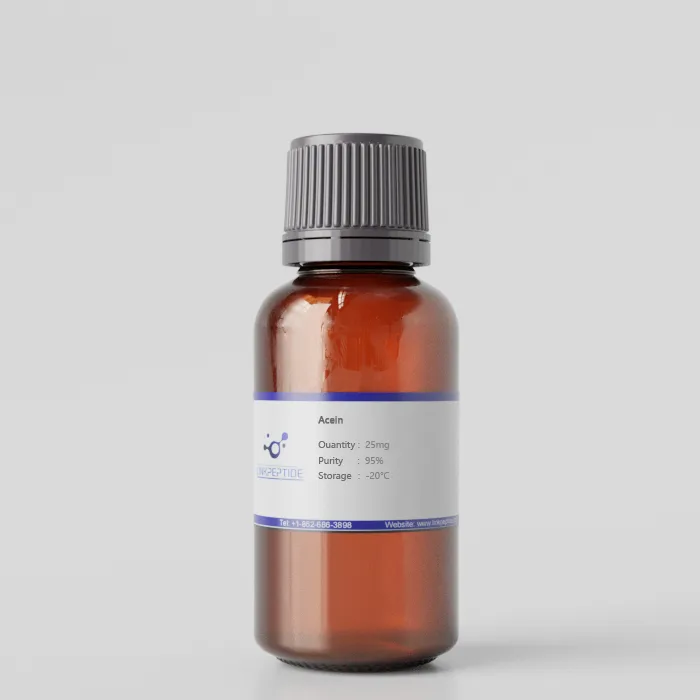
Product Name:Acein
Purity:95%
Molar Mass:932.5
Chemical Formula:C43H68N10O13
Storage:Store at -20 degrees Celsius
Sequence:PPTTTKFAA
Application:
Acein is a peptide toxin derived from the venom of the spider Agelenopsis aperta. It acts as a potent blocker of N-type voltage-gated calcium channels, which are essential for neurotransmitter release and pain signal transmission. By inhibiting these channels, Acein has garnered attention for its potential in managing chronic pain conditions. Its selective inhibition of calcium channels makes it a valuable tool for research on neuronal excitability, neurotransmission, and pain pathways. Acein is particularly useful in exploring novel therapeutic strategies for treating chronic pain and other neurological disorders where calcium channel modulation plays a critical role.
Current Research:
Acein is a synthetic nonapeptide with the sequence H-Pro-Pro-Thr-Thr-Thr-Lys-Phe-Ala-Ala-OH, known for its ability to modulate the angiotensin-converting enzyme (ACE) and stimulate dopamine secretion. These properties have positioned Acein as a subject of interest in research related to aging and neurodegenerative diseases.
ACE Modulation
As an ACE modulator, Acein influences the renin-angiotensin system, which plays a crucial role in regulating blood pressure and fluid balance. By targeting ACE, Acein may affect the conversion of angiotensin I to angiotensin II, thereby impacting cardiovascular functions. This mechanism suggests potential therapeutic applications in conditions associated with ACE activity.
Dopamine Secretion Enhancement
Research indicates that Acein can promote dopamine secretion by inhibiting the expression of the clec-126 gene. In studies involving Caenorhabditis elegans, Acein increased dopamine levels, which was associated with extended lifespan and improved motor functions. These findings suggest that Acein's ability to enhance dopamine secretion could have implications for aging and neurodegenerative conditions where dopamine deficiency is a factor.
Potential Therapeutic Applications
The dual functionality of Acein in modulating ACE and enhancing dopamine secretion presents potential therapeutic avenues:
Neurodegenerative Diseases: By increasing dopamine levels, Acein may offer benefits in conditions like Parkinson's disease, where dopamine deficiency is a hallmark.
Cardiovascular Health: Through ACE modulation, Acein could contribute to the management of hypertension and related cardiovascular disorders.
Current Research Status
Despite its promising biological activities, the development of Acein as a therapeutic agent has not progressed significantly. Initial research was conducted by Universit?? de Montpellier II, focusing on its role as an ACE modulator for neurological conditions. However, there have been no substantial advancements in clinical applications to date.
Conclusion
Acein's capacity to modulate ACE activity and enhance dopamine secretion underscores its potential in therapeutic strategies for aging-related and neurodegenerative diseases. Ongoing research is essential to fully elucidate its mechanisms and to explore its efficacy and safety in clinical settings.
Reference:
Get a Quote
 LinkPeptide

![[Orn5]-URP](https://www.linkpeptide.com/wp-content/uploads/2024/10/Orn5-URP-jpg-3.webp "[Orn5]-URP")