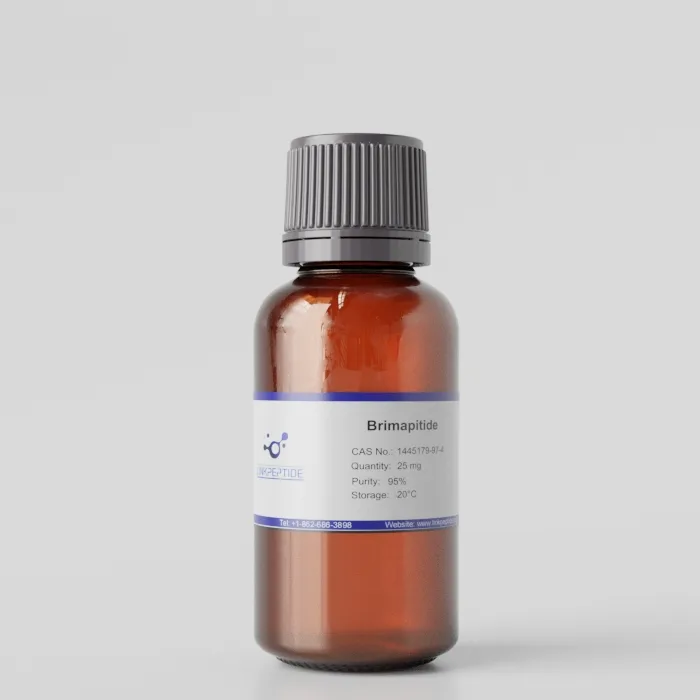
Product Name: Brimapitide
Form: Free base
CAS No: 1445179-97-4
Molar Mass: 3822.44
Chemical Formula: C164H286N66O40
Synonyms: XG-102, AM-111
Storage: Store at -20℃
Sequence: DQSRPVQPFLNLTTPRKPRPPRRRQRRKKRG
Target: JNK
Application:
Brimapitide (CAS: 1445179-97-4) is a synthetic peptide-based drug currently under investigation for its potential therapeutic applications in conditions related to the gastrointestinal system, particularly in the treatment of gastrointestinal disorders such as inflammatory bowel disease (IBD). Brimapitide functions by targeting specific receptors or pathways involved in the regulation of gastrointestinal inflammation and immune responses. It is designed to modulate these pathways to alleviate symptoms associated with IBD, such as abdominal pain, diarrhea, and mucosal inflammation. In pharmaceutical chemistry, brimapitide's targeted approach to addressing gastrointestinal inflammation represents a promising avenue for the development of novel therapies for IBD and other related conditions. Clinical trials are underway to evaluate its safety, efficacy, and therapeutic potential in patients with IBD, with the aim of providing new treatment options for individuals affected by these debilitating diseases.
Current Research:
Brimapitide is a novel peptide currently under investigation for its therapeutic potential in cancer immunotherapy and autoimmune diseases. The peptide targets G-protein coupled receptors (GPCRs) involved in immune regulation and tumor microenvironment modulation, making it a promising candidate for combination therapies aimed at improving the immune response against cancers and managing inflammatory diseases. Brimapitide is designed to enhance immune system activity while minimizing immune suppression, a key limitation of many existing treatments.
Mechanism of Action
Brimapitide functions by interacting with specific GPCRs that play a crucial role in the activation and trafficking of immune cells. By binding to these receptors, Brimapitide is able to modulate immune cell migration, promoting the recruitment of immune cells to sites of inflammation or tumor tissues. In cancer, it works by promoting immune cell infiltration into tumors, which is often a barrier to effective immunotherapy. The peptide also works by enhancing T-cell activation and tumor antigen presentation, allowing the immune system to better recognize and target cancer cells. In autoimmune diseases, Brimapitide can help to restore immune tolerance by reducing the activity of autoreactive T cells and modulating inflammatory cytokine release. This makes Brimapitide a potential therapeutic for both cancer immunotherapy and autoimmune conditions, where immune modulation is a key treatment strategy.
Indications and Uses
Brimapitide is being developed for potential use in oncology and autoimmune disorders. In oncology, the peptide is being studied for its ability to enhance the effectiveness of immunotherapies like immune checkpoint inhibitors, tumor vaccines, and cytokine therapies. By boosting immune cell infiltration into tumors and enhancing T-cell responses, Brimapitide aims to overcome immune evasion mechanisms and improve patient outcomes in cancers such as non-small cell lung cancer (NSCLC), melanoma, and head and neck squamous cell carcinoma (HNSCC). In autoimmune diseases, including rheumatoid arthritis (RA) and multiple sclerosis (MS), Brimapitide could help modulate immune responses to prevent self-attack on healthy tissues, offering a more targeted and safer approach compared to traditional immunosuppressive drugs.
Efficacy and Clinical Benefits
Preclinical studies have shown that Brimapitide can promote immune activation and enhance the tumor-targeting activity of immune cells. These studies have demonstrated that when combined with other immunotherapeutic agents, Brimapitide can increase tumor shrinkage and prolong survival in mouse models of various cancers. Early-phase clinical trials have also shown that Brimapitide can mobilize immune cells to the tumor site and enhance antitumor immunity, with preliminary data suggesting improved responses in patients treated with checkpoint inhibitors. Furthermore, studies investigating Brimapitide in autoimmune models have shown its potential to modulate inflammatory responses, reducing the severity of disease symptoms and preventing tissue damage in models of autoimmune arthritis and demyelinating diseases. These results suggest that Brimapitide has the potential to be an effective adjuvant therapy in both cancer and autoimmune conditions.
Safety and Tolerability
In early clinical studies, Brimapitide has exhibited a favorable safety profile, with the majority of adverse effects being mild and transient. The most common side effects include injection site reactions and mild flu-like symptoms. Since the peptide works by modulating the immune system, there is a need to monitor for potential autoimmune flares or overactivation of the immune system, which could lead to increased inflammation or tissue damage in some individuals. However, so far, no significant immune-related adverse events have been observed in early trials. Further clinical testing will be necessary to confirm its long-term safety and tolerability, particularly in combination with other immune-modulating therapies.
Advantages and Limitations
The main advantage of Brimapitide lies in its selective immune modulation, which offers a targeted approach to treating cancer and autoimmune diseases without broadly suppressing the immune system. This targeted mechanism could potentially reduce the risk of infections and immune suppression, which are common side effects of traditional immunotherapies. Additionally, Brimapitide’s ability to enhance immune cell recruitment to tumors or sites of inflammation could improve the efficacy of existing cancer treatments and reduce disease activity in autoimmune conditions. However, limitations include the injectable administration of the peptide, which may affect patient compliance, and the fact that the peptide’s long-term efficacy and safety have yet to be fully established, requiring further clinical studies.
Future Directions
Future research on Brimapitide will focus on optimizing its use in combination therapies for cancer and autoimmune diseases. Ongoing clinical trials will assess its synergistic effects when combined with checkpoint inhibitors, tumor vaccines, and cytokine therapies in cancer. Additionally, Brimapitide’s potential in modulating chronic inflammation in autoimmune diseases will be further explored, with the aim of improving patient quality of life and reducing the need for traditional immunosuppressive drugs. As more data becomes available, Brimapitide may have broader applications in immune-based therapies for various malignancies and autoimmune disorders.
Reference:
Get a Quote
 LinkPeptide