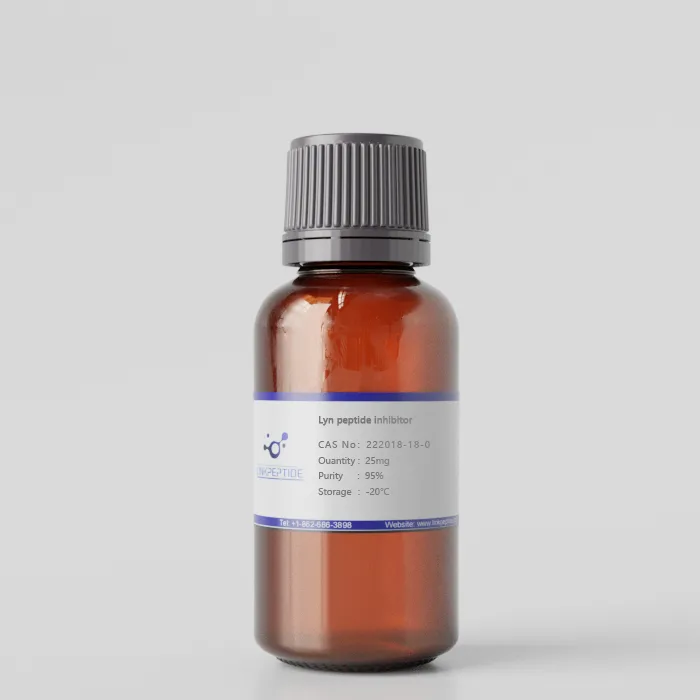
Product Name:Lyn peptide inhibitor
CAS No:222018-18-0
Purity:95%
Molar Mass:2370.91
Chemical Formula:C115H184N30O24
Storage:Store at -20 degrees Celsius
Sequence:YGYRLRRKWEEKIPNP
Target:Lyn
Application:
Lyn Peptide Inhibitor is a synthetic peptide designed to specifically inhibit the activity of Lyn kinase, a member of the Src family of tyrosine kinases. Lyn kinase plays a critical role in various cellular processes, including signal transduction, regulation of immune responses, and cell proliferation. By inhibiting Lyn kinase, this peptide disrupts downstream signaling pathways, making it a valuable tool in research focused on understanding Lyn's role in immune cell function, cancer progression, and other diseases where Lyn kinase is implicated. The Lyn Peptide Inhibitor is particularly useful for exploring therapeutic strategies that target Lyn kinase in conditions such as leukemia, lymphoma, and autoimmune disorders.
Current Research:
The Lyn peptide inhibitor (CAS: 222018-18-0) is a synthetic, cell-permeable peptide designed to selectively inhibit the Lyn tyrosine kinase, particularly its association with the interleukin-5 (IL-5) receptor signaling pathway. By blocking Lyn activation and its binding to the βc subunit of IL-3, granulocyte-macrophage colony-stimulating factor (GM-CSF), and IL-5 receptors, this inhibitor modulates downstream signaling events.
Mechanism of Action
The Lyn peptide inhibitor specifically disrupts the interaction between Lyn kinase and the βc subunit of cytokine receptors, thereby preventing Lyn's activation. This inhibition affects signaling pathways involved in eosinophil differentiation and survival, which are critical in conditions like asthma and allergic responses.
Biological Activity
Inhibition of Eosinophil Differentiation: The peptide effectively suppresses IL-5 receptor-mediated eosinophil differentiation in vitro.
Reduction of Eosinophil Survival: It decreases the survival of eosinophils by interfering with Lyn-dependent signaling pathways.
Attenuation of Airway Inflammation: In animal models, the inhibitor has been shown to reduce airway eosinophilic inflammation, highlighting its potential therapeutic applications.
Research Applications
Due to its targeted action, the Lyn peptide inhibitor is utilized in studies focusing on:
Understanding the role of Lyn kinase in immune cell signaling and function.
Investigating the molecular mechanisms underlying eosinophil-related disorders.
Developing potential therapeutic strategies for asthma, allergies, and other eosinophilic conditions.
Handling and Storage
For optimal stability, the Lyn peptide inhibitor should be stored desiccated at -20°C. It is soluble in water up to 10 mg/mL, facilitating its use in various experimental protocols.
Conclusion
The Lyn peptide inhibitor serves as a valuable tool in immunological research, offering insights into Lyn kinase-mediated signaling pathways and their implications in eosinophil-associated diseases. Its specificity and efficacy make it a promising candidate for developing targeted therapies in related conditions.
Reference:
Get a Quote
 LinkPeptide