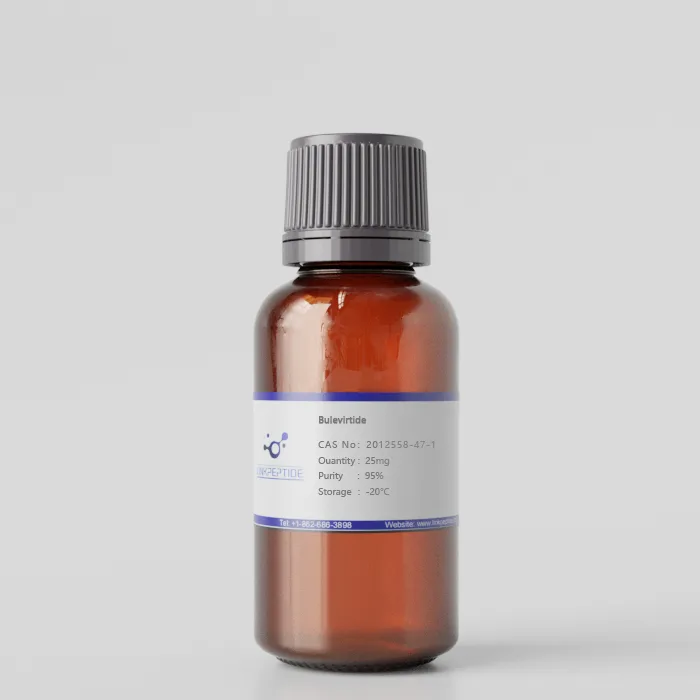
Product Name:Bulevirtide
Form:TFA salt
CAS No:2012558-47-1
Molar Mass:5399
Chemical Formula:C248H355N65O72
Synonyms:Myrcludex B
Storage:-20°C
Sequence:GTNLSVPNPLGFFPDHQLDPAFGANSNNPDWDFNPNKDHWPEANKVG
Target:NTCP
Application:
Bulevirtide is a novel antiviral medication developed for the treatment of chronic hepatitis D, a severe form of hepatitis caused by the hepatitis D virus (HDV). It works by inhibiting the entry of the virus into liver cells by targeting the hepatitis delta virus entry receptor, NTCP (sodium taurocholate cotransporting polypeptide). Bulevirtide blocks the interaction between HDV and the NTCP receptor, preventing the virus from infecting liver cells. This mechanism significantly reduces viral replication. Bulevirtide has been shown to improve liver function and reduce HDV RNA levels in patients, offering a new therapeutic option for those with chronic hepatitis D.
Current Research:
Bulevirtide has emerged as a promising treatment for chronic hepatitis D (CHD), a disease that has long been challenging to manage due to limited therapeutic options. Hepatitis D, caused by the hepatitis delta virus (HDV), often leads to severe liver damage, cirrhosis, and an increased risk of liver cancer. Bulevirtide, a synthetic peptide, works by inhibiting the entry of HDV into liver cells, specifically targeting the NTCP (sodium taurocholate cotransporting polypeptide) receptor that the virus uses to enter hepatocytes.
A pivotal clinical trial, published in Lancet Gastroenterology & Hepatology (2023), assessed the efficacy of bulevirtide in patients with chronic hepatitis D. The study found that bulevirtide significantly reduced HDV RNA levels in patients, with a substantial number achieving undetectable viral loads after 48 weeks of treatment. The reduction in viral replication led to improvements in liver function markers, such as ALT (alanine aminotransferase) and AST (aspartate aminotransferase), indicating decreased liver inflammation and damage. The treatment was well-tolerated, with most adverse events being mild to moderate, including injection site reactions.
Another ongoing study, published in Hepatology (2024), is investigating the long-term effects of bulevirtide in combination with other antivirals like pegylated interferon. Early results suggest that the combination therapy could lead to even greater reductions in HDV RNA levels and improve sustained virological response rates, offering the potential for a more effective treatment regimen for patients with chronic hepatitis D.
Bulevirtide is currently one of the few approved treatments specifically targeting HDV, and its promising results have made it a key component in ongoing efforts to combat hepatitis D. Continued research is needed to refine its use and evaluate long-term safety and effectiveness.
Reference:
Kang, C., & Syed, Y. Y. (2020). Bulevirtide: first approval. Drugs, 80(15), 1601-1605.
Get a Quote
 LinkPeptide