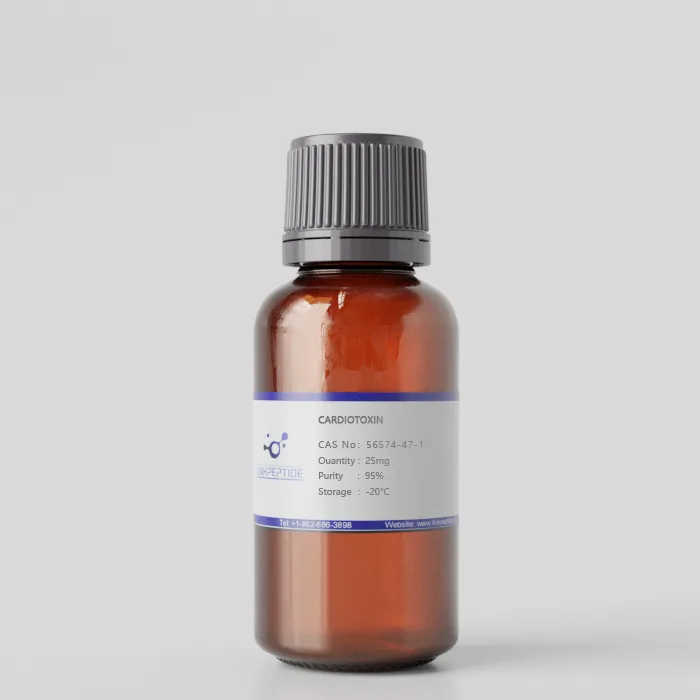
Product Name:CARDIOTOXIN
Synonyms:CYTOTOXIN; CARDIOTOXIN; CARDIOTOXIN, NAJA NIGRICOLLIS; NAJA MOSSAMBICA MOSSAMBICA CARDIOTOXIN; NAJA MOSSAMBICA MOSSAMBICA TOXIN;NAJA MOSSAMBICA MOSSAMBICA CARDIOTOXIN
CAS No:56574-47-1
Purity:95%
Molar Mass:6800
Chemical Formula:C298H493N81O77S12
Storage:Store at -20 degrees Celsius
Sequence:LKCNQLIPPF WKTCPKGKNL CYKMTMRAAP MVPVKRGCID VCPKSSLLIK YMCCNTDKCN
Application:
Cardiotoxin is a bioactive peptide derived from the venom of certain snake species, particularly from cobras (Naja spp.). It exerts its effects by disrupting the integrity of cell membranes, leading to cell lysis and apoptosis, particularly in cardiac muscle cells. This peptide is extensively studied for its role in understanding membrane dynamics, cytotoxicity, and the molecular mechanisms underlying venom toxicity. Cardiotoxin is also used in research exploring novel therapeutic strategies for heart diseases and as a tool in cancer research due to its cytolytic properties. With its high specificity and potency, Cardiotoxin is crucial for advanced studies in toxicology, pharmacology, and cell biology.
Current Research:
Cardiotoxin, a potent polypeptide derived from snake venom, plays a critical role in advancing biomedical and pharmaceutical research. Known for its unique ability to disrupt cell membranes and induce cytotoxic effects, Cardiotoxin serves as a valuable model for studying cellular physiology, membrane dynamics, and cytolytic mechanisms.
Cardiotoxins specifically target cell membranes by binding to phospholipids, disrupting their structure, and inducing pore formation. This action results in calcium influx and subsequent cell death, making Cardiotoxin a model system for investigating necrotic and apoptotic pathways. These mechanisms are of particular interest in studying the pathophysiology of cardiovascular diseases, cancer, and immune responses.
In preclinical settings, Cardiotoxin has been instrumental in studying the interactions between venom-derived peptides and mammalian cell membranes. Its cytotoxic properties have provided insights into the development of anticancer strategies, where its selective toxicity toward tumor cells is being explored. Furthermore, its role in modulating immune cell function has highlighted potential applications in understanding immune evasion mechanisms and developing immunomodulatory agents.
Beyond its application in cell biology, Cardiotoxin is utilized in high-throughput drug screening to assess the efficacy and safety of membrane-targeting compounds. Its well-characterized structure-function relationship aids researchers in designing peptide-based therapeutics and inhibitors.
Recent advancements in molecular biology have facilitated the synthesis and modification of Cardiotoxin analogs, enhancing their specificity and stability for experimental use. This progress not only improves its application in fundamental research but also paves the way for its potential therapeutic applications.
Cardiotoxin remains a cornerstone in biochemical and pharmacological research, offering profound insights into cellular mechanisms and contributing to the development of innovative therapeutic strategies.
Reference:
Get a Quote
 LinkPeptide

![[Pyr1]-Apelin-13](https://www.linkpeptide.com/wp-content/uploads/2024/10/Pyr1-Apelin-13-jpg-3.webp "[Pyr1]-Apelin-13")