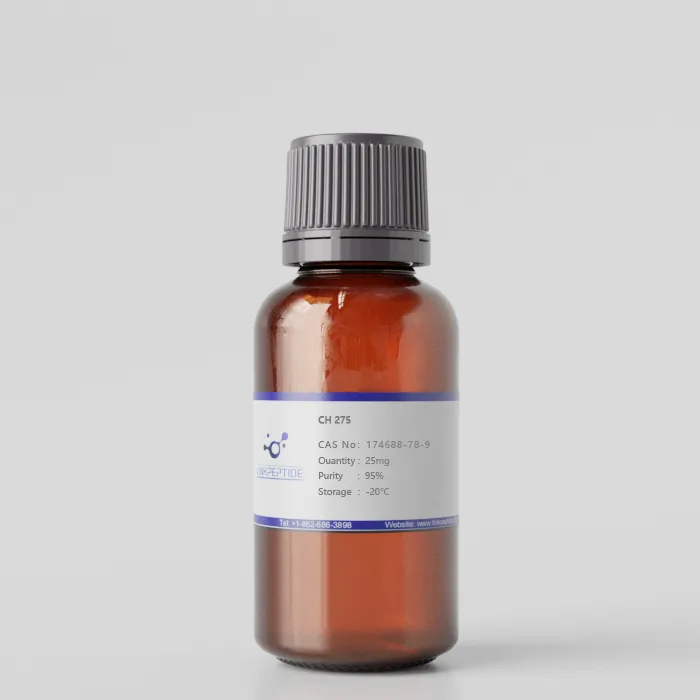
Product Name:CH 275
CAS No:174688-78-9
Purity:95%
Molar Mass:1485.8
Chemical Formula:C74H96N14O15S2
Storage:Store at -20 degrees Celsius
Sequence:CKFFWXTFTSC
Target:sst1
Application:
CH 275 is a compound that acts as an agonist for the sst1 (somatostatin receptor subtype 1). Somatostatin receptors, particularly sst1, are involved in various physiological processes, including the inhibition of hormone secretion, cell growth regulation, and neurotransmission. CH 275 is utilized in research to study the specific role of sst1 in different biological systems, providing valuable insights into somatostatin receptor signaling. This compound is instrumental in exploring therapeutic approaches for conditions such as endocrine disorders, cancer, and neurodegenerative diseases where somatostatin receptor modulation is of interest.
Current Research:
CH 275 is a potent and selective agonist of the somatostatin receptor subtype 1 (sst1), with an IC₅₀ of 30.9 nM for human sst1. It exhibits significantly lower affinity for other somatostatin receptor subtypes, making it a valuable tool for exploring sst1-mediated biological processes. This specificity minimizes off-target effects, which is particularly advantageous in research and therapeutic contexts.
Current studies highlight its potential in neurodegenerative diseases, especially Alzheimer's disease (AD). CH 275 has been shown to activate neprilysin, a key enzyme in amyloid-beta (Aβ) degradation, in neuronal cultures. This activity is further enhanced when combined with modulators of somatostatin pathways, suggesting its role in mitigating amyloidogenic processes.
In vivo investigations have corroborated these findings. Continuous administration of CH 275 in animal models has demonstrated increased neprilysin activity and reduced amyloid plaque deposition in the hippocampus, a region critically affected in AD. Long-term studies report significant reductions in Aβ plaque burden without observable toxicity, underlining its therapeutic potential.
Additionally, CH 275’s specificity for sst1 allows precise modulation of receptor-mediated pathways, reducing unwanted interactions with other somatostatin receptor subtypes. This property is critical for advancing its application in targeted therapies.
Future research is focused on elucidating the detailed molecular mechanisms of CH 275 and evaluating its clinical viability. Its ability to influence amyloid degradation pathways and its favorable safety profile position it as a promising candidate for addressing the pathophysiology of neurodegenerative diseases.
Reference:
Get a Quote
 LinkPeptide

![SCYLLATOXIN [Tyr2]-](https://www.linkpeptide.com/wp-content/uploads/2024/10/SCYLLATOXIN-Tyr2-jpg-2.webp "SCYLLATOXIN [Tyr2]-")