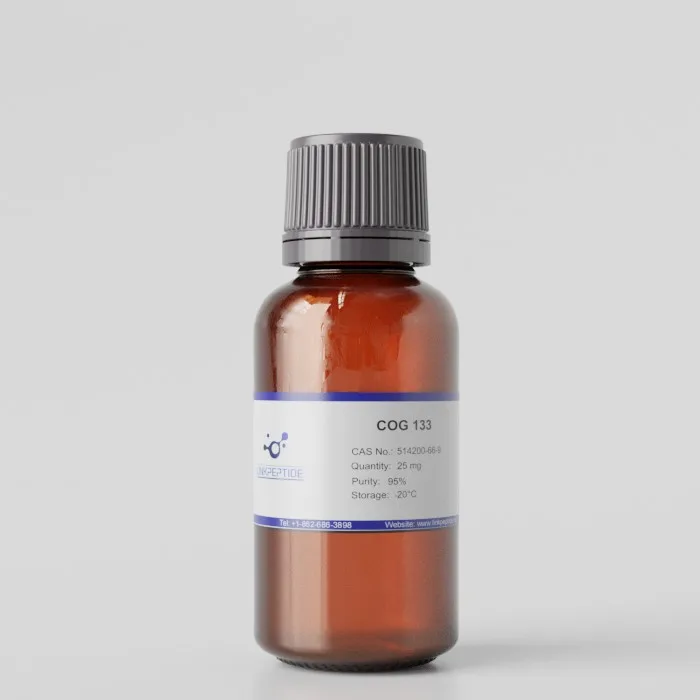
Product Name: COG 133
CAS No: 514200-66-9
Purity: 95%
Molar Mass: 2169.7
Chemical Formula: C97H181N37O19
Storage: Store at -20 degree celsius
Sequence: LRVRLASHLRKLRKRLL
Target: α7 nicotinic acetylcholine
Application: COG 133 is a synthetic peptide derived from the apolipoprotein E (apoE) protein, known for its neuroprotective properties. It functions by mimicking the receptor-binding region of apoE, thereby inhibiting the interactions between apoE and its receptors on cell surfaces. This mechanism reduces oxidative stress and inflammation in the nervous system. COG 133 is primarily used in neurological research, including studies on Alzheimer's disease, stroke, and other neurodegenerative conditions. Its applications extend to therapeutic development for brain injuries and neuroinflammatory diseases.
Current Research:
COG 133 is a synthetic peptide fragment derived from apolipoprotein E (ApoE), encompassing residues 133 to 149. This peptide has garnered significant interest due to its potent anti-inflammatory and neuroprotective properties. By mimicking specific regions of ApoE, COG 133 interacts with low-density lipoprotein receptors and exhibits antagonistic activity against nicotinic acetylcholine receptors (nAChRs), with an IC?? of approximately 445 nM.
In preclinical studies, COG 133 has demonstrated efficacy in reducing symptoms of experimental autoimmune encephalomyelitis, an animal model of multiple sclerosis. Treatment with this peptide resulted in decreased inflammation, demyelination, and cellular infiltration within the spinal cord, indicating its potential in modulating immune responses and providing neuroprotection.
Further research has explored the therapeutic applications of COG 133 in chemotherapy-induced intestinal mucositis. Administration of the peptide in murine models challenged with 5-fluorouracil led to amelioration of intestinal damage, reduction in pro-inflammatory cytokine levels, and enhancement of epithelial cell proliferation and migration. These findings suggest that COG 133 may offer protective effects against gastrointestinal toxicity associated with cancer treatments.
Additionally, COG 133 has been investigated for its role in cancer immunotherapy. Studies indicate that inhibition of ApoE, through agents like COG 133, can potentiate the efficacy of immune checkpoint therapies, such as anti-PD-1 antibodies. This combination approach has shown promise in curbing tumor development and promoting regression, potentially by modulating tumor-associated macrophage populations and enhancing anti-tumor immune responses.
In summary, COG 133 represents a promising therapeutic agent with multifaceted applications in neuroinflammatory diseases, chemotherapy-induced mucositis, and cancer immunotherapy. Its ability to modulate immune functions and provide neuroprotection underscores its potential in addressing complex pathological conditions. Ongoing research aims to further elucidate its mechanisms of action and optimize its clinical utility.
Get a Quote
 LinkPeptide