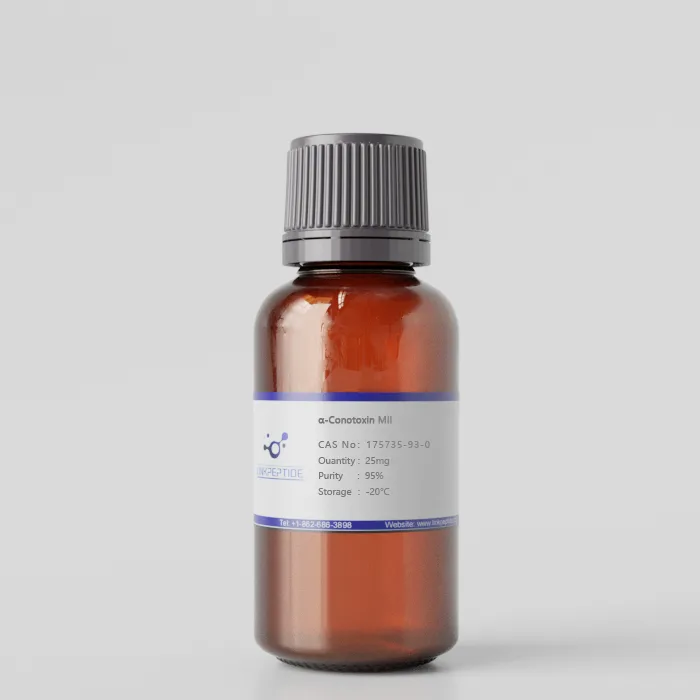
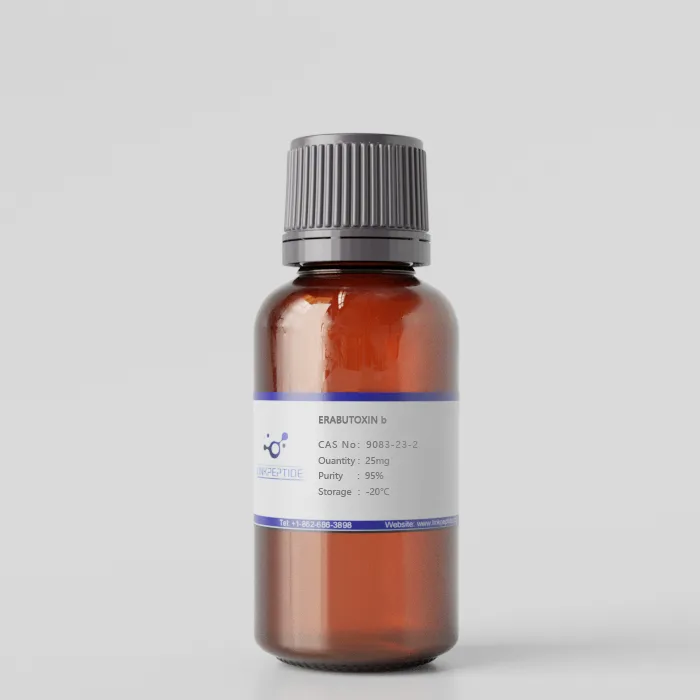
Product Name:α-Conotoxin MII
CAS No:175735-93-0
Purity:95%
Molar Mass:1710.99
Chemical Formula:C67H103N23O22S4
Storage:Store at -20 degrees Celsius
Sequence:GCCSNPVCHLEHSNLC
Target:nAChRs
Application:
α-Conotoxin MII is a peptide toxin derived from the venom of the marine cone snail Conus magus. It is a potent and selective antagonist of the nicotinic acetylcholine receptors (nAChRs), particularly the α3β2 subtype. This receptor subtype is primarily found in the nervous system and is involved in various physiological processes, including neurotransmission, pain sensation, and addiction. Due to its high selectivity, α-Conotoxin MII is a valuable tool in research to study the function of nAChRs, especially in relation to neurophysiological processes and neurological disorders. It is often used to explore therapeutic potentials for conditions such as chronic pain, addiction, and neurodegenerative diseases.
Current Research:
α-Conotoxin MII: A Specific Antagonist of Nicotinic Acetylcholine Receptors
α-Conotoxin MII is a peptide toxin isolated from the venom of the marine cone snail Conus magus. It is a member of the α-conotoxin family, known for their ability to selectively target nicotinic acetylcholine receptors (nAChRs). α-Conotoxin MII specifically antagonizes the α3β2 subtype of nAChRs, which are implicated in various neurological processes and disorders.
Structure and Binding Specificity
Sequence: The peptide comprises 16 amino acids, with the sequence GCCSNPVCHLEHSNLC. It includes two disulfide bonds, which stabilize its three-dimensional structure and are critical for its activity.
Receptor Specificity: α-Conotoxin MII selectively binds to the α3β2 nAChR subtype with high affinity. It demonstrates minimal activity on other nAChR subtypes, making it a valuable tool for receptor-specific studies.
Mechanism of Action
α-Conotoxin MII acts as a competitive antagonist at the α3β2 nAChR. By blocking the binding of acetylcholine, it inhibits receptor activation, modulating downstream signaling pathways. This selective antagonism allows for detailed investigations into the physiological roles of α3β2 nAChRs.
Research Applications
Neurological Studies:
Used to study the role of α3β2 nAChRs in synaptic transmission and neurological disorders.
Provides insights into receptor contributions to conditions such as addiction, schizophrenia, and Parkinson’s disease.
Addiction Research:
The α3β2 nAChR subtype is involved in dopamine release in the mesolimbic pathway, a key component of addiction mechanisms. α-Conotoxin MII helps dissect these pathways and evaluate potential therapeutic targets.
Pain Modulation:
Explored in pain research to understand nAChR involvement in sensory signal processing and potential therapeutic implications.
Drug Development:
Serves as a reference compound in developing selective modulators or inhibitors targeting specific nAChR subtypes.
Handling and Storage
Storage: Store the lyophilized peptide at -20°C in a desiccated environment to preserve stability.
Reconstitution: Reconstitute in sterile water or a suitable buffer for experimental applications.
Conclusion
α-Conotoxin MII is a highly specific tool for studying the α3β2 nAChR subtype. Its selectivity and potency provide significant insights into the physiological and pathological roles of nicotinic acetylcholine receptors, advancing research in neuroscience, addiction, and pain modulation.
Reference:
Get a Quote
 LinkPeptide