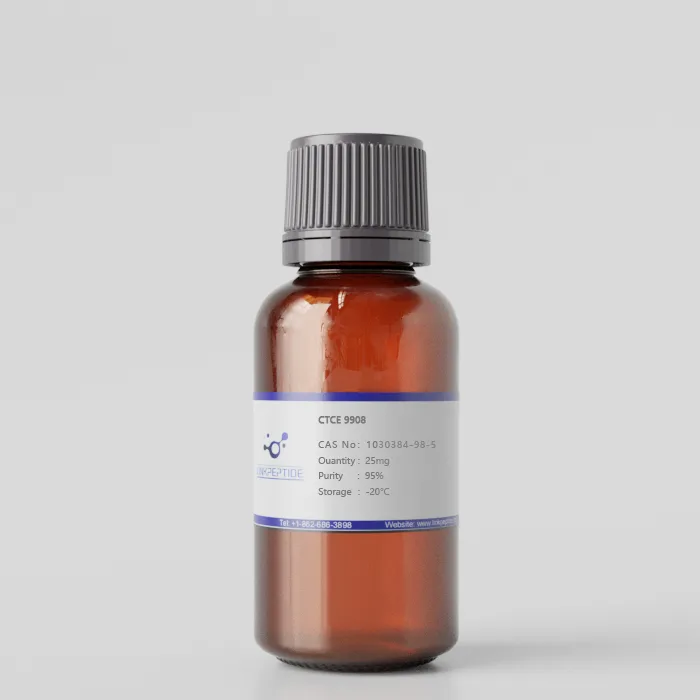
Product Name:CTCE 9908
CAS No:1030384-98-5
Purity:95%
Molar Mass:1927.25
Chemical Formula:C86H147N27O23
Storage:Store at -20 degrees Celsius
Sequence:Sequence 1:KGVSLSYRK-NH2;Sequence 1':KGVSLSYR
Target:CXCR4
Application:
CTCE 9908 is a peptide antagonist of the CXCR4 receptor, which is involved in the regulation of cell migration and homing, particularly in the context of cancer metastasis. CXCR4 and its ligand, SDF-1 (stromal cell-derived factor 1), play a key role in the metastatic spread of cancer cells to organs like the bone marrow and lungs. By inhibiting the CXCR4-SDF-1 interaction, CTCE 9908 has been studied for its potential to reduce tumor growth, inhibit metastasis, and enhance the effectiveness of other cancer therapies. It is a valuable tool in cancer research focused on disrupting the tumor microenvironment and metastatic pathways.
Current Research:
CTCE-9908 is a synthetic peptide antagonist of the C-X-C chemokine receptor type 4 (CXCR4), a receptor implicated in various physiological and pathological processes, including cancer metastasis. By inhibiting the interaction between CXCR4 and its ligand, stromal cell-derived factor 1 (SDF-1 or CXCL12), CTCE-9908 disrupts signaling pathways that facilitate tumor cell migration and proliferation.
Mechanism of Action
CTCE-9908 competitively binds to CXCR4, preventing SDF-1 from activating the receptor. This blockade hinders downstream signaling pathways involved in cell migration, adhesion, and survival, thereby inhibiting processes such as metastasis and angiogenesis. In ovarian cancer cells, CTCE-9908 has been shown to induce mitotic catastrophe, leading to cell death, and to inhibit cell migration toward SDF-1.
Preclinical and Clinical Studies
Preclinical studies have demonstrated that CTCE-9908 effectively reduces tumor growth and metastasis in various cancer models, including breast cancer, osteosarcoma, and melanoma. For instance, in a transgenic mouse model of metastatic breast cancer, treatment with CTCE-9908 resulted in a significant reduction in primary tumor growth and metastatic spread.
A Phase I/II clinical trial evaluated the safety, pharmacokinetics, and preliminary efficacy of CTCE-9908 in patients with advanced solid tumors. The study reported that CTCE-9908 was well-tolerated, with manageable side effects, and showed signs of antitumor activity, particularly in patients with ovarian cancer.
Potential Therapeutic Applications
Given its ability to inhibit CXCR4-mediated signaling, CTCE-9908 holds promise as a therapeutic agent in oncology. By targeting the CXCR4/CXCL12 axis, it may effectively impede tumor progression and metastasis. Additionally, combining CTCE-9908 with other treatments, such as chemotherapy or anti-angiogenic agents, could enhance therapeutic outcomes by disrupting multiple pathways critical for tumor survival and dissemination.
Conclusion
CTCE-9908 represents a promising approach in cancer therapy by targeting the CXCR4/CXCL12 signaling axis. Its efficacy in preclinical models and favorable safety profile in early-phase clinical trials underscore its potential as a novel anticancer agent. Ongoing research aims to further elucidate its therapeutic benefits and to optimize its use in combination with existing cancer treatments.
Reference:
Get a Quote
 LinkPeptide