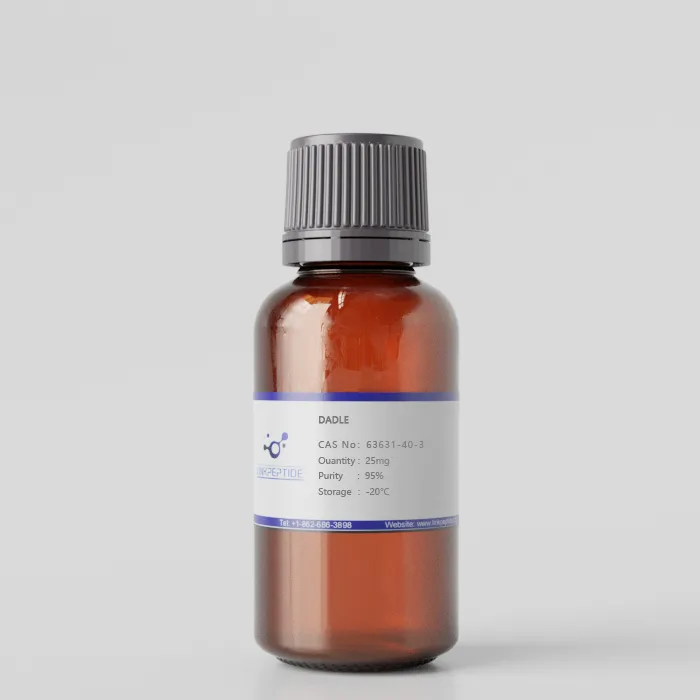
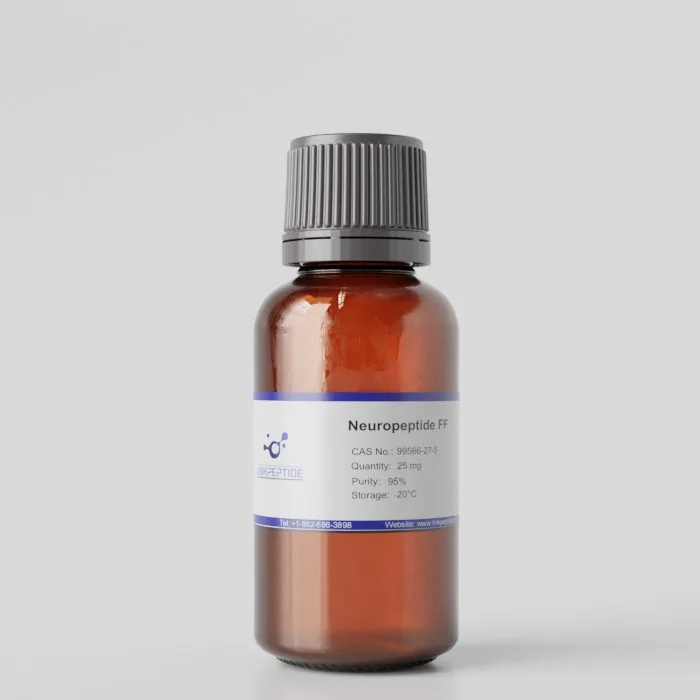
Product Name:DADLE
CAS No:63631-40-3
Purity:95%
Molar Mass:569.66
Chemical Formula:C29H39N5O7
Storage:Store at -20 degrees Celsius
Sequence:YAGFL
Target:??-opioid
Application:DADLE (D-Ala2, D-Leu5-enkephalin) is a synthetic opioid peptide that is a modified analog of the natural enkephalins. It has an amino acid sequence where alanine (Ala) and leucine (Leu) are replaced with their D-form counterparts, which increases its stability and receptor affinity. DADLE acts primarily as a selective agonist for the delta-opioid receptor (??-opioid receptor). It is used in research to study the role of ??-opioid receptors in pain modulation, mood regulation, and addiction. DADLE helps in exploring the therapeutic potential of targeting ??-opioid receptors for pain relief and other neurological disorders.
Current Research:
(D-Ala2, D-Leu?)-Enkephalin (DADLE), a synthetic peptide analog of enkephalin, exhibits high affinity for ??-opioid receptors (DOR) and, to a lesser extent, ???-opioid receptors. Its interaction with these receptors has been extensively studied, revealing significant implications for neuroprotection, analgesia, and cellular survival mechanisms.
Neuroprotective Effects
Activation of DOR by DADLE has demonstrated substantial neuroprotective properties. In models of ischemic stroke, DADLE administration reduced neuronal apoptosis and enhanced cell survival, suggesting its potential in mitigating ischemic brain injury. The underlying mechanisms involve modulation of apoptotic pathways and attenuation of excitotoxic damage.
Analgesic Properties
As a ??-opioid receptor agonist, DADLE exhibits analgesic effects. However, its clinical application is limited due to transient reductions in mean arterial blood pressure and heart rate observed upon administration.
Cellular Survival and Anti-Apoptotic Mechanisms
DADLE has been shown to induce a reversible hibernation-like state in HeLa cells, characterized by reduced metabolic activity and enhanced stress resistance. This state is associated with the formation of hibernation-induced RNA-binding proteins, which play a role in cellular survival under adverse conditions.
Potential Therapeutic Applications
The multifaceted effects of DADLE position it as a promising candidate for therapeutic development in conditions such as neurodegenerative diseases, ischemic injuries, and chronic pain management. Ongoing research aims to elucidate its mechanisms of action and optimize its efficacy and safety profiles for clinical use.
Reference:
Get a Quote
 LinkPeptide