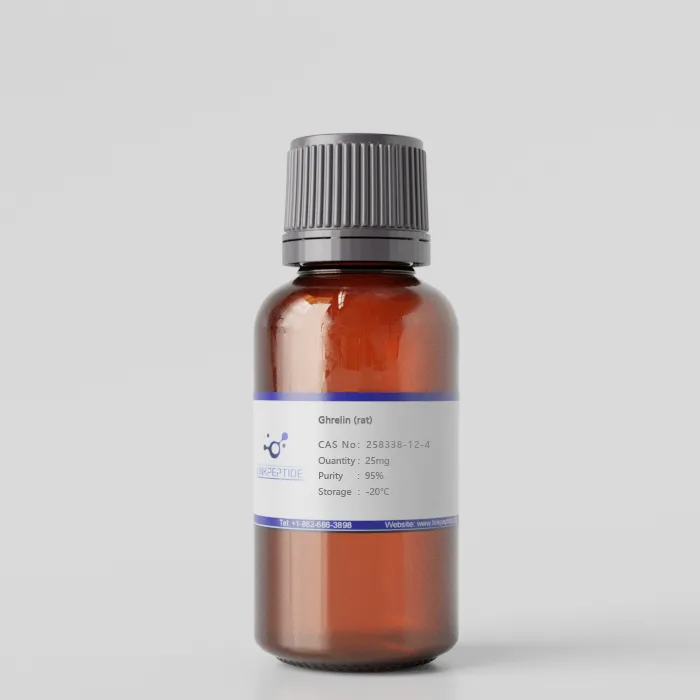
Product Name:Ghrelin (rat)
CAS No:258338-12-4
Purity:95%
Molar Mass:3314.83
Chemical Formula:C147H245N45O42
Storage:Store at -20 degrees Celsius
Sequence:GSSFLSPEHQKAQQRKESKKPPAKLQPR
Target:GHS-R1a
Application:
Ghrelin (rat) is an endogenous peptide hormone that mirrors the functions of its human counterpart, playing a crucial role in appetite stimulation, energy balance, and growth hormone release in rodent models. Composed of 28 amino acids, it is primarily secreted by the stomach and acts on the growth hormone secretagogue receptor (GHS-R1a) to regulate various physiological processes, including glucose metabolism and gastrointestinal motility. Ghrelin (rat) is extensively utilized in preclinical research to investigate metabolic disorders, obesity, and the mechanisms of energy regulation, providing a foundation for developing therapeutic strategies applicable to human health.
Current Research:
Ghrelin is a 28-amino acid peptide hormone predominantly produced in the stomach, with critical roles in regulating appetite, energy balance, and growth hormone secretion. In rats, the sequence and function of ghrelin are highly conserved, making it a widely studied model for understanding this hormone's physiological and pathological effects. Structure Sequence: Rat ghrelin's amino acid sequence is identical to that of human ghrelin: GSSFLSPEHQKAQQRKESKKPPAKLQPR Octanoylation: The serine residue at position 3 is acylated with an n-octanoic acid group. This modification is essential for receptor binding and biological activity. Mechanism of Action Receptor Interaction: Ghrelin binds to the growth hormone secretagogue receptor (GHS-R1a), a G protein-coupled receptor, to exert its effects. Signaling Pathways: Upon receptor binding, ghrelin activates intracellular signaling pathways, including increased cyclic AMP (cAMP) production and calcium mobilization. Physiological Functions Appetite Regulation: Ghrelin is a potent orexigenic hormone that stimulates food intake by activating neurons in the hypothalamic arcuate nucleus. Energy Homeostasis: It promotes fat storage and reduces energy expenditure, playing a central role in metabolic regulation. Growth Hormone Secretion: Ghrelin stimulates growth hormone release from the anterior pituitary, influencing growth and metabolic functions. Gastrointestinal Motility: It enhances gastric emptying and motility, supporting its role in digestive health. Glucose Metabolism: Ghrelin modulates insulin sensitivity and glucose homeostasis, with implications for diabetes research. Research Applications Obesity and Appetite Studies: Used to investigate the hormonal regulation of appetite and to develop anti-obesity therapies targeting ghrelin signaling. Metabolic Disorders: Facilitates studies on energy expenditure, fat metabolism, and glucose homeostasis. Neuroscience: Examines the role of ghrelin in reward behavior, stress, and mood regulation. Drug Development: A critical tool for developing ghrelin receptor antagonists or agonists for treating obesity, cachexia, and metabolic syndrome. Gastrointestinal Research: Explores its effects on motility and potential therapeutic applications for gastroparesis. Handling and Storage Form: Typically supplied as a lyophilized powder. Storage: Store at -20 degrees Celsius in a desiccated environment to maintain stability. Reconstitution: Reconstitute in sterile water or a buffer suitable for experimental conditions. Conclusion Rat ghrelin is a crucial hormone for understanding appetite regulation, energy balance, and growth hormone secretion. Its conservation across species and diverse physiological roles make it a cornerstone of research in metabolism, endocrinology, and drug development.
Reference:
Get a Quote
 LinkPeptide