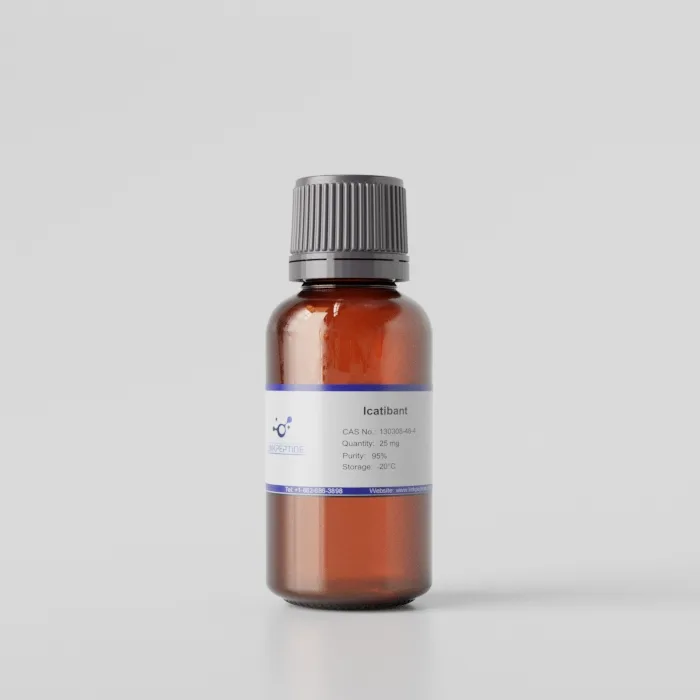
Product Name: Icatibant
Form: Acetate salt
CAS No: 130308-48-4
Molar Mass: 1304.52
Chemical Formula: C59H89N19O13S
Synonyms: D-Arginyl-L-arginyl-L-prolyl-(4R)-4-hydroxy-L-prolylglycyl-3-(2-thienyl)-L-alanyl-L-seryl-(3R)-1,2,3,4-tetrahydro-3-isoquinolinecarbonyl-(2S,3aS,7aS)-octahydro-1H-indole-2-carbonyl-L-arginine (ACI)
Storage: Store at -20℃
Sequence: RRPXGXSXXR
Target: bradykinin B2 receptor
Application:
Icatibant (CAS: 130308-48-4) is a pharmaceutical agent with significance in the field of hereditary angioedema (HAE) management. As a selective bradykinin B2 receptor antagonist, icatibant plays a pivotal role in controlling the symptoms of acute attacks associated with HAE. By blocking the binding of bradykinin to its receptors, icatibant effectively inhibits vasodilation and vascular permeability, which are hallmarks of HAE episodes. The targeted action of icatibant provides rapid relief from symptoms such as swelling and pain. This makes icatibant a crucial tool in the pharmaceutical armamentarium for managing HAE, offering patients a specific and effective intervention to alleviate the impact of this genetic disorder.
Current Research:
Icatibant is a selective bradykinin B2 receptor antagonist used for the treatment of acute attacks of hereditary angioedema (HAE). Hereditary angioedema is a rare genetic disorder characterized by recurrent episodes of swelling, typically in the extremities, abdomen, face, and upper airways. These attacks are caused by an overproduction of bradykinin, a peptide that increases vascular permeability, leading to fluid leakage and edema. Icatibant works by inhibiting the bradykinin B2 receptor, thus reducing the effects of bradykinin and providing relief from the symptoms of HAE attacks. It is administered via subcutaneous injection and provides rapid and effective control of symptoms during acute episodes.
Mechanism of Action
Icatibant exerts its therapeutic effects by selectively binding to the bradykinin B2 receptor, a key mediator of inflammation and vascular permeability. In hereditary angioedema, excess bradykinin activates the B2 receptor, leading to vasodilation, increased vascular permeability, and fluid accumulation in the tissues, resulting in swelling. By blocking this receptor, icatibant prevents bradykinin from exerting its pro-inflammatory effects, thereby reducing the severity and duration of HAE attacks. This action helps to alleviate swelling and discomfort, particularly in the face, abdomen, and respiratory tract, where swelling can be life-threatening.
Indications and Uses
Icatibant is specifically indicated for the treatment of acute attacks of hereditary angioedema in adults and children aged 2 years and older. It is not used for the prevention of attacks, but rather to manage acute episodes once they occur. The drug is administered via subcutaneous injection, typically in a clinical setting, though self-administration is possible once patients are properly trained. Icatibant provides rapid symptom relief, with improvement often seen within hours of administration. It is effective for treating swelling in both the superficial and deeper tissues, including the laryngeal and gastrointestinal tract, where attacks can cause significant morbidity and even be life-threatening.
Efficacy and Clinical Benefits
Icatibant has been shown to significantly reduce the duration and severity of acute HAE attacks. Clinical trials and real-world evidence demonstrate that patients experience relief from swelling and other symptoms, such as pain and gastrointestinal distress, within hours of receiving the drug. Its rapid onset of action is particularly valuable in treating potentially life-threatening laryngeal edema, where timely intervention is crucial to prevent airway obstruction. Icatibant's ability to target the underlying cause of the attack, rather than simply managing symptoms, makes it a highly effective option for acute HAE episodes.
Safety and Tolerability
Icatibant is generally well tolerated, with the most common side effects being mild and temporary. These may include injection site reactions (such as pain, redness, and swelling), fever, headache, and nausea. Serious side effects are rare but may include hypersensitivity reactions and anaphylaxis, although these are uncommon. Icatibant should be used with caution in patients with a history of hypersensitivity to the drug. Long-term safety data suggest that icatibant is well tolerated when used for the treatment of multiple acute attacks over time, with no major safety concerns identified in clinical trials.
Advantages and Limitations
The primary advantage of icatibant is its rapid and effective control of symptoms during acute HAE attacks, particularly in situations where swelling in the airway or abdominal region poses a significant risk to patient health. Its selectivity for the bradykinin B2 receptor ensures that it directly targets the cause of the attack, offering superior symptom relief compared to other treatments like C1 esterase inhibitors. However, the drug does not prevent attacks and is only effective once an episode has begun. Additionally, it is administered via injection, which may limit its convenience for some patients, although self-administration is an option after proper training.
Future Directions
Ongoing research is exploring the potential of icatibant in other bradykinin-mediated conditions, such as angioedema induced by ACE inhibitors, as well as in combination with other treatments for hereditary angioedema. There is also interest in improving patient access to treatment through the development of more convenient administration methods, such as auto-injectors, and expanding its use in pediatric populations. Further studies are being conducted to assess its long-term safety and efficacy in managing recurrent acute attacks and preventing complications associated with chronic HAE.
Reference:
Get a Quote
 LinkPeptide