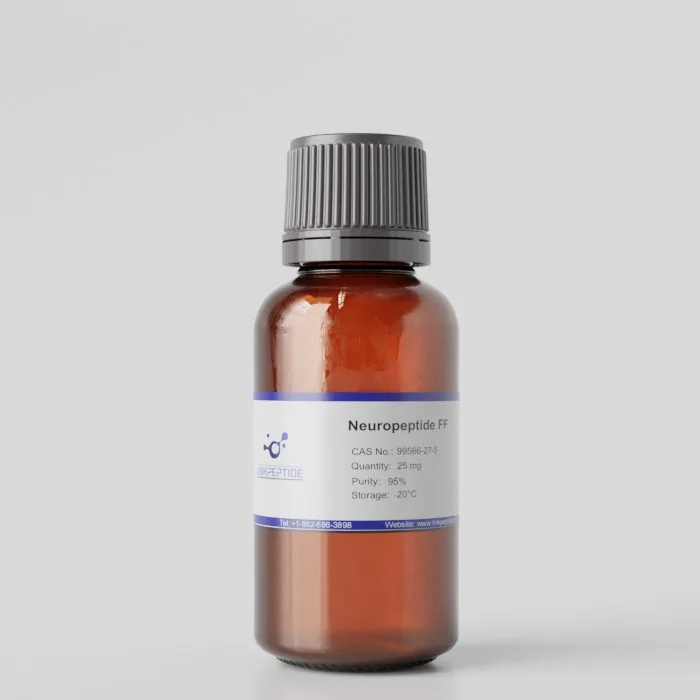
Product Name: Neuropeptide FF
CAS No: 99566-27-5
Purity: 95%
Molar Mass: 1081.3
Chemical Formula: C54H76N14O10
Storage: Store at -20 degrees Celsius
Sequence: FLFQPQRF
Target: NPFF1 and NPFF2
Application:
Neuropeptide FF (NPFF) is a peptide neurotransmitter known for its role in modulating pain, opioid tolerance, and cardiovascular functions. It binds to NPFF1 and NPFF2 receptors, which are involved in the regulation of nociception, opioid receptor activity, and neuroendocrine responses. NPFF has been shown to counteract opioid-induced analgesia and develop tolerance, making it a significant focus of research in pain management and addiction studies. Additionally, NPFF influences blood pressure and heart rate, contributing to its potential therapeutic applications in cardiovascular diseases. Its multifaceted effects on pain, opioid modulation, and cardiovascular functions highlight NPFF's importance in neurobiological and clinical research.
Current Research:
Neuropeptide FF (NPFF) is an endogenous peptide that plays a multifaceted role in modulating pain, opioid tolerance, and energy balance. It acts through specific G-protein-coupled receptors, NPFF1 and NPFF2, which are widely distributed in the central nervous system and peripheral tissues. In the context of pain management, NPFF has been identified as both an anti-opioid and pro-nociceptive peptide. It counteracts opioid-induced analgesia, suggesting its role in the development of opioid tolerance. This interaction positions NPFF as a target for addressing opioid dependency and tolerance while preserving pain relief efficacy. Beyond its involvement in pain modulation, NPFF influences neuroendocrine and cardiovascular systems. It regulates autonomic functions such as blood pressure and heart rate, contributing to homeostatic processes. Studies have also highlighted its role in energy metabolism and feeding behavior, where NPFF can suppress appetite and regulate energy expenditure. NPFF is further implicated in inflammatory responses and neuropathic pain conditions. It enhances the release of pro-inflammatory cytokines and modulates the activity of glial cells, suggesting its contribution to chronic pain and inflammation. Targeting NPFF pathways could provide therapeutic opportunities for conditions such as fibromyalgia and other chronic pain syndromes. Recent research has explored NPFF analogs and receptor-specific modulators as potential therapeutic agents. These studies aim to harness its regulatory properties while mitigating adverse effects, providing new avenues for drug development in pain management, metabolic disorders, and cardiovascular health. In summary, Neuropeptide FF is a versatile molecule with significant implications in pain regulation, energy homeostasis, and autonomic functions. Its dual role in modulating opioid effects and maintaining homeostasis underscores its therapeutic potential, warranting further exploration in both basic and clinical research.
Get a Quote
 LinkPeptide