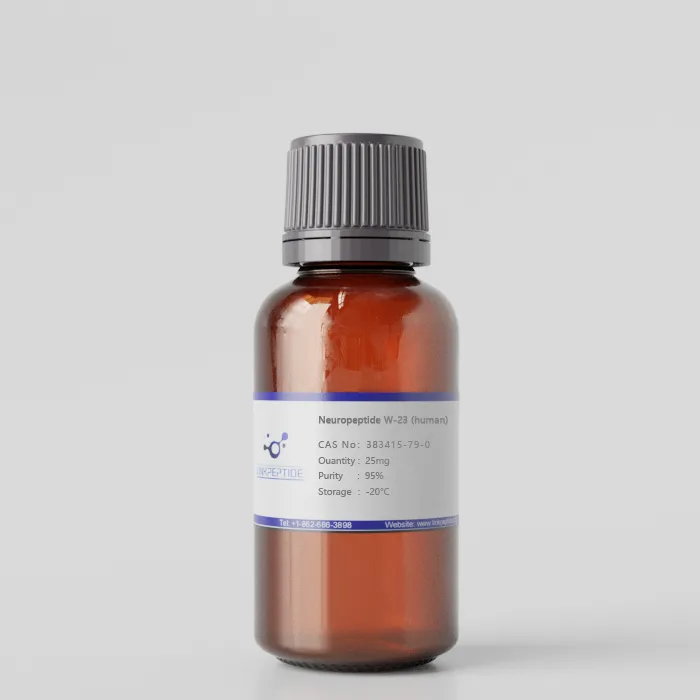
Product Name:Neuropeptide W-23 (human)
CAS No:383415-79-0
Purity:95%
Molar Mass:2584.03
Chemical Formula:C119H183N35O28S
Storage:Store at -20 degrees Celsius
Sequence:WYKHVASPRYHTVGRAAGLLMGL
Target:GPR7 and GPR8
Application:Neuropeptide W-23 (human) is a bioactive peptide involved in regulating various physiological functions, particularly in the central nervous system. It binds to the neuropeptide W receptors, GPR7 and GPR8, and is known to influence processes such as stress response, energy balance, and appetite regulation. Neuropeptide W-23 is also implicated in the modulation of anxiety and pain signaling. Research using Neuropeptide W-23 focuses on its potential therapeutic roles in conditions like metabolic disorders, anxiety, and mood regulation, making it a valuable tool for understanding neuropeptide signaling pathways in human health and disease.
Current Research:
Neuropeptide W-23 (NPW-23) is a 23-amino acid peptide that serves as an endogenous ligand for the G protein-coupled receptors NPBW1 (GPR7) and NPBW2 (GPR8). It plays a significant role in various physiological processes, including the modulation of feeding behavior, energy homeostasis, and neuroendocrine functions.
Structure and Receptor Interaction
NPW-23 is one of the two active forms of Neuropeptide W, the other being Neuropeptide W-30 (NPW-30). Both peptides are derived from the same precursor protein encoded by the NPW gene. NPW-23 exhibits higher efficacy in activating NPBW1 and NPBW2 receptors compared to NPW-30. These receptors are part of the G protein-coupled receptor family and are involved in various signaling pathways.
Physiological Functions
Feeding Behavior and Energy Homeostasis: NPW-23 has been shown to influence feeding behavior and energy balance. Central administration of NPW-23 in rodent models leads to increased food intake and body weight, indicating its orexigenic effects. Additionally, NPW-23 is involved in the regulation of energy expenditure, suggesting a role in maintaining energy homeostasis.
Neuroendocrine Regulation: NPW-23 modulates the release of various hormones. It has been observed to stimulate the secretion of prolactin, corticosterone, and growth hormone, implicating its involvement in the stress response and other neuroendocrine functions.
Cardiovascular Effects: Studies indicate that NPW-23 can influence cardiovascular functions. In conscious rats, intracerebroventricular injection of NPW-23 increases mean arterial pressure and heart rate, suggesting its role in central cardiovascular regulation.
Mechanism of Action
Upon binding to NPBW1 and NPBW2 receptors, NPW-23 activates intracellular signaling cascades, including the phospholipase C (PLC) pathway. This activation leads to an increase in intracellular calcium levels and the activation of protein kinase C (PKC), which are crucial for mediating the physiological effects of NPW-23.
Clinical Implications
Dysregulation of NPW-23 signaling has been associated with various conditions:
Obesity: Given its role in promoting food intake, alterations in NPW-23 levels or receptor activity may contribute to the development of obesity.
Stress-Related Disorders: Since NPW-23 influences the release of stress hormones, it may be implicated in stress-related disorders, including anxiety and depression.
Research Applications
NPW-23 is utilized in research to explore its physiological and pathological roles. Synthetic NPW-23 is employed in vitro to study receptor binding and signaling mechanisms, as well as in vivo to assess its effects on behavior, hormone secretion, and cardiovascular functions.
Conclusion
Neuropeptide W-23 is a critical modulator of various physiological processes, particularly in feeding behavior, energy balance, and neuroendocrine regulation. Ongoing research continues to uncover its diverse roles and potential therapeutic targets for metabolic and stress-related disorders.
Reference:
Get a Quote
 LinkPeptide