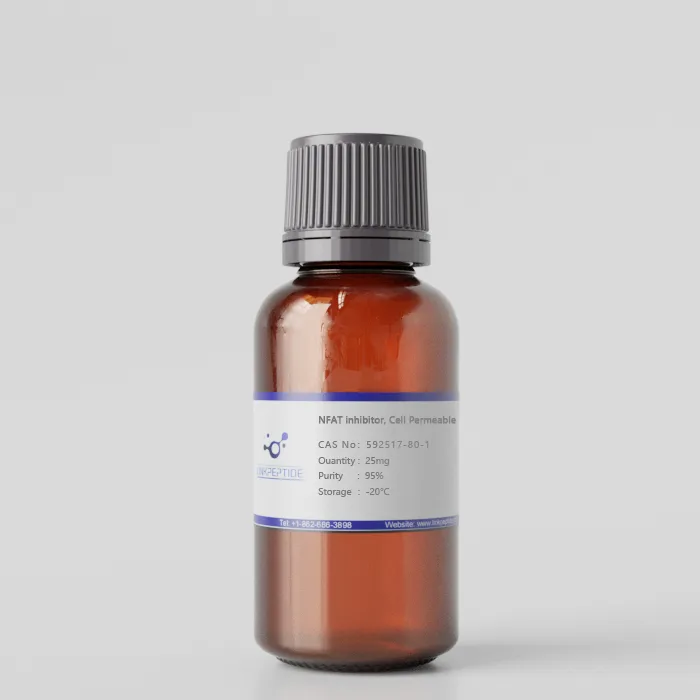
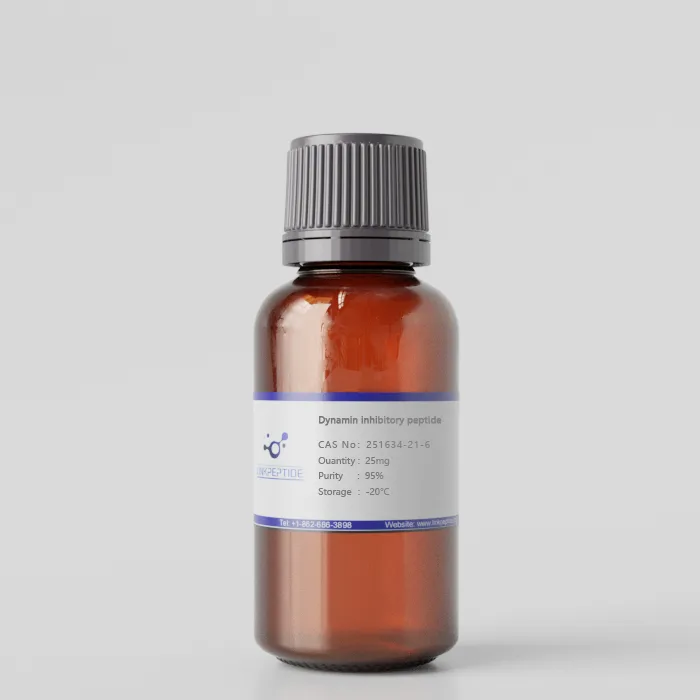
Product Name:NFAT inhibitor, Cell Permeable
CAS No:592517-80-1
Purity:95%
Molar Mass:3573.15
Chemical Formula:C147H259N67O36S
Storage:Store at -20 degrees Celsius
Sequence:RRRRRRRRRRRGGGMAGPHPVIVITGPHEE
Target:NFAT
Application:NFAT inhibitor, cell-permeable, is a compound that effectively blocks the Nuclear Factor of Activated T-cells (NFAT) transcription factor within cells. NFAT is crucial for the regulation of immune responses, particularly in T-cells, where it controls the expression of cytokines and other immune-related genes. By crossing the cell membrane, this inhibitor can directly interfere with NFAT's activity, making it an important tool for studying immune regulation, inflammation, and autoimmune diseases. Researchers use cell-permeable NFAT inhibitors to explore therapeutic interventions in conditions such as autoimmune disorders, organ transplantation rejection, and chronic inflammatory diseases, offering new avenues for immune system modulation.
Current Research:
NFAT (Nuclear Factor of Activated T-Cells) inhibitors, particularly those designed to be cell-permeable, are valuable research tools for modulating the calcineurin-NFAT signaling pathway. This pathway plays a critical role in immune responses, T-cell activation, and various physiological processes. Cell-permeable NFAT inhibitors ensure effective intracellular delivery, enabling robust inhibition of NFAT-dependent transcriptional activity.
Mechanism of Action
NFAT inhibitors work by disrupting the dephosphorylation of NFAT by calcineurin, a calcium-activated phosphatase. Upon inhibition, NFAT remains phosphorylated in the cytoplasm, preventing its nuclear translocation and subsequent activation of gene transcription. This mechanism effectively suppresses NFAT-mediated expression of cytokines such as IL-2, IL-4, and TNF-α, critical in immune and inflammatory responses.
Research Applications
Immunology: NFAT inhibitors are extensively used to study T-cell activation and immune signaling. They help dissect the role of NFAT in autoimmunity, transplant rejection, and immune tolerance.
Cardiovascular Research: The pathway’s role in cardiac hypertrophy and vascular remodeling makes NFAT inhibitors relevant in studying cardiovascular diseases.
Cancer: NFAT is implicated in tumor progression and metastasis, particularly in cancers like breast and colon cancer. NFAT inhibitors help elucidate its role in tumorigenesis.
Neurobiology: NFAT signaling impacts neuronal differentiation and plasticity, with inhibitors used to explore its functions in neurological disorders.
Advantages of Cell Permeability
Cell-permeable NFAT inhibitors ensure efficient intracellular access, making them suitable for both in vitro and in vivo applications. They provide a reliable means of studying NFAT activity without requiring additional delivery systems.
Conclusion
Cell-permeable NFAT inhibitors are indispensable for research in immunology, oncology, and beyond. Their ability to selectively inhibit calcineurin-NFAT signaling provides insights into disease mechanisms and therapeutic opportunities. Continued development of such inhibitors expands their utility in exploring NFAT-related pathologies.
Reference:
Get a Quote
 LinkPeptide