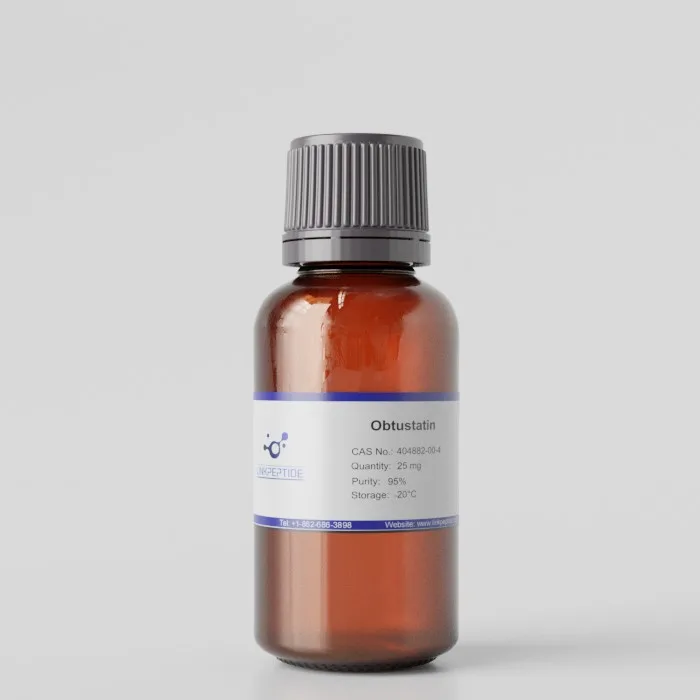
Product Name: Obtustatin
CAS No: 404882-00-4
Purity: 95%
Molar Mass: 4393.1
Chemical Formula: C184H284N52O57S8
Storage: Store at -20 degrees Celsius
Sequence: CTTGPCCRQCKLKPAGTTCWKTSLTSHYCTGKSCDCPLYPG
Target: integrin α1β1
Application:
Obtustatin is a disintegrin protein derived from Vipera lebetina venom, known for its ability to selectively inhibit α1β1 integrin receptors. This interaction prevents integrin-mediated cell adhesion and migration, particularly in endothelial and smooth muscle cells. Obtustatin is primarily studied for its potential therapeutic applications in inhibiting angiogenesis, the formation of new blood vessels crucial in tumor growth and metastasis. Its specificity and potency in targeting α1β1 integrin make it a valuable tool in cancer research and the development of anti-angiogenic therapies.
Current Research:
Obtustatin is a disintegrin peptide derived from the venom of the snake Vipera lebetina obtusa. It is a potent and selective antagonist of the α1β1 integrin, a receptor involved in cell adhesion, migration, and angiogenesis. Its high specificity and biological activity have made it a valuable tool in vascular biology and oncology research.
Mechanism of Action
Obtustatin binds selectively to the α1 subunit of α1β1 integrins, inhibiting its interaction with collagen. This disruption prevents endothelial cell adhesion to the extracellular matrix, thereby inhibiting angiogenesis. Unlike many other anti-angiogenic agents, obtustatin does not significantly affect other integrin subtypes, minimizing potential off-target effects.
Applications in Research
Anti-Angiogenic Studies
Obtustatin is widely studied for its ability to inhibit angiogenesis, a key process in tumor growth and metastasis. By blocking α1β1 integrin function, it reduces endothelial cell proliferation, migration, and tube formation, offering insights into therapeutic strategies for cancer treatment.
Tumor Suppression Models
Preclinical models have demonstrated that obtustatin effectively suppresses tumor growth and vascularization. Its role in disrupting the tumor microenvironment highlights its potential for combination therapies in oncology.
Vascular Biology Research
The peptide is utilized to study integrin-mediated pathways in vascular development and remodeling. Its selective inhibition of α1β1 integrin provides insights into the molecular mechanisms governing blood vessel formation.
Chronic Inflammatory Diseases
α1β1 integrins are also implicated in fibrosis and chronic inflammation. Obtustatin’s inhibitory effects on these pathways are being explored for potential therapeutic applications in conditions such as arthritis and fibrotic diseases.
Advantages
High specificity for α1β1 integrins.
Potent anti-angiogenic and anti-tumor properties.
Minimal off-target effects compared to broader integrin inhibitors.
Conclusion
Obtustatin is a highly specific integrin inhibitor with promising applications in anti-angiogenic therapy and tumor suppression. Its ability to target integrin-mediated processes makes it a valuable tool in vascular biology and cancer research. Ongoing studies aim to optimize its therapeutic potential and explore its broader applications in inflammatory and fibrotic diseases.
Reference:
Get a Quote
 LinkPeptide