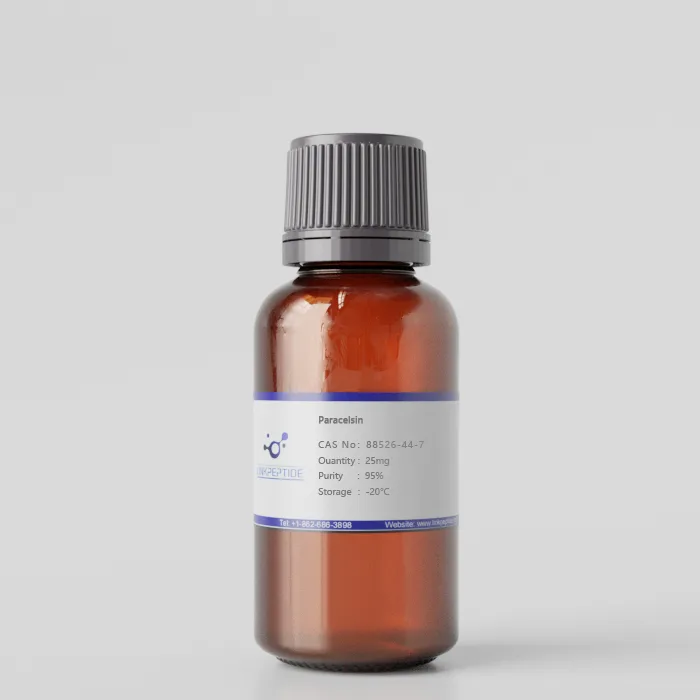
Product Name:Paracelsin
CAS No:88526-44-7
Purity:95%
Molar Mass:1909.2
Chemical Formula:C88H145N23O24
Storage:Store at -20 degrees Celsius
Sequence:XAXAXAQXVXGXXPVXXQQF
Application:
Paracelsin is a cyclic peptide antibiotic derived from the fungus Tolypocladium inflatum. Known for its potent antifungal and antibacterial properties, Paracelsin works by disrupting cell membrane integrity, leading to cell death in susceptible organisms. This peptide is particularly effective against a range of fungal pathogens and certain Gram-positive bacteria. Paracelsin's unique structure and mode of action make it a valuable tool in research focused on membrane-active antibiotics and the development of novel therapeutic agents. Additionally, its role in studying microbial resistance mechanisms and membrane biochemistry provides crucial insights into the interactions between antimicrobial peptides and cellular membranes.
Current Research:
Paracelsin is a cyclic peptide antibiotic produced by Trichoderma reesei, known for its potent antimicrobial activity against Gram-positive bacteria and certain fungi. Structurally, paracelsin belongs to the peptaibol class of compounds, characterized by their high content of non-proteinogenic amino acids such as α-aminoisobutyric acid (Aib) and the presence of a C-terminal hydroxyl or hydroxy-amino acid. These structural features contribute to its bioactivity and stability.
Mechanism of Action
Paracelsin exerts its antimicrobial effects by interacting with lipid bilayers, leading to membrane disruption. It is believed to form ion channels or pores in the microbial membrane, disrupting ionic gradients and causing cell death. This mechanism, which does not directly target protein synthesis or DNA replication, makes paracelsin less susceptible to traditional resistance mechanisms.
Research Applications
Antimicrobial Studies:
Paracelsin is widely used to study membrane-active antibiotics. Its ability to target lipid bilayers rather than specific bacterial proteins provides insights into alternative antimicrobial strategies, particularly against resistant strains.
Biophysical Research:
The peptide’s ability to form transmembrane channels has made it a model system for studying membrane-protein interactions and the biophysical properties of ion channel formation.
Fungal and Bacterial Pathogen Studies:
Paracelsin’s dual activity against bacteria and fungi makes it a valuable tool for exploring cross-kingdom antimicrobial properties, with implications for combating polymicrobial infections.
Drug Development:
The unique properties of paracelsin have inspired the development of synthetic analogs and derivatives for therapeutic applications, particularly as templates for designing peptides with enhanced stability and selectivity.
Conclusion
Paracelsin is a distinctive peptide antibiotic with versatile applications in antimicrobial research and biophysics. Its nontraditional mechanism of action provides a promising foundation for addressing the challenges of antibiotic resistance.
Reference:
Get a Quote
 LinkPeptide