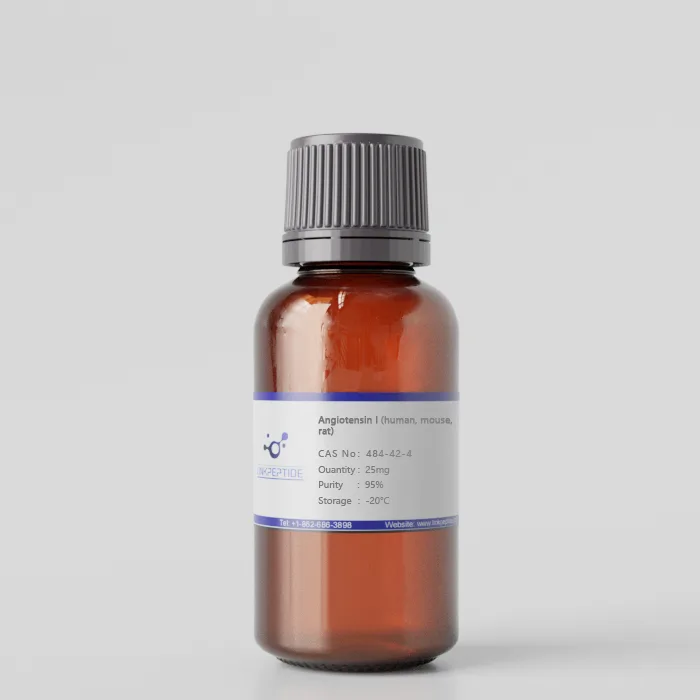
Product Name:Pro-Adrenomedullin (N-20), porcine
Form:TFA salt
Purity:95%
Storage:2-8 degree Celsius
Molar Mass:2444.9
Chemical Formula:C112H178N36O26
Sequence:Ala-Arg-Leu-Asp-Val-Ala-Ala-Glu-Phe-Arg-Lys-Lys-Trp-Asn-Lys-Trp-Ala-Leu-Ser-Arg-NH2
Application:Pro-Adrenomedullin (N-20), porcine is a bioactive peptide fragment derived from the N-terminal region of pro-adrenomedullin (PAMP), containing the first 20 amino acids. This peptide is involved in vascular homeostasis, immune regulation, and metabolic control. Research suggests that PAMP (N-20) in pigs exhibits vasodilatory, antimicrobial, and anti-inflammatory properties, making it a valuable tool in cardiovascular, immune, and endocrine studies. It is widely used in hypertension, infection-related inflammation, and endothelial function research, with potential applications in sepsis, metabolic disorders, and stress response models in porcine-based research.
Current Research:
Introduction
Pro-Adrenomedullin (N-20), porcine, is a short peptide fragment derived from pro-adrenomedullin (PAMP), which serves as a precursor to adrenomedullin (ADM), a potent vasodilator. This N-terminal sequence (amino acids 1-20) has been studied for its effects on vascular regulation, immune response, and metabolic stability. Due to similarities between porcine and human physiology, PAMP (N-20), porcine, is particularly useful in translational research models for cardiovascular, inflammatory, and metabolic diseases.
Cardiovascular and Vasodilatory Research
Pro-adrenomedullin-derived peptides, including PAMP (N-20), porcine, have been shown to impact vascular function and blood pressure regulation. Research suggests that PAMP (N-20), porcine:
Activates endothelial nitric oxide synthase (eNOS), promoting nitric oxide (NO)-mediated vasodilation.
Regulates vascular tone, making it relevant in hypertension and atherosclerosis studies.
May improve endothelial function, supporting investigations into porcine cardiovascular models for human disease research.
Given its hypotensive properties, this peptide is being explored as a potential biomarker and therapeutic target in cardiovascular diseases.
Immunomodulatory and Anti-Inflammatory Effects
PAMP-derived peptides play an important role in immune regulation, and PAMP (N-20), porcine, has been studied for its effects on:
Suppressing pro-inflammatory cytokines (e.g., TNF-α, IL-6, IL-1β), reducing excessive immune activation.
Modulating immune cell function, particularly in macrophages and T-cells, which influence infection response.
Potential protective effects in sepsis and systemic inflammatory response syndrome (SIRS), making it a candidate for immune-modulation studies in pigs.
This peptide is being explored for its role in porcine infection models, particularly in sepsis and inflammatory disease research.
Metabolic and Endocrine Research
Studies on PAMP and its fragments suggest roles in metabolic and endocrine regulation. Research in porcine models indicates:
Potential insulin-regulating properties, which may have implications for diabetes and metabolic syndrome studies.
Interactions with stress hormone pathways, making it relevant in adrenal function and metabolic regulation research.
Due to the physiological similarities between pigs and humans, PAMP (N-20), porcine, serves as a useful model for studying metabolic and endocrine disorders.
Potential Research and Therapeutic Applications
Due to its vasodilatory, immune-modulating, and metabolic-regulating effects, PAMP (N-20), porcine, is being studied for:
Cardiovascular disease research, particularly in hypertension and endothelial dysfunction models.
Sepsis and immune-related inflammation studies, targeting infection-induced cytokine storms.
Metabolic disorder models, including insulin regulation and glucose homeostasis research.
Conclusion
Pro-Adrenomedullin (N-20), porcine, is a bioactive peptide fragment involved in vascular homeostasis, immune function, and metabolic regulation. Its vasodilatory, anti-inflammatory, and metabolic effects make it a valuable research tool in cardiovascular, immunology, and endocrine studies. Ongoing research continues to explore its therapeutic potential in sepsis, blood pressure regulation, and metabolic disorders in preclinical porcine models.
Get a Quote
 LinkPeptide

![Lys-[Des-Arg9]Bradykinin](https://www.linkpeptide.com/wp-content/uploads/2024/10/Lys-Des-Arg9Bradykinin-jpg-3.webp "Lys-[Des-Arg9]Bradykinin")