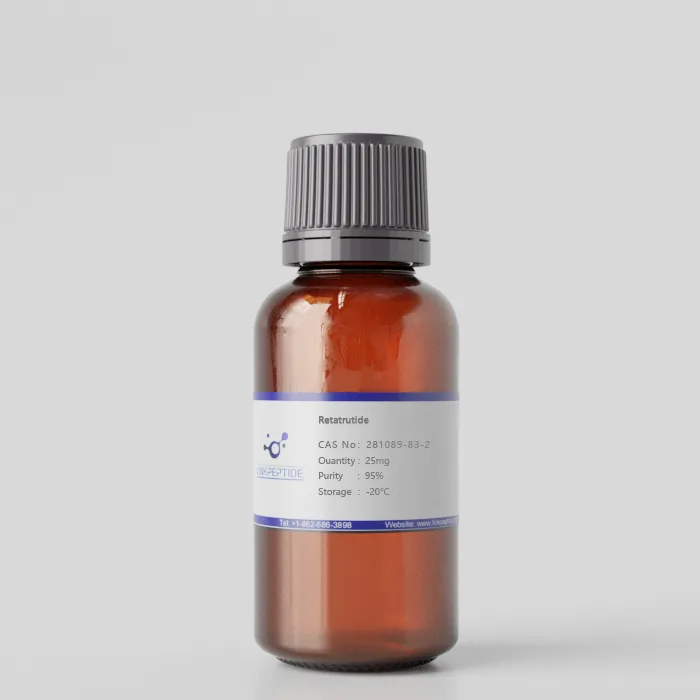
Product Name:Retatrutide
Form: Sodium salt
CAS No:2381089-83-2
Molar Mass:4731.06
Chemical Formula:C223H343F3N46O70
Synonyms:LY-3437943
Storage:-20°C
Target:GCGR
Application:
Retatrutide is an investigational peptide-based medication designed to target both GLP-1 and GIP receptors, which play key roles in glucose metabolism and insulin sensitivity. By modulating these receptors, Retatrutide aims to improve glycemic control and promote weight loss, making it a promising treatment for type 2 diabetes and obesity. Early clinical trials have shown favorable results, with Retatrutide reducing blood glucose and body weight in patients who have not responded well to other therapies. While still undergoing evaluation, Retatrutide offers a unique approach to managing metabolic diseases and holds potential for transforming treatment options in the future.
Current Research:
Retatrutide (LY3437943) is an investigational triple receptor agonist targeting the glucagon-like peptide-1 (GLP-1), glucose-dependent insulinotropic polypeptide (GIP), and glucagon receptors. This unique mechanism aims to address obesity and type 2 diabetes by enhancing insulin sensitivity, promoting weight loss, and improving metabolic health.
Phase 2 Clinical Trials:
A 48-week, randomized, double-blind, placebo-controlled Phase 2 trial evaluated retatrutide in 338 overweight or obese adults without diabetes. Participants received subcutaneous injections of retatrutide at doses of 1 mg, 4 mg, 8 mg, or 12 mg, or placebo, once weekly. The primary endpoint was the percentage change in body weight from baseline at 24 weeks. Secondary endpoints included weight change at 48 weeks and improvements in cardiometabolic measures.
Efficacy Results:
Weight Reduction: At 24 weeks, retatrutide achieved a mean weight reduction of up to 17.5% (41.2 lbs or 18.7 kg) in participants receiving the highest dose (12 mg). At 48 weeks, the mean weight reduction increased to up to 24.2% (57.8 lbs or 26.2 kg) in the same group.
Cardiometabolic Improvements: Treatment with retatrutide was associated with significant improvements in systolic and diastolic blood pressure, triglycerides, LDL-cholesterol, total cholesterol, HbA1c, and fasting glucose and insulin levels at both 24 and 48 weeks.
Safety and Tolerability:
The safety profile of retatrutide was similar to other incretin-based therapies. Gastrointestinal side effects, such as nausea, diarrhea, vomiting, and constipation, were the most commonly reported adverse events. These events were generally mild to moderate in severity and typically occurred during the dose escalation period.
Ongoing and Future Studies:
The TRIUMPH Phase 3 development program is currently evaluating the safety and efficacy of retatrutide for chronic weight management, obstructive sleep apnea, and knee osteoarthritis in individuals with obesity and overweight. The core registration studies include:
TRIUMPH-1: A randomized, double-blind, placebo-controlled trial investigating efficacy and safety in participants without type 2 diabetes who have obesity or overweight, including those with obstructive sleep apnea and osteoarthritis.
TRIUMPH-2: A randomized, double-blind, placebo-controlled trial assessing efficacy and safety in participants with type 2 diabetes who have obesity or overweight, including those with obstructive sleep apnea.
TRIUMPH-3: A randomized, double-blind, placebo-controlled trial evaluating efficacy and safety in participants with Class II or III obesity and established cardiovascular disease.
TRIUMPH-4: A randomized, double-blind, placebo-controlled trial examining efficacy and safety in participants with obesity or overweight and osteoarthritis.
These studies aim to further establish the therapeutic potential of retatrutide across various metabolic conditions.
References:
Get a Quote

 LinkPeptide