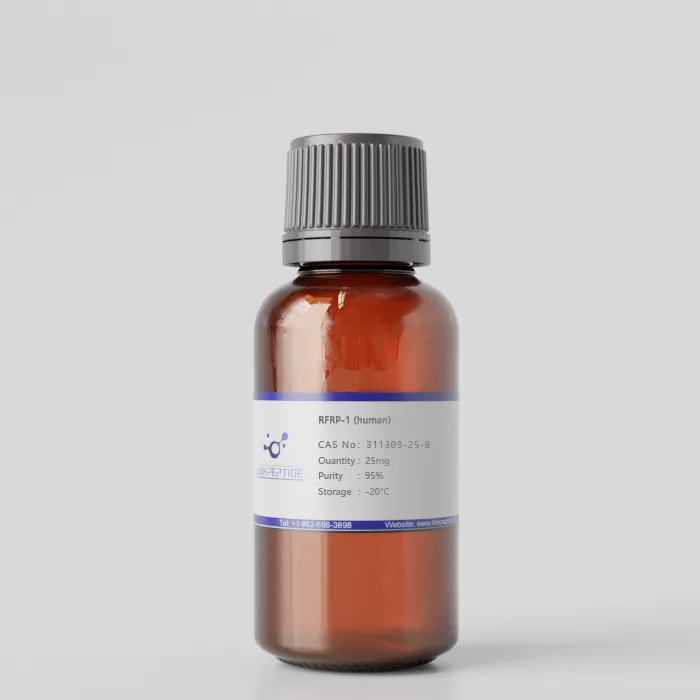
Product Name:RFRP-1 (human)
CAS No:311309-25-8
Purity:95%
Molar Mass:1428.7
Chemical Formula:C67H101N19O14S
Storage:Store at -20 degrees Celsius
Sequence:MPHSFANLPLRF-NH2
Target:NPFF1 and NPFF2
Application:
RFRP-1 (human) is related to NPFF1 and NPFF2 receptors, which are part of the neuropeptide FF (NPFF) receptor family. These receptors are involved in modulating pain, opioid signaling, and neuroendocrine functions. NPFF1 and NPFF2 are activated by RFamide-related peptides, including RFRP-1, and play roles in various physiological processes such as nociception (pain sensation), stress response, and regulation of the autonomic nervous system. RFRP-1's interaction with these receptors makes it an important peptide for studying pain modulation, opioid effects, and hormonal regulation, with potential implications in understanding stress, reproduction, and metabolic processes.
Current Research:
Human RFamide-related peptide-1 (RFRP-1) is a neuropeptide implicated in the regulation of reproductive functions. It is an ortholog of gonadotropin-inhibitory hormone (GnIH) found in other species. RFRP-1 is derived from a precursor protein encoded by the NPVF gene, which also gives rise to RFRP-3. Both peptides are expressed in the dorsomedial hypothalamus and project to various brain regions, including those involved in reproductive hormone control.
Structure and Receptor Interaction
The amino acid sequence of human RFRP-1 is MPHSFANLPLRF-NH?. This peptide acts as an agonist for neuropeptide FF receptors, specifically NPFF1 and NPFF2, with EC?? values of 29 nM and 0.0011 nM, respectively. Activation of these receptors by RFRP-1 influences several physiological processes, notably the inhibition of gonadotropin release.
Role in Reproductive Regulation
RFRP-1 modulates the hypothalamic-pituitary-gonadal (HPG) axis by inhibiting the secretion of gonadotropin-releasing hormone (GnRH) from hypothalamic neurons. This suppression leads to decreased release of luteinizing hormone (LH) and follicle-stimulating hormone (FSH) from the anterior pituitary gland, ultimately affecting gonadal function and reproductive capability. The presence of RFRP-1 fibers in close proximity to GnRH neurons supports its role in this inhibitory pathway.
Additional Functions
Beyond reproductive regulation, RFRP-1 is involved in modulating pain perception, stress responses, and energy homeostasis. Its widespread distribution in the central nervous system suggests a multifaceted role in coordinating various physiological processes.
Clinical Implications
Dysregulation of RFRP-1 expression or function may contribute to reproductive disorders, such as hypogonadotropic hypogonadism and infertility. Understanding the mechanisms of RFRP-1 action could lead to novel therapeutic targets for managing these conditions. Additionally, its involvement in stress and metabolic pathways presents potential implications for treating stress-related disorders and metabolic syndromes.
Research Directions
Ongoing studies aim to elucidate the precise mechanisms by which RFRP-1 influences GnRH neurons and other target cells. Investigating its interactions with various receptors and signaling pathways will enhance our understanding of its diverse physiological roles. Furthermore, exploring the regulation of RFRP-1 expression under different physiological and pathological conditions could provide insights into its function in health and disease.
Conclusion
Human RFRP-1 is a critical neuropeptide in the regulation of reproductive and other physiological functions. Its inhibitory effect on the HPG axis underscores its importance in maintaining reproductive homeostasis. Continued research into RFRP-1 will further clarify its roles and potential as a therapeutic target in various clinical contexts.
Reference:
Get a Quote

 LinkPeptide