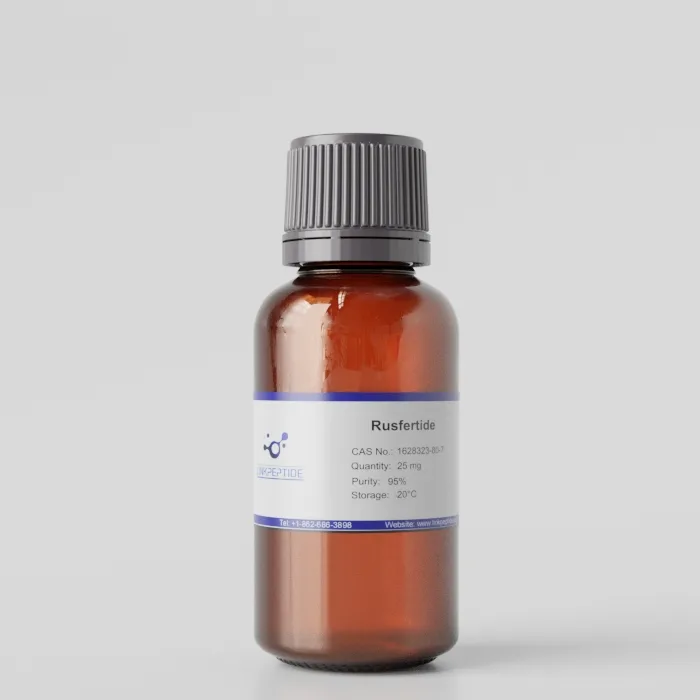
Product Name: Rusfertide
Form: TFA salt
CAS No: 1628323-80-7
Molar Mass: 2442.03
Chemical Formula: C114H181N27O28S2
Synonyms: PTG-300FB
Storage: Store at -20℃
Application:
Rusfertide (CAS: 1628323-80-7) is a promising peptide-based drug currently under investigation for its therapeutic potential in the treatment of anemia associated with chronic kidney disease (CKD). This novel compound functions by mimicking the action of erythropoietin (EPO), a hormone produced by the kidneys that regulates red blood cell production in the bone marrow. In individuals with CKD, impaired kidney function leads to reduced EPO production, resulting in anemia. Rusfertide acts as a synthetic peptide analog of EPO, stimulating the production of red blood cells and effectively addressing anemia in CKD patients. By targeting the same biological pathway as EPO, rusfertide offers a promising alternative to traditional EPO therapy, potentially reducing the need for frequent injections and improving patient outcomes. Clinical trials are currently underway to evaluate the safety, efficacy, and optimal dosing regimen of rusfertide in CKD patients, with the goal of providing a new treatment option for this common complication of kidney disease.
Current Research:
Rusfertide is an investigational peptide-based therapy designed to treat conditions involving iron overload, particularly hereditary hemochromatosis and other iron-related disorders. As a novel therapeutic, rusfertide offers a targeted approach to managing iron homeostasis by binding to and regulating the body’s iron transport systems, ultimately improving iron metabolism and reducing the harmful effects of iron accumulation in tissues.
Mechanism of Action
Rusfertide is a synthetic peptide that mimics the action of a natural protein called hepcidin, a key regulator of iron absorption and distribution in the body. Hepcidin is produced by the liver and plays a critical role in controlling iron levels by binding to ferroportin, the only known iron exporter on the surface of cells. When hepcidin binds to ferroportin, it leads to the internalization and degradation of the ferroportin protein, preventing iron from being released into the bloodstream.
In patients with hereditary hemochromatosis or other iron overload disorders, the body either produces too little hepcidin or does not respond to it appropriately, resulting in excessive iron absorption from the diet and abnormal iron accumulation in vital organs such as the liver, heart, and pancreas. This excess iron can lead to organ damage, cirrhosis, heart failure, and diabetes.
Rusfertide, as a hepcidin mimetic, functions by increasing the body’s natural iron regulation. By binding to ferroportin, rusfertide effectively reduces the amount of iron being absorbed and released into the bloodstream, promoting iron sequestration in macrophages and preventing iron overload in tissues. This action helps to reduce serum iron levels and alleviate the damaging effects of chronic iron accumulation in the body.
Current Research and Development
Rusfertide is undergoing clinical trials to assess its safety, pharmacokinetics, and efficacy in patients with iron overload disorders. In Phase 2 clinical trials, rusfertide has shown promising results in reducing iron levels in patients with hereditary hemochromatosis. In one study, participants treated with rusfertide experienced significant reductions in serum ferritin (a marker of iron stores) and transferrin saturation, both of which are elevated in patients with iron overload.
In addition to hereditary hemochromatosis, rusfertide is being studied in other conditions involving iron dysregulation, such as beta-thalassemia and anemia of chronic disease. Early-phase trials suggest that rusfertide may be effective in improving iron balance in patients with these conditions, who often require regular blood transfusions that increase the risk of iron overload. By targeting ferroportin and reducing iron absorption, rusfertide may help reduce the need for phlebotomies (blood draws) or iron chelation therapy, which are traditionally used to manage iron overload but can be burdensome and less effective in long-term management.
Advantages Over Current Therapies
Rusfertide offers several advantages over traditional iron management strategies, including iron chelation therapy and phlebotomy, which have limitations and side effects. Iron chelation drugs, such as deferoxamine and deferasirox, are often associated with gastrointestinal issues, kidney toxicity, and the need for long-term administration. Phlebotomy, which involves regular blood draws, can be inconvenient and painful for patients, particularly those with conditions like thalassemia or sickle cell anemia who already require frequent medical intervention.
By providing a targeted approach that mimics the body’s natural iron regulatory mechanisms, rusfertide reduces the need for these invasive or complex treatments. It also offers a potentially more convenient and effective option for patients, as it can be administered as a subcutaneous injection or infusion, and has the potential for less frequent dosing compared to current therapies.
Future Directions
As research on rusfertide progresses, the focus will shift toward optimizing its use in a wider range of iron overload disorders. Studies are ongoing to determine the ideal dosing regimens and to evaluate its long-term safety and effectiveness. Additionally, researchers are investigating the potential use of rusfertide in combination with other therapies, such as erythropoiesis-stimulating agents or gene therapy for conditions like beta-thalassemia, where iron overload is a common complication.
In the future, personalized medicine approaches may be developed to tailor rusfertide treatment to individual patients, based on genetic profiles or biomarkers that predict responsiveness to therapy. This could further enhance the effectiveness of rusfertide and improve patient outcomes in the management of iron overload disorders.
If successful, rusfertide has the potential to become a cornerstone therapy for patients with chronic iron overload, offering a safer, more convenient, and more effective alternative to current treatments, while improving the quality of life and reducing the long-term complications associated with iron accumulation.
Reference:
Get a Quote
 LinkPeptide