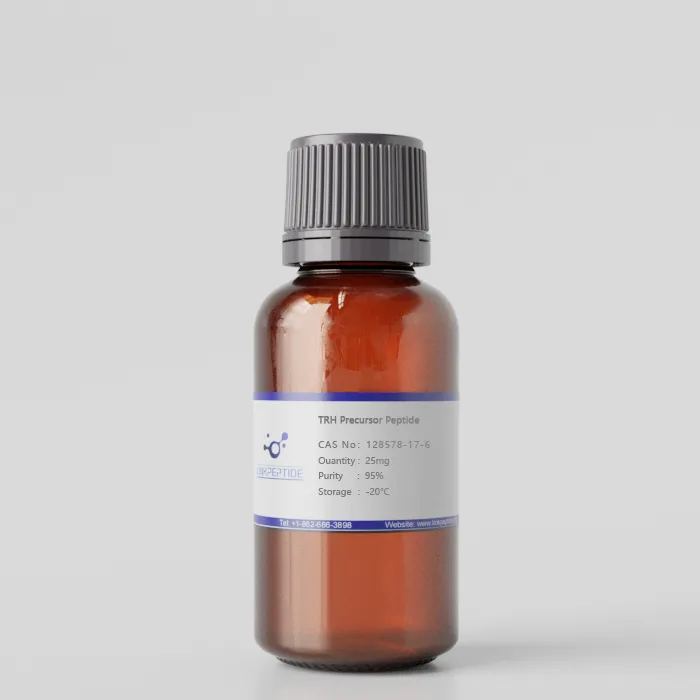
Product Name:TRH Precursor Peptide
CAS No:128578-17-6
Purity:95%
Molar Mass:1006.17
Chemical Formula:C42H75N19O10
Storage:Store at -20 degrees Celsius
Sequence:KRQHPGKR
Application:TRH precursor peptide, also known as thyrotropin-releasing hormone (TRH) precursor, is a prohormone that undergoes post-translational processing to produce TRH and other related peptides. TRH is a critical neuroendocrine hormone that regulates the secretion of thyroid-stimulating hormone (TSH) from the anterior pituitary, thus controlling thyroid function and metabolism. Beyond its role in the hypothalamic-pituitary-thyroid axis, TRH has broader physiological effects, including modulation of mood, energy homeostasis, and neuroprotection. The TRH precursor peptide is essential for research exploring thyroid disorders, metabolic diseases, and potential therapeutic applications targeting neurological and psychiatric conditions.
Current Research:
Thyrotropin-releasing hormone (TRH) is a tripeptide hormone pivotal in regulating the hypothalamic-pituitary-thyroid axis. It is synthesized from a larger precursor protein known as prepro-TRH.
Synthesis and Processing
The human prepro-TRH is a 29-kDa polypeptide composed of 255 amino acids. Within this precursor, there are multiple copies of the TRH progenitor sequence, each flanked by specific amino acid motifs. Post-translational processing involves:
Cleavage: Proteolytic enzymes cleave the precursor at dibasic sites to release TRH and other non-TRH peptides.
Modification: The N-terminal glutamine of TRH is cyclized to pyroglutamate, and the C-terminal glycine is amidated, forming the mature TRH structure.
This processing occurs in the hypothalamus, where TRH is produced and subsequently released into the portal circulation to act on the anterior pituitary gland.
Biological Significance
Beyond TRH, the prepro-TRH precursor gives rise to several non-TRH peptides. Some of these peptides have been detected in rat brain, pancreas, and thyroid tissues, suggesting potential roles in various physiological processes. For instance, a cryptic peptide derived from prepro-TRH (amino acids 160-169) has been shown to stimulate thyrotropin gene expression in pituitary cells, indicating that these non-TRH peptides may have endocrine functions.
Research Implications
Understanding the processing of the TRH precursor is crucial for elucidating the regulation of thyroid function and its broader implications in endocrine signaling. Studies on prepro-TRH-derived peptides contribute to our knowledge of hormone biosynthesis and the complex interplay of neuroendocrine factors.
In summary, the TRH precursor peptide is integral to the production of TRH and other biologically active peptides, playing a significant role in maintaining hormonal balance and offering insights into endocrine system regulation.
Reference:
Get a Quote
 LinkPeptide