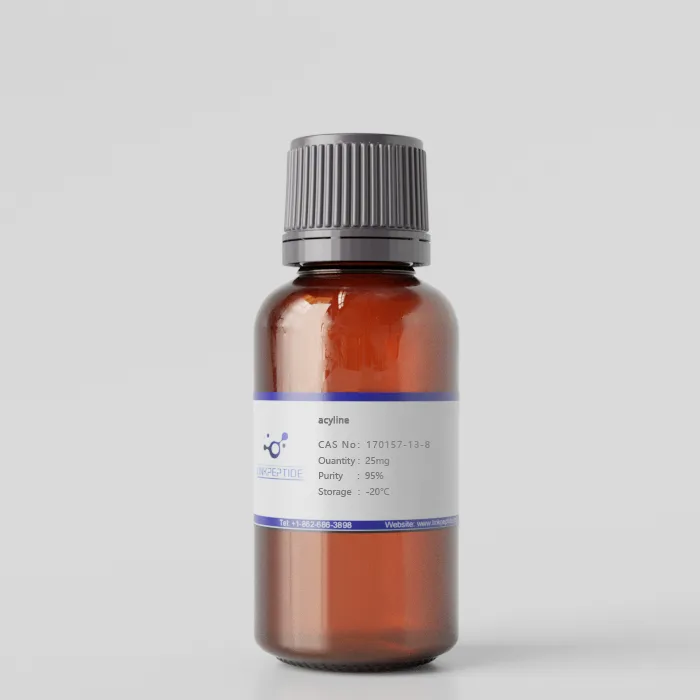
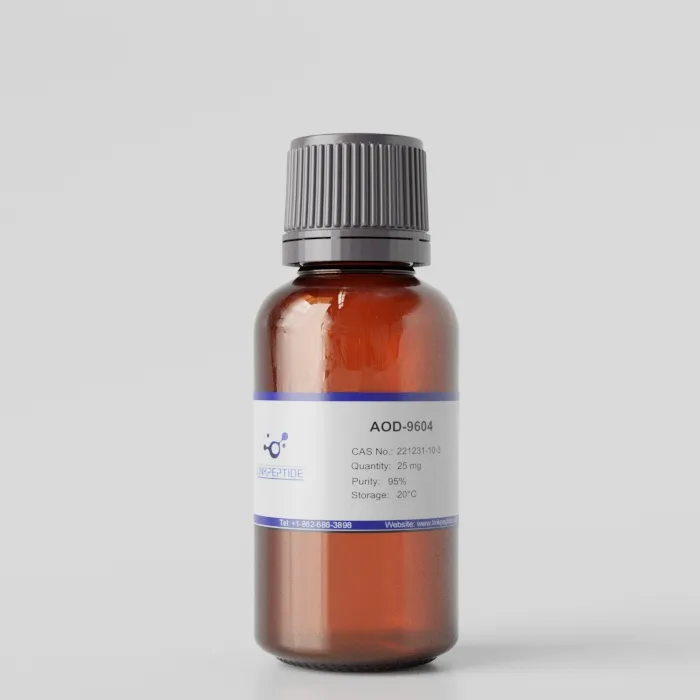
Product Name:acyline
Synonyms:N-Acetyl-3-(2-naphthalenyl)-D-alanyl-4-chloro-D-phenylalanyl-3-(3-pyridinyl)-D-alanyl-L-seryl-4-(acetylamino)-L-phenylalanyl-4-(acetylamino)-D-phenylalanyl-L-leucyl-N6-(1-methylethyl)-L-lysyl-L-prolyl-D-alaninamide (ACI)
CAS No:170157-13-8
Purity:95%
Molar Mass:1533.21
Chemical Formula:C80H102ClN15O14
Storage:Store at -20 degrees Celsius
Sequence:AFASFFLKPA
Target:GnRH
Application:
Acyline is a potent synthetic peptide antagonist of gonadotropin-releasing hormone (GnRH) that is widely used in research related to reproductive health and endocrine regulation. By binding to GnRH receptors, Acyline effectively inhibits the secretion of luteinizing hormone (LH) and follicle-stimulating hormone (FSH), leading to a suppression of testosterone and estrogen production. This property makes Acyline a valuable tool in studies investigating the physiological and therapeutic aspects of hormone-dependent conditions, such as prostate cancer, endometriosis, and precocious puberty. Its high affinity and stability provide reliable results in experimental settings, offering insights into the development of new treatments for hormone-related disorders.
Current Research:
Acyline is a synthetic decapeptide and a potent gonadotropin-releasing hormone (GnRH) antagonist. Designed to suppress the release of luteinizing hormone (LH) and follicle-stimulating hormone (FSH), Acyline has become an essential tool in endocrinological research and clinical studies exploring hormonal regulation and reproductive health.
Acyline achieves its function by competitively binding to GnRH receptors in the anterior pituitary gland, inhibiting the natural action of GnRH. This results in a significant and reversible suppression of gonadotropins and downstream sex steroid hormones such as testosterone and estradiol. Its high specificity and prolonged action make it suitable for investigating conditions involving hormonal dysregulation, such as prostate cancer, endometriosis, and precocious puberty.
Preclinical and clinical studies have highlighted Acyline's efficacy in producing a rapid and sustained suppression of gonadotropin levels. Unlike earlier GnRH antagonists, Acyline exhibits improved stability and reduced histamine-related side effects, making it a favorable candidate for both research and therapeutic applications.
In reproductive biology, Acyline has been used to study the physiological role of gonadotropins in spermatogenesis and ovulation. It has also been explored in male and female contraception trials due to its ability to temporarily suppress reproductive hormones without causing long-term adverse effects.
Additionally, Acyline is valuable in endocrinology research involving hormone-dependent cancers and metabolic syndromes linked to sex steroids. Its application extends to investigating neuroendocrine interactions, particularly in stress and aging-related hormonal changes.
With its potent inhibitory properties and broad applicability, Acyline remains a cornerstone molecule for advancing our understanding of hormonal pathways and developing targeted treatments for endocrine disorders. Its continued exploration is anticipated to yield significant insights into both basic science and clinical practice.
Reference:
Get a Quote
 LinkPeptide