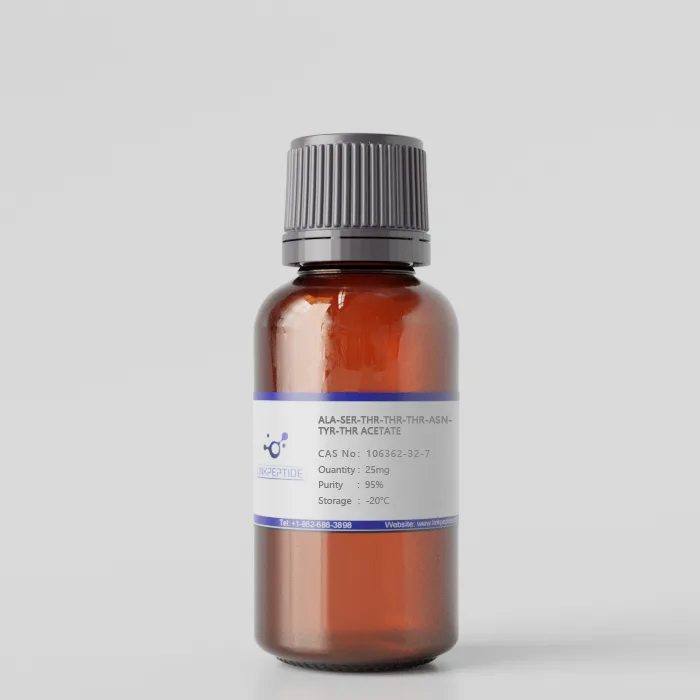
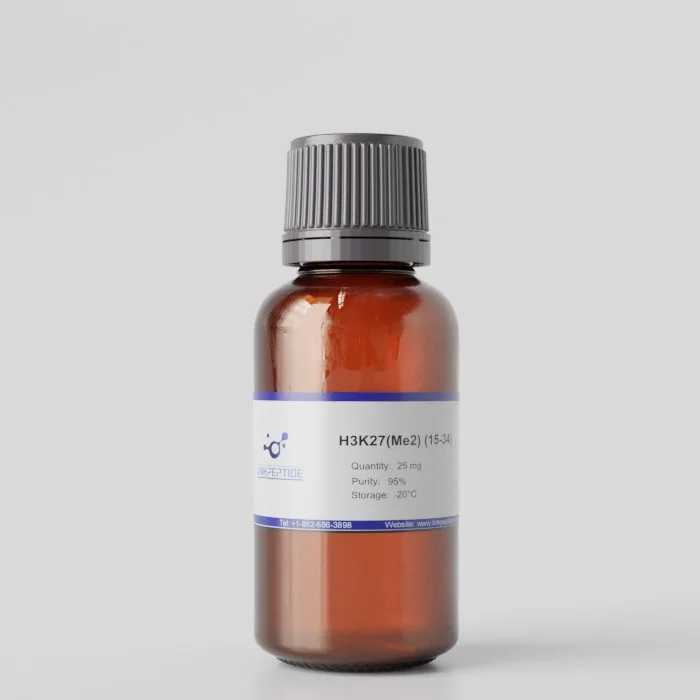
Product Name:ALA-SER-THR-THR-THR-ASN-TYR-THR ACETATE
Synonyms:Peptide T
CAS No:106362-32-7
Purity:95%
Molar Mass:857.86
Chemical Formula:C35H55N9O16
Storage:Store at -20 degrees Celsius
Sequence:ASTTTNYT
Application:
ALA-SER-THR-THR-THR-ASN-TYR-THR Acetate is a synthetic peptide sequence with a focus on research involving signal transduction, protein interactions, and phosphorylation processes. This peptide sequence, composed of eight amino acids—alanine (ALA), serine (SER), threonine (THR), asparagine (ASN), and tyrosine (TYR)—is designed for applications in studying protein kinases, receptor binding, and cellular response mechanisms. The presence of multiple threonine residues provides opportunities to investigate phosphorylation events, a critical aspect of many cellular processes. The acetate form enhances the peptide's solubility and stability, making it suitable for various experimental conditions in biochemical and pharmacological research. Ideal for studying post-translational modifications and protein signaling pathways.
Current Research:
Ala-Ser-Thr-Thr-Thr-Asn-Tyr-Thr Acetate, commonly known as Peptide T, is an octapeptide derived from the V2 region of the HIV-1 envelope glycoprotein gp120. It functions as a ligand for the CD4 receptor, effectively blocking the binding of HIV to CD4+ T cells. By inhibiting this critical interaction, Peptide T prevents viral entry into host cells, making it a valuable molecule in the study of HIV replication and pathogenesis.
Peptide T is not only known for its antiviral activity but also its immunomodulatory properties. At nanomolar concentrations, it stimulates the production of interleukin-10 (IL-10) in human T-helper 2 (Th2) cells and peripheral blood mononuclear cells (PBMCs). Furthermore, it inhibits the production of interferon-gamma (IFN-γ) in PBMCs, showcasing its potential role in modulating immune responses. This dual functionality makes it a promising candidate for exploring therapies that address immune dysregulation.
Despite its significant in vitro effects, Peptide T has shown mixed results in vivo. For instance, while it has demonstrated efficacy in preventing viral infection in cellular models, its ability to ameliorate autoimmune conditions such as experimental autoimmune encephalomyelitis (EAE) appears context-dependent. These findings emphasize the complexity of its biological activity and the need for further investigation.
With a molecular weight of 857.86 g/mol, Peptide T is typically supplied as an acetate salt. It is soluble in dimethyl sulfoxide (DMSO) and should be stored at -20°C to ensure stability. Its versatility in both HIV research and immunology highlights its importance as a tool for understanding disease mechanisms and exploring novel therapeutic pathways.
Reference:
Get a Quote
 LinkPeptide