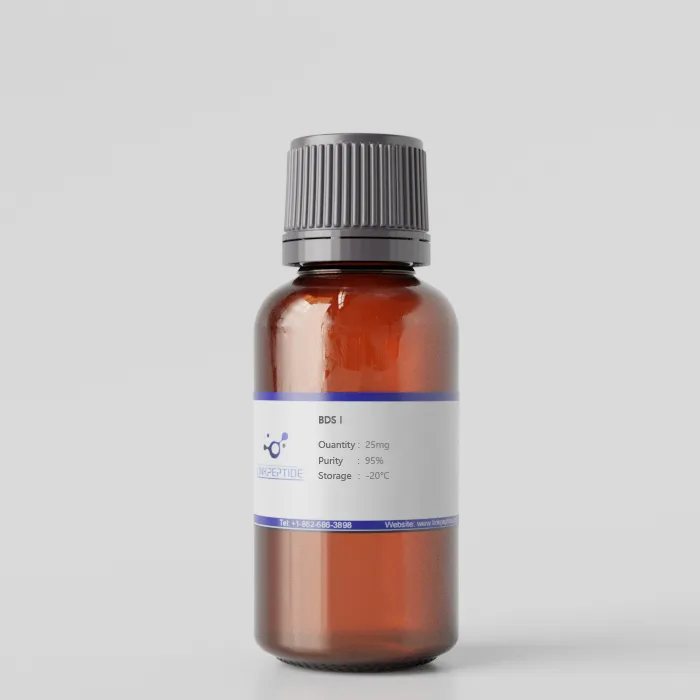
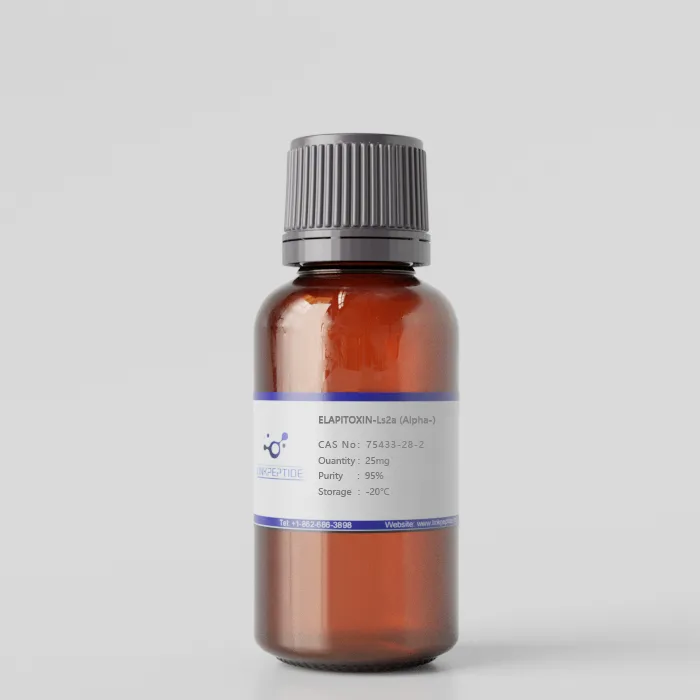
Product Name:BDS I
Synonyms:Blood depressing substance I, Blood depressing substance 1, Delta/Kappa-actitoxin-Avd4a
Purity:95%
Molar Mass:4708
Chemical Formula:C210H303N57O56S6
Storage:Store at -20 degrees Celsius
Sequence:AAPCFCSGKPGRGDLWILRGTCPGGYGYTSNCYKWPNICCYPH
Target:KV3 K+ channels, NaV Na+ channels
Application:
BDS I (Blood Depressant Substance I) is a peptide toxin derived from the sea anemone Anemonia sulcata. It acts as a selective inhibitor of voltage-gated sodium channels (Nav channels), specifically targeting Nav1.7. This channel is crucial for the transmission of pain signals in sensory neurons, making BDS I an important tool for studying pain mechanisms and potential therapeutic targets for pain management. Its ability to modulate sodium channel activity can also be relevant in research involving neuronal excitability and certain cardiac or neurological conditions.
Current Research:
BDS-I, also known as Blood-Depressing Substance I, is a 43-amino-acid peptide toxin isolated from the venom of the sea anemone Anemonia sulcata. It functions as a potent and reversible inhibitor of specific voltage-gated ion channels, notably the Kv3.4 potassium channel and certain sodium channels.
Structural Characteristics
BDS-I comprises 43 amino acids, including six cysteine residues that form three disulfide bridges, contributing to its stable and compact structure. This configuration is characteristic of sea anemone toxins that modulate ion channel activity.
Mechanism of Action
BDS-I exhibits its effects through the following mechanisms:
Kv3.4 Potassium Channels: BDS-I selectively inhibits Kv3.4 channels by binding to their voltage-sensing domains, causing a depolarizing shift in the conductance-voltage relationship and slowing both activation and inactivation kinetics. This modulation reduces potassium efflux, affecting neuronal excitability.
Voltage-Gated Sodium Channels (Nav): BDS-I also interacts with certain sodium channels, including Nav1.7, by binding to the S3-S4 linker of domain IV. This interaction slows channel inactivation, leading to prolonged sodium influx during depolarization and enhancing neuronal firing.
Pharmacological Significance
Due to its specific modulation of Kv3.4 and Nav channels, BDS-I serves as a valuable tool in neurophysiological research. It aids in elucidating the roles of these channels in neuronal signaling and has potential therapeutic implications for conditions involving channelopathies.
Research Applications
BDS-I is utilized in studies to:
Investigate the physiological and pathological roles of Kv3.4 and Nav channels in neuronal excitability.
Explore potential therapeutic targets for neurological disorders associated with dysfunctional ion channel activity.
Conclusion
BDS-I is a potent modulator of specific voltage-gated ion channels, offering significant utility in neuroscience research and potential therapeutic applications.
Reference:
Get a Quote
 LinkPeptide