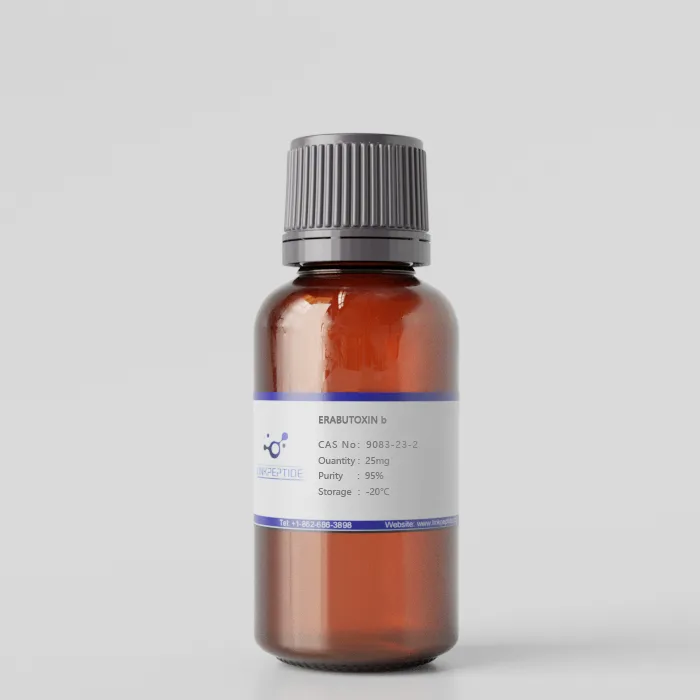
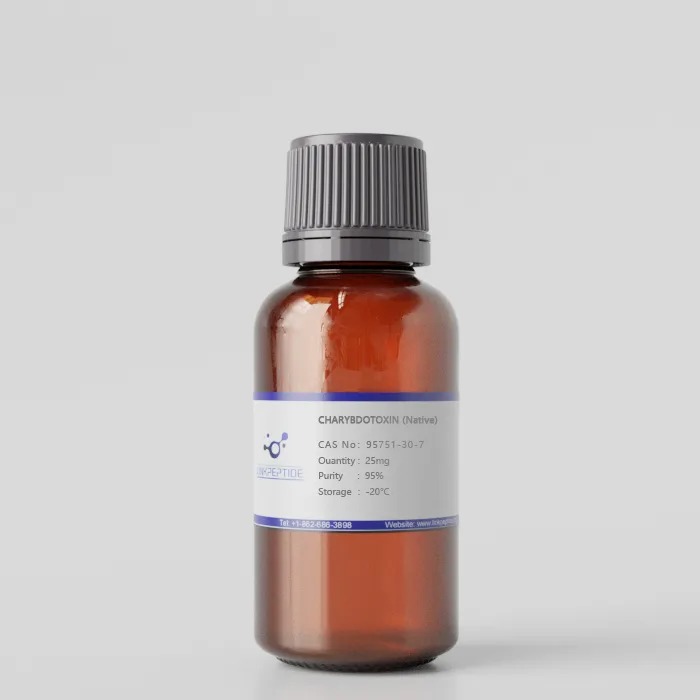
Product Name:CHARYBDOTOXIN (Native)
Synonyms:Lqh alpha IT Recombinant
CAS No:95751-30-7
Purity:95%
Molar Mass:4296
Chemical Formula:C176H277N57O55S7
Storage:Store at -20 degrees Celsius
Sequence:XFTNVSCTTSKECWSVCQRLHNTSRGKCMNKKCRCYS
Application:
Charybdotoxin (Native) is a potent peptide toxin derived from the venom of the scorpion Leiurus quinquestriatus. This 37-amino-acid peptide is a crucial tool in neurophysiological research due to its high affinity for voltage-gated potassium channels (Kv1.3) and calcium-activated potassium channels (KCa). By blocking these channels, Charybdotoxin is instrumental in studies related to cellular excitability, immune cell function, and ion channel pharmacology. Its specificity and efficacy make it invaluable in dissecting the roles of potassium channels in various physiological and pathological processes, including autoimmune diseases and cancer. This native form of Charybdotoxin ensures reliable and reproducible results in advanced research settings.
Current Research:
Charybdotoxin (CTX), a potent peptide toxin derived from Leiurus quinquestriatus scorpion venom, has garnered significant attention in drug discovery due to its ability to selectively inhibit specific potassium channels, particularly large-conductance calcium-activated (BK) and intermediate-conductance calcium-activated (IK) potassium channels. Its high-affinity interaction with these channels has positioned CTX as an essential tool for investigating the physiological and pathological roles of potassium channel modulation in various biological systems.
Recent studies have highlighted the relevance of CTX in understanding the intricate mechanisms of ion channel dysfunction linked to diseases such as epilepsy, autoimmune disorders, and cancer. The toxin's ability to modulate potassium channel activity provides insights into neuronal excitability, immune cell activation, and smooth muscle contraction, making it invaluable for preclinical research. For instance, CTX has been utilized to elucidate the role of potassium channels in tumor microenvironments, specifically in regulating cancer cell proliferation and immune evasion.
Moreover, CTX's specificity and potency have inspired the development of peptide-based channel inhibitors. Its structural features, including the disulfide bond-stabilized scaffold, have been a template for designing bioengineered peptides with enhanced pharmacological properties. These advancements aim to improve therapeutic targeting of ion channels while minimizing off-target effects.
The application of CTX in drug screening assays has further expanded its utility, enabling the identification of novel channel modulators with therapeutic potential. Its role in high-throughput assays is instrumental in identifying small molecules and biologics that mimic or antagonize its activity.
In summary, Charybdotoxin continues to serve as a critical molecular probe in drug discovery, offering unparalleled insights into potassium channel biology and advancing therapeutic innovations for channelopathies and other potassium channel-related disorders.
Reference:
Get a Quote
 LinkPeptide

![SCYLLATOXIN [Tyr2]-](https://www.linkpeptide.com/wp-content/uploads/2024/10/SCYLLATOXIN-Tyr2-jpg-2.webp "SCYLLATOXIN [Tyr2]-")