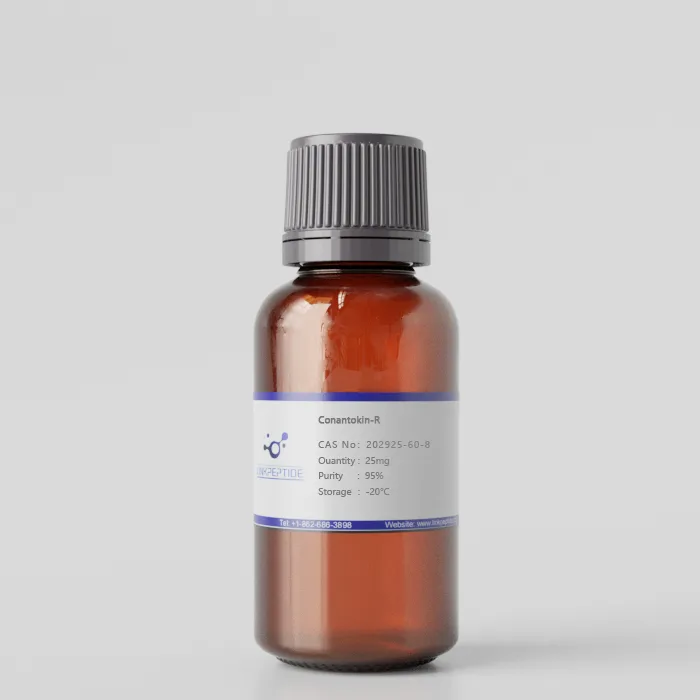
Product Name:Conantokin-R
CAS No:202925-60-8
Purity:95%
Molar Mass:3098.4
Chemical Formula:C127H201N35O49S3
Storage:Store at -20 degrees Celsius
Sequence:GEXXVAKMAAXLARXNIAKGCKVNCYP
Target:NMDA receptor
Application:
Conantokin-R is a peptide toxin derived from the venom of the Conus radiatus snail, known for its selective inhibition of N-methyl-D-aspartate (NMDA) receptors, specifically targeting the NR2B subunit. NMDA receptors are involved in synaptic plasticity, learning, memory, and excitotoxicity associated with neurological conditions. Conantokin-R is used in neuroscience research to study NMDA receptor function and to explore its role in conditions such as epilepsy, neurodegenerative diseases, and pain management. Its ability to modulate NMDA receptor activity makes it a valuable tool in the development of therapeutic agents for disorders involving glutamate-mediated neurotoxicity.
Current Research:
Conantokin-R (Con-R) is a 27-residue peptide isolated from the venom of Conus radiatus, a marine cone snail. It functions as a selective antagonist of N-methyl-D-aspartate receptors (NMDARs), particularly targeting subtypes containing the NR2B and NR2A subunits. This specificity renders it a valuable tool for investigating NMDAR-mediated neurological processes and exploring potential therapeutic applications.
Structural Characteristics
Con-R is distinguished by the presence of multiple ??-carboxyglutamate (Gla) residues, resulting from post-translational modifications of glutamate residues. These Gla residues facilitate calcium binding, which induces a conformational transition from a 3?? helix to an ??-helix, stabilizing the peptide's structure and enhancing its interaction with NMDARs.
Receptor Specificity and Binding Affinity
Electrophysiological studies using Xenopus oocytes expressing various NMDAR subunits have demonstrated that Con-R exhibits a preference for receptors containing NR2B and NR2A subunits, with significantly lower affinity for NR2C and NR2D subunits. This selectivity is crucial for dissecting the roles of specific NMDAR subtypes in synaptic transmission and plasticity.
Mechanism of Action
By binding to the NMDAR complex, Con-R inhibits receptor activation, thereby reducing calcium influx and modulating excitatory neurotransmission. This antagonistic action on NMDARs underlies its potential therapeutic effects in conditions associated with excitotoxicity.
Pharmacological Profile
In animal models, Con-R has demonstrated potent anticonvulsant activity, surpassing that of traditional NMDAR antagonists like ifenprodil and dizocilpine (MK-801). Its efficacy in attenuating seizure activity highlights its potential as a therapeutic agent for epilepsy and other neurological disorders characterized by excessive NMDAR activity.
Research Applications
The specificity of Con-R for certain NMDAR subtypes makes it an invaluable tool in neuropharmacological research:
Neuroprotection Studies: Utilized to investigate mechanisms of neuronal injury and to develop strategies for neuroprotection in conditions such as ischemic stroke and traumatic brain injury.
Synaptic Plasticity Research: Employed to study the role of NMDARs in synaptic plasticity, learning, and memory processes.
Drug Development: Serves as a lead compound for designing novel therapeutics aimed at modulating NMDAR activity in various neurological conditions.
Clinical Implications
Given its potent anticonvulsant properties and specificity for NMDAR subtypes, Con-R holds promise for the development of new treatments for epilepsy and other disorders involving NMDAR dysfunction. However, further research is necessary to fully elucidate its therapeutic potential and safety profile.
Conclusion
Conantokin-R is a potent and selective NMDAR antagonist, offering significant utility in the study of excitatory neurotransmission and its implications in health and disease. Its application in research continues to advance our understanding of NMDAR function and holds promise for the development of novel therapeutic strategies targeting neurological disorders.
Reference:
Get a Quote
 LinkPeptide

![[Phe1Ψ(CH2-NH)Gly2]Nociceptin(1-13)NH2](https://www.linkpeptide.com/wp-content/uploads/2024/10/Phe1¶aCH2-NHGly2Nociceptin1-13NH2-jpg.webp "[Phe1Ψ(CH2-NH)Gly2]Nociceptin(1-13)NH2")