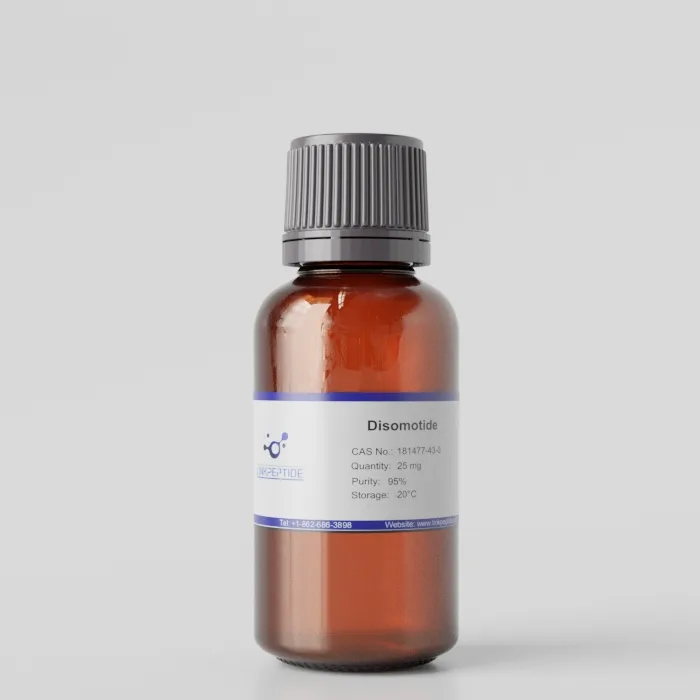
Product Name: Disomotide
Form: TFA salt
CAS No: 181477-43-0
Molar Mass: 1035.21
Chemical Formula: C47H74N10O14S
Synonyms: G209-2M, MPS 22
Storage: Store at -20℃
Sequence: IMDQVPFSV
Application:
Disomotide (CAS: 181477-43-0) is a synthetic peptide-based compound currently under investigation for its potential therapeutic applications in cancer treatment. It functions as an immunomodulator by targeting toll-like receptor 7 (TLR7), a pattern recognition receptor involved in the innate immune response. Disomotide activates TLR7, leading to the production of pro-inflammatory cytokines and chemokines, as well as the activation of antigen-presenting cells and cytotoxic T cells. This immune activation helps to enhance anti-tumor immune responses and modulate the tumor microenvironment, promoting tumor cell death and inhibiting tumor growth and metastasis. In pharmaceutical chemistry, disomotide's targeted modulation of TLR7 represents a novel approach to cancer immunotherapy, offering potential benefits in the treatment of various cancers. Clinical trials are underway to evaluate its safety, efficacy, and therapeutic potential in different cancer types, with the goal of providing new treatment options for patients with advanced or metastatic disease.
Current Research:
Disomotide, also known as G209-2M, is a synthetic peptide derived from the gp100 protein, which is expressed in melanoma cells. It is being investigated as an immunotherapeutic agent, particularly for the treatment of melanoma. Disomotide works by stimulating the immune system to enhance cytotoxic T lymphocytes (CTLs) response against tumor cells that express the gp100 antigen, potentially leading to improved cancer control.
Mechanism of Action
Disomotide activates the immune system by stimulating the generation of CTLs that recognize and target melanoma cells presenting the gp100 peptide. This immune-mediated action helps the body identify and destroy cancer cells more effectively. By focusing on a specific tumor-associated antigen, disomotide offers the potential for a targeted immune response with fewer off-target effects, a key advantage in cancer immunotherapy.
Clinical Research and Efficacy
In clinical trials, disomotide has shown promising results in the treatment of melanoma. Studies have demonstrated that disomotide vaccination leads to the generation of high levels of circulating T cells capable of recognizing and eliminating melanoma cells. Phase III trials are ongoing to assess its overall efficacy and long-term benefits in melanoma patients. Early studies suggest that disomotide could significantly improve patient outcomes, particularly in terms of immune response and cancer cell elimination.
Regulatory Status and Potential Applications
Disomotide is still undergoing clinical trials for melanoma, but its unique immune-stimulating properties may offer applications beyond melanoma treatment. Its ability to enhance the immune system’s recognition of tumor cells could be beneficial in developing vaccines or immunotherapies for other cancers that express the gp100 antigen. The potential to target a wide range of malignancies further enhances the compound’s appeal as a therapeutic candidate.
Conclusion
Disomotide represents a promising cancer immunotherapy with a targeted mechanism of action aimed at improving the body’s immune response to melanoma cells. While clinical research is still underway, its potential to treat melanoma and other cancers expressing the gp100 antigen positions disomotide as an important tool in cancer immunotherapy. Ongoing trials will determine its full therapeutic potential and long-term effectiveness.
Reference:
Get a Quote
 LinkPeptide