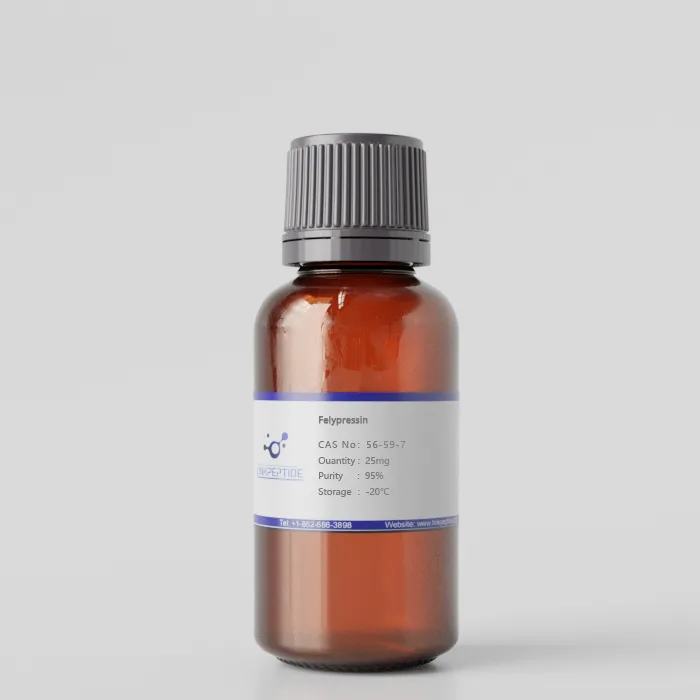
Product Name:Felypressin
Synonyms:Octapressin, PLV 2
CAS No:56-59-7
Purity:95%
Molar Mass:1040.22
Chemical Formula:C46H65N13O11S2
Storage:Store at -20 degrees Celsius
Sequence:CFFQNCPKG-NH2
Target:Vasopressin 1
Application:
Felypressin is a synthetic analog of the naturally occurring hormone vasopressin, primarily used for its vasoconstrictive properties. It functions by stimulating the vasopressin V1 receptors on smooth muscle cells, leading to the constriction of blood vessels. Felypressin is commonly utilized in dentistry, often combined with local anesthetics to prolong their effect by reducing blood flow in the area. In research, it serves as a tool to study vascular dynamics and the regulation of blood pressure. Due to its targeted action, Felypressin is valuable in both clinical applications and scientific investigations into cardiovascular function.
Current Research:
Felypressin is a synthetic analog of vasopressin, a peptide hormone involved in vasoconstriction and water balance regulation. With a sequence of eight amino acids, Felypressin is structurally modified to enhance its vasopressor activity while reducing its antidiuretic effects, making it particularly valuable in clinical and research settings.
Mechanism of Action
Felypressin exerts its effects primarily through the activation of V1a receptors on vascular smooth muscle cells. This interaction induces vasoconstriction by increasing intracellular calcium levels, leading to smooth muscle contraction. Its selectivity for V1a receptors over V2 receptors minimizes renal water retention, distinguishing it from natural vasopressin.
Clinical Applications
Felypressin is frequently used in dental and surgical procedures as a vasoconstrictor adjunct to local anesthetics. By constricting blood vessels at the injection site, it prolongs the anesthetic's duration of action and reduces local bleeding. Its rapid onset and efficacy make it an ideal choice for managing hemostasis in minor surgical interventions.
Research Utility
In pharmacological research, Felypressin serves as a tool for studying vasopressin receptor signaling and vascular physiology. Its receptor specificity allows researchers to dissect the roles of V1a-mediated pathways in vasoregulation and cardiovascular function. Additionally, it is used in experimental models to investigate the pathophysiology of conditions involving abnormal vasoconstriction, such as hypertension and shock.
Advantages and Limitations
The advantages of Felypressin include its rapid action, receptor selectivity, and minimal systemic side effects compared to vasopressin. However, its use is contraindicated in patients with cardiovascular instability due to its potent vasoconstrictive effects.
Felypressin continues to be a critical agent in medical practice and research, contributing to advancements in anesthetic techniques, vascular biology, and receptor pharmacology. Its refined pharmacodynamic profile underscores its importance in both applied and investigative fields.
Reference:
Get a Quote
 LinkPeptide