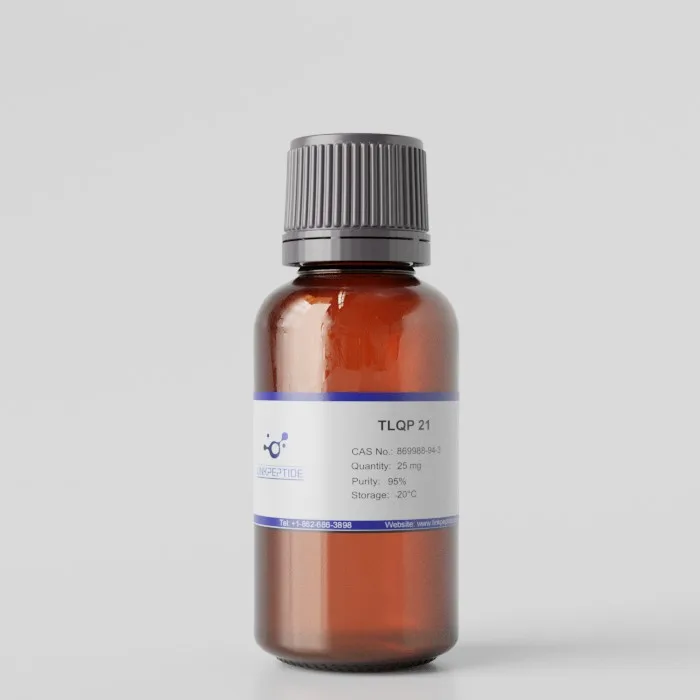
Product Name:gurmarin
Synonyms:Gurmarin (Gymnema sylvestre)
CAS No:138464-10-5
Purity:95%
Molar Mass:4208.95
Chemical Formula:C187H276N46O53S6
Storage:Store at -20 degrees Celsius
Sequence:XQCVKKDELC IPYYLDCCEP LECKKVNWWD HKCIG
Application:
Gurmarin is a bioactive peptide derived from the leaves of the Gymnema sylvestre plant, known for its ability to inhibit sweet taste perception. This peptide specifically interacts with taste receptors on the tongue, temporarily suppressing the ability to detect sweet flavors. Gurmarin has garnered significant interest in research focused on understanding the molecular mechanisms of taste perception and the modulation of taste receptors. Additionally, its potential applications extend to the development of therapeutic strategies for managing diabetes and obesity, where reducing sweet cravings can be beneficial. With its unique properties, Gurmarin is an essential tool in both sensory biology research and the exploration of novel treatments for metabolic disorders.
Current Research:
Gurmarin is a 35-amino acid peptide isolated from the leaves of Gymnema sylvestre, a plant traditionally used in Ayurvedic medicine. This peptide is known for its unique ability to inhibit sweet taste perception in mammals, making it a valuable tool for studying taste modulation and receptor interactions.
Gurmarin selectively binds to sweet taste receptors on the tongue, specifically T1R2 and T1R3, which are part of the G-protein-coupled receptor family. By disrupting the receptor's ability to detect sweet molecules, Gurmarin provides insights into the molecular mechanisms underlying sweet taste perception. Its specificity to sweet taste receptors has made it instrumental in identifying receptor-binding sites and understanding signal transduction pathways involved in taste perception.
In addition to its applications in sensory research, Gurmarin has been studied for its potential therapeutic benefits. Gymnema sylvestre extracts, including Gurmarin, are traditionally used in the management of diabetes due to their ability to modulate sweet taste and reduce sugar cravings. Gurmarin's influence on sweet taste perception may contribute to dietary interventions aimed at controlling sugar intake and managing metabolic disorders.
Gurmarin also serves as a model for exploring peptide-receptor interactions in other G-protein-coupled receptor systems. Its well-characterized structure and specificity make it an excellent candidate for drug screening assays targeting sweet taste modulation or related pathways.
As research progresses, Gurmarin continues to provide valuable insights into taste receptor biology and holds potential for applications in therapeutic strategies for metabolic health and sensory modulation. Its role in advancing the understanding of taste perception highlights its importance in both basic and applied scientific research.
Reference:
Get a Quote
 LinkPeptide

![[Ala17]-MCH](https://www.linkpeptide.com/wp-content/uploads/2024/08/Ala17-MCH-jpg.webp "[Ala17]-MCH")