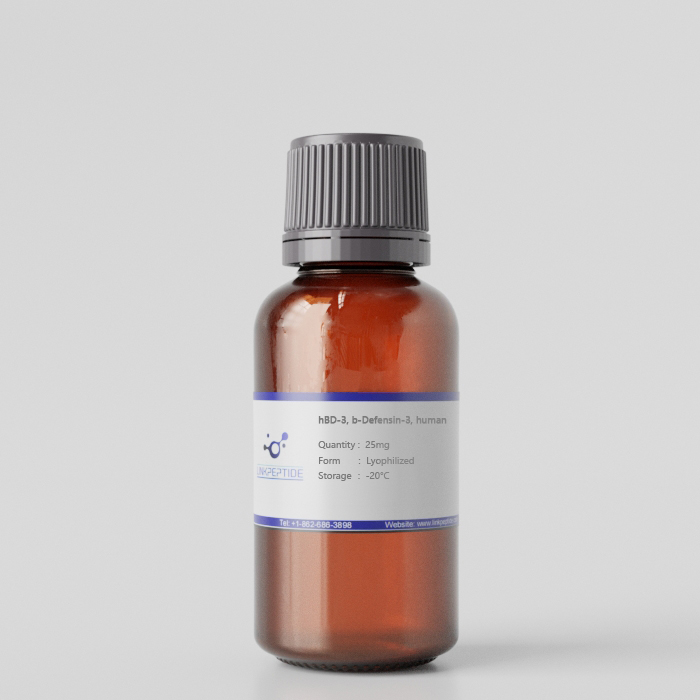
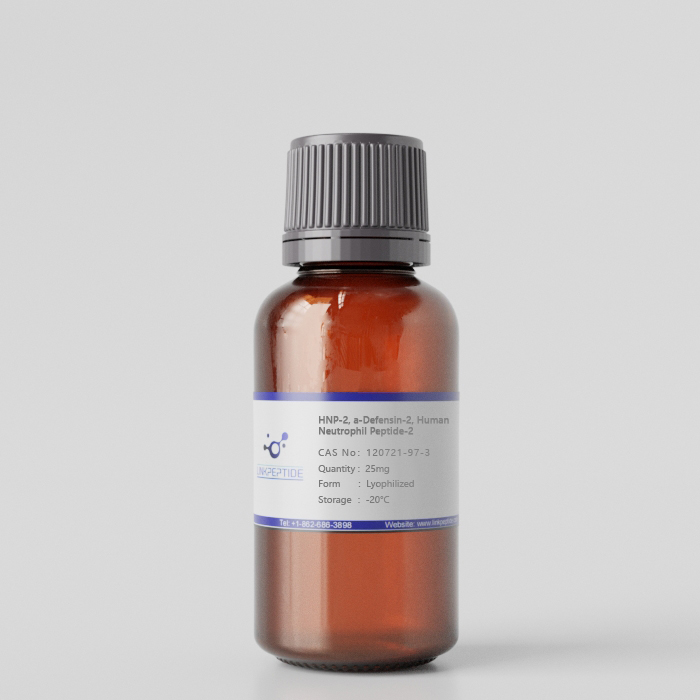
Product Name: hBD-3, b-Defensin-3, human
Sequence One Letter Code: GIINTLQKYYCRVRGGRCAVLSCLPKEEQIGKCSTRGRKCCRRKK (Disulfide bridge: 11-40, 18-33, 23-41)
Sequence Three Letter Code: H-Gly-Ile-Ile-Asn-Thr-Leu-Gln-Lys-Tyr-Tyr-Cys-Arg-Val-Arg-Gly-Gly-Arg-Cys-Ala-Val-Leu-Ser-Cys-Leu-Pro-Lys-Glu-Glu-Gln-Ile-Gly-Lys-Cys-Ser-Thr-Arg-Gly-Arg-Lys-Cys-Cys-Arg-Arg-Lys-Lys -OH (Disulfide bridge: 11-40, 18-33, 23-41)
Chemical Formula:C216H371N75O59S6
Molecular Weight: 5155.4
Purity: ≥ 95%
Form: Lyophilized
Storage Conditions: - 20 °C
Source / Species: human
Conjugation: Unconjugated
Code Nacres: NA.26
Application: Human beta-defensin-3 (hBD-3) is a 45-amino-acid cysteine-rich antimicrobial peptide containing three intramolecular disulfide bonds and a strong cationic charge. Mainly expressed in keratinocytes and immune-associated tissues, hBD-3 provides broad-spectrum defense against bacteria, fungi, and viruses. Unlike many defensins, it retains potent antimicrobial activity under physiological salt conditions, making it especially relevant for infection-related research. Human beta-defensin-3 also modulates immune responses by stimulating cytokine production and promoting monocyte migration. This peptide is widely used in studies of innate immunity, antimicrobial mechanisms, host defense, inflammation, and immune regulation.
Get a Quote
 LinkPeptide