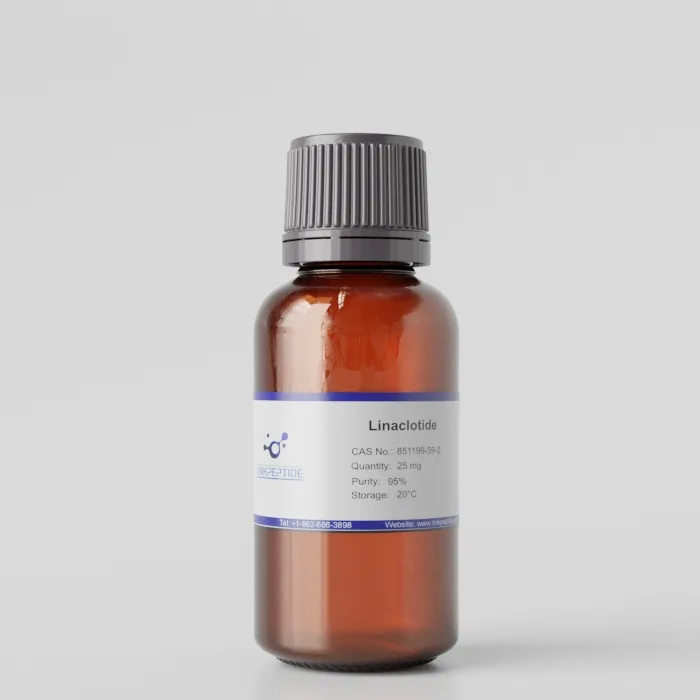
Product Name: Linaclotide
Form: Free base
CAS No: 851199-59-2
Molar Mass: 1526.74
Chemical Formula: C59H79N15O21S6
Synonyms: Linzess, Constella
Storage: Store at -20℃
Sequence: CCEYCCNPACTGCY
Target: guanylate cyclase C
Application:
Linaclotide (CAS: 851199-59-2) is a synthetic peptide agonist of guanylate cyclase-C (GC-C) receptors, primarily found in the intestinal epithelium. It functions by binding to GC-C receptors, leading to an increase in intracellular cyclic guanosine monophosphate (cGMP) levels. This cascade ultimately activates the cystic fibrosis transmembrane conductance regulator (CFTR) channels, promoting chloride and bicarbonate secretion into the intestinal lumen and enhancing intestinal fluid secretion. Linaclotide is used in the treatment of chronic idiopathic constipation (CIC) and irritable bowel syndrome with constipation (IBS-C) to alleviate constipation symptoms and improve bowel habits. In pharmaceutical chemistry, linaclotide's targeted activation of GC-C receptors represents a novel approach to managing constipation, offering an effective and well-tolerated treatment option for patients with CIC and IBS-C. Its application underscores its importance in gastrointestinal therapeutics and improving quality of life for individuals with chronic constipation. Additionally, ongoing research explores linaclotide's potential in other gastrointestinal disorders characterized by dysregulated intestinal motility and fluid balance, highlighting its versatility in gastroenterology.
Current Research:
Linaclotide is a synthetic peptide used in the treatment of irritable bowel syndrome with constipation (IBS-C) and chronic idiopathic constipation (CIC). It is a potent and selective agonist of the guanylate cyclase-C (GC-C) receptor, which plays a crucial role in the regulation of fluid and electrolyte balance in the gastrointestinal tract. Linaclotide works locally within the gut, promoting bowel movements and alleviating discomfort associated with constipation without significant systemic absorption. Its mechanism of action makes it a novel and effective therapeutic option for patients suffering from constipation-related disorders.
Mechanism of Action
Linaclotide exerts its effects by binding to and activating the GC-C receptors located on the surface of intestinal epithelial cells. Upon activation, linaclotide increases the intracellular levels of cyclic guanosine monophosphate (cGMP), which stimulates the secretion of chloride and bicarbonate ions into the intestinal lumen. This secretion leads to an influx of water into the gut, softening the stool and enhancing peristalsis, thus improving bowel movement frequency and consistency. In addition to promoting water secretion, linaclotide has been shown to reduce visceral pain in patients with IBS-C by reducing pain sensitivity in the gastrointestinal tract. This dual action, increasing fluid secretion and decreasing pain perception, makes linaclotide a valuable treatment option for individuals suffering from constipation and abdominal discomfort.
Indications and Uses
Linaclotide is primarily indicated for the treatment of IBS-C and CIC in adults. IBS-C is a subtype of irritable bowel syndrome characterized by constipation, abdominal pain, and bloating. CIC is a condition defined by infrequent or difficult bowel movements that are not caused by any other underlying medical condition. Linaclotide has been shown to improve stool frequency, reduce abdominal pain, and alleviate bloating in patients with both IBS-C and CIC. It is administered orally, typically once daily, and can be taken with or without food. Due to its efficacy in improving both bowel movements and abdominal discomfort, linaclotide is a highly effective option for patients who have not responded well to over-the-counter laxatives or other treatments.
Efficacy and Clinical Benefits
Clinical trials have demonstrated the effectiveness of linaclotide in improving key symptoms associated with IBS-C and CIC. Patients receiving linaclotide experienced significant improvements in bowel movement frequency, stool consistency, and a reduction in abdominal pain and bloating compared to placebo. These improvements were observed within the first week of treatment and were sustained over time. In patients with IBS-C, linaclotide also provided relief from the discomfort and distress associated with the condition, improving overall quality of life. Additionally, linaclotide has shown positive results in reducing the number of bowel movements required by patients with CIC, making it a reliable and beneficial treatment option for chronic constipation.
Safety and Tolerability
Linaclotide is generally well tolerated, with a safety profile that is favorable for most patients. The most common side effects reported in clinical trials are mild gastrointestinal symptoms, including diarrhea, abdominal pain, and flatulence. These side effects are typically transient and resolve with continued use. Serious side effects are rare, but patients should be monitored for signs of dehydration, especially if diarrhea occurs. Linaclotide's action is localized to the gastrointestinal tract, and it has minimal systemic absorption, which reduces the likelihood of systemic side effects. However, caution is recommended in patients with a history of gastrointestinal obstruction or those who are at risk of dehydration.
Advantages and Limitations
The primary advantage of linaclotide is its dual action in treating both constipation and abdominal discomfort, which are common symptoms of IBS-C and CIC. Its ability to increase fluid secretion and improve bowel movement frequency while simultaneously reducing abdominal pain and bloating makes it a comprehensive treatment option. Furthermore, linaclotide’s minimal systemic absorption limits the risk of systemic side effects, making it a safer choice compared to other treatments for constipation. However, linaclotide does have some limitations. Diarrhea is a common side effect, particularly during the initial stages of treatment, which may limit its use in some patients. Additionally, while it is effective for many patients with IBS-C and CIC, some individuals may require adjunct therapies or alternative treatments to achieve optimal relief.
Future Directions
Ongoing research is focused on optimizing the use of linaclotide for the treatment of IBS-C, CIC, and other gastrointestinal disorders. Studies are exploring its potential in treating other conditions involving constipation, such as opioid-induced constipation (OIC). There is also interest in investigating linaclotide’s effects on the gut microbiome and its potential for improving gut health beyond its immediate effects on motility and fluid secretion. Future clinical trials will focus on identifying the most effective dosing regimens, as well as examining long-term safety and efficacy in diverse patient populations. Additionally, combination therapies with linaclotide and other gastrointestinal agents may be explored to provide more comprehensive treatment options for patients with complex gastrointestinal symptoms.
Reference:
Get a Quote
 LinkPeptide