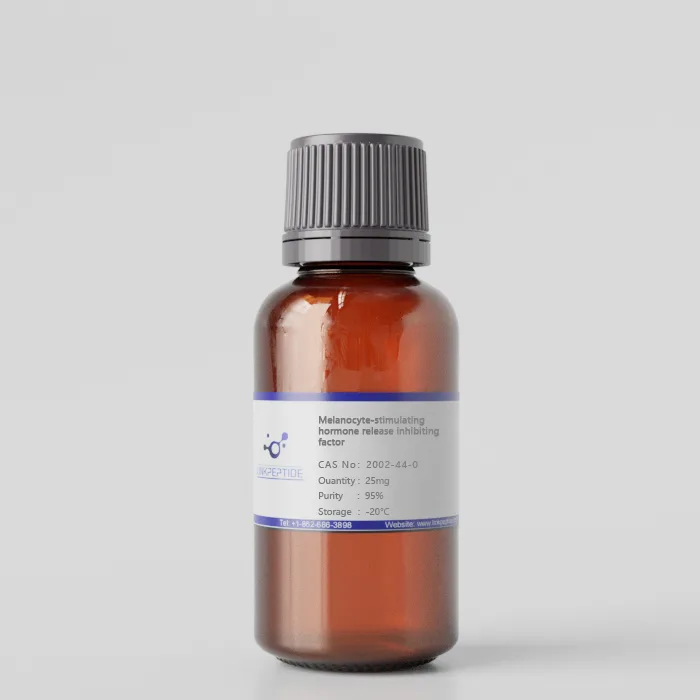
Product Name:Melanocyte-stimulating hormone release inhibiting factor
Synonyms:MIF-1
CAS No:2002-44-0
Purity:95%
Molar Mass:284.35
Chemical Formula:C13H24N4O3
Storage:Store at -20 degrees Celsius
Sequence:PLG
Target:MSH
Application:Melanocyte-Stimulating Hormone Release Inhibiting Factor (MIF-1) is a tripeptide with the sequence Pro-Leu-Gly-NH2, known for its ability to inhibit the release of melanocyte-stimulating hormone (MSH) and modulate the activity of various neuropeptides. MIF-1 plays a critical role in the regulation of pituitary gland functions, particularly in controlling the secretion of MSH, which is involved in skin pigmentation and other physiological processes. In addition to its effects on MSH, MIF-1 has been studied for its potential neuromodulatory properties, including its influence on mood, behavior, and pain perception. This peptide is of significant interest in research focused on neuroendocrine regulation, psychiatric disorders, and the development of novel therapeutic agents targeting neuropeptide pathways.
Current Research:
Melanocyte-stimulating hormone release-inhibiting factor (MIF-1), also known as Pro-Leu-Gly-NH?, is a tripeptide that functions as a regulatory neuropeptide. Its primary role is to inhibit the release of melanocyte-stimulating hormone (MSH), a hormone involved in pigmentation, appetite regulation, and stress responses. MIF-1 is part of a broader group of neuropeptides that modulate the activity of the hypothalamic-pituitary-adrenal (HPA) axis and other neuroendocrine functions.
Biological Activity
Regulation of MSH Release: MIF-1 modulates the release of MSH by acting on hypothalamic neurons, influencing pathways that regulate pigmentation and appetite.
Antidepressant-like Effects: MIF-1 has been implicated in mood regulation, with studies suggesting its potential antidepressant properties through its interactions with neurotransmitter systems, particularly dopaminergic pathways.
Neuroendocrine Functions: Beyond its role in MSH regulation, MIF-1 also influences other neuroendocrine processes, including stress responses and metabolic regulation.
Research Applications
MIF-1 is a valuable tool for exploring the physiological and pathological roles of neuropeptides in the central nervous system. It has been used to:
Investigate the mechanisms of HPA axis modulation.
Explore its potential as a therapeutic agent for mood disorders, including depression.
Study its regulatory effects on MSH and related hormones in conditions such as obesity and pigmentation disorders.
Conclusion
Melanocyte-stimulating hormone release-inhibiting factor is a multifunctional neuropeptide with significant implications in neuroendocrine regulation, mood modulation, and hormonal control. Its study continues to provide insights into the intricate roles of neuropeptides in maintaining physiological balance and offers promising avenues for therapeutic development.
Reference:
Get a Quote

 LinkPeptide