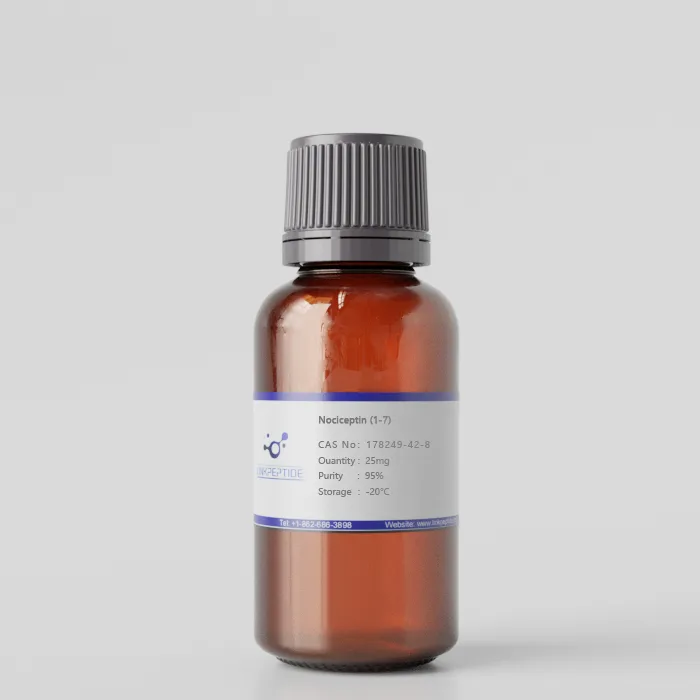
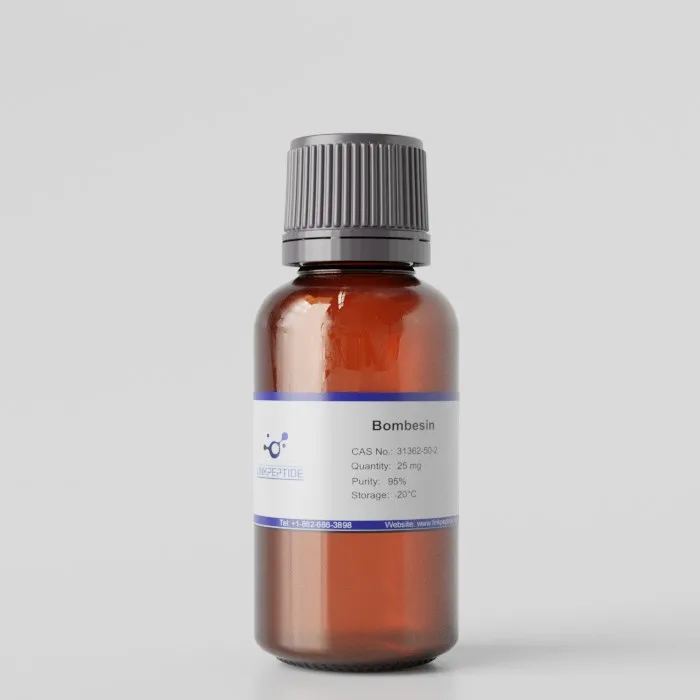
Product Name:Nociceptin (1-7)
CAS No:178249-42-8
Purity:95%
Molar Mass:655.7
Chemical Formula:C31H41N7O9
Storage:Store at -20 degrees Celsius
Sequence:FGGFTGA
Target:nociceptin receptor
Application:
Nociceptin (1-7) is a truncated fragment of the full-length nociceptin/orphanin FQ peptide, consisting of the first seven amino acids of the sequence. Nociceptin is an endogenous neuropeptide that acts as a ligand for the nociceptin receptor (NOP, also known as ORL-1), which is involved in modulating pain, stress responses, and various neurophysiological functions. The Nociceptin (1-7) fragment retains some of the biological activity of the full-length peptide but with distinct pharmacological properties. This fragment is often studied to understand the structure-activity relationship of nociceptin and its role in pain modulation, anxiety, and other neurological processes. Researchers use Nociceptin (1-7) to investigate the potential therapeutic applications of targeting the nociceptin system in pain management and neuropsychiatric disorders.
Current Research:
Nociceptin (1-7) is a peptide fragment derived from the N-terminal region of nociceptin, also known as orphanin FQ. Nociceptin is the endogenous ligand for the nociceptin receptor (NOP), a member of the opioid receptor family. The truncated sequence Phe-Gly-Gly-Phe-Thr-Gly-Ala (amino acids 1 to 7) retains functional significance while exhibiting distinct pharmacological properties from the full-length peptide. Mechanism of Action Nociceptin (1-7) interacts with the nociceptin receptor (NOP) and potentially other non-classical binding sites. Its activity often diverges from that of full-length nociceptin, demonstrating modulatory effects on pain perception, stress response, and neurophysiological processes. This fragment may act as an agonist, antagonist, or allosteric modulator depending on the specific biological context and receptor target. Physiological and Research Applications Pain Modulation: Nociceptin (1-7) has been implicated in modulating nociceptive pathways. It can exhibit antinociceptive or pronociceptive effects, depending on the dose, route of administration, and experimental model. Neurotransmitter Release: Studies suggest that Nociceptin (1-7) influences the release of neurotransmitters such as dopamine and serotonin, offering insights into its role in mood and stress-related behaviors. Learning and Memory: Nociceptin fragments like (1-7) are used in neurobehavioral studies to explore their effects on cognitive functions and potential therapeutic implications in neurodegenerative disorders. Pharmacological Studies: The fragment serves as a tool to dissect the functional domains of nociceptin, aiding in the development of selective NOP receptor modulators for therapeutic use. Handling and Storage Nociceptin (1-7) is typically supplied as a lyophilized powder. It should be stored at -20 degrees Celsius in a desiccated environment to preserve its stability. For experimental use, reconstitution in sterile water or an appropriate buffer is recommended. Conclusion Nociceptin (1-7) is a valuable research tool for investigating the physiological roles of nociceptin fragments and their interactions with the NOP receptor. Its distinct pharmacological profile allows for targeted studies in pain modulation, neurophysiology, and therapeutic drug development, advancing our understanding of this critical neuropeptide system.
Reference:
Get a Quote
 LinkPeptide