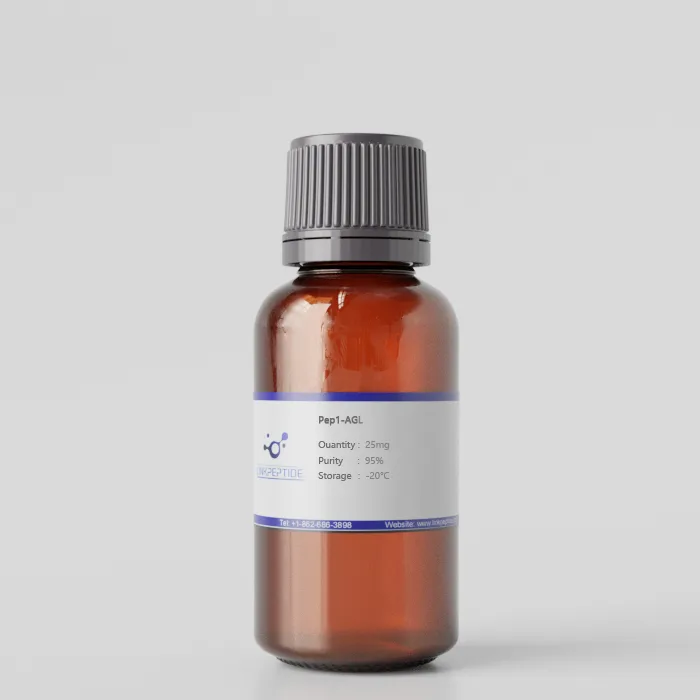
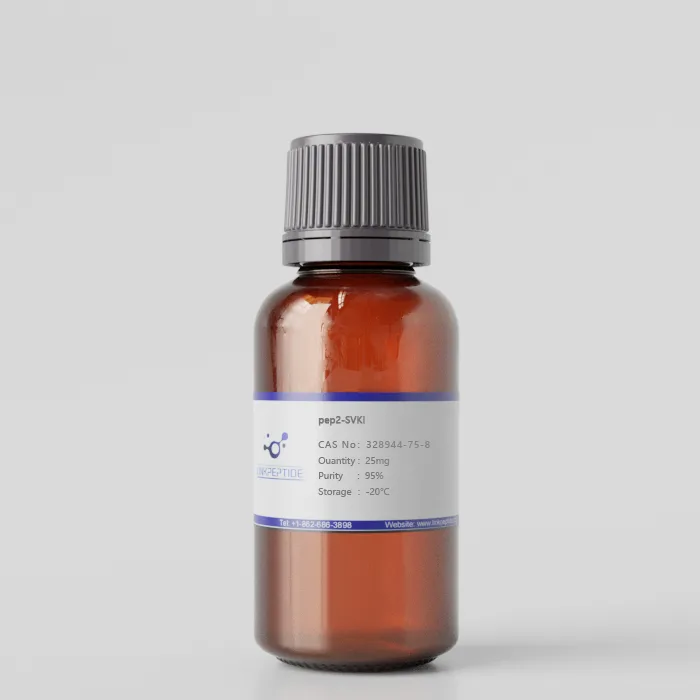
Product Name:Pep1-AGL
Synonyms:AKOS024456697
Purity:95%
Molar Mass:960.1
Chemical Formula:C40H69N11O14S
Storage:Store at -20 degrees Celsius
Sequence:SSGMPLGAAGL
Application:
Pep1-AGL is a finely tuned peptide engineered to interact with specific protein complexes involved in glycosylation processes. This peptide is essential for studying the regulation and modification of glycoproteins, which play critical roles in cellular communication, immune response, and protein stability. Pep1-AGL is particularly useful in exploring the mechanisms of glycan synthesis and its implications in various diseases, including cancer and congenital disorders. With its high purity and consistent activity, Pep1-AGL provides reliable and reproducible results, making it a valuable tool for researchers focused on glycobiology and therapeutic development.
Current Research:Pep1-AGL is a synthetic peptide that mimics the C-terminal 'AGL' motif of the GluA1 subunit of AMPA receptors. This motif is crucial for the interaction of GluA1 with specific PDZ domain-containing proteins, which are essential for the proper trafficking and synaptic localization of AMPA receptors. By utilizing Pep1-AGL, researchers can investigate the specific binding dynamics between GluA1 and its associated scaffolding proteins, thereby gaining insights into the molecular mechanisms underlying synaptic transmission and plasticity.
Experimental studies employing Pep1-AGL have demonstrated its efficacy in disrupting GluA1-PDZ protein interactions, leading to alterations in AMPA receptor trafficking and synaptic function. These findings are significant for understanding the cellular processes involved in learning and memory, as well as the pathophysiology of neurological disorders characterized by synaptic dysfunction.
It is important to note that Pep1-AGL has been withdrawn from commercial sale for unspecified reasons. Researchers interested in studying the GluA1 'AGL' motif may need to synthesize the peptide independently or seek alternative tools to explore this specific protein-protein interaction.
In summary, Pep1-AGL has served as a valuable tool in neuropharmacological research, enabling the detailed study of GluA1-mediated interactions critical for synaptic function. Despite its commercial unavailability, the peptide's role in advancing our understanding of AMPA receptor regulation underscores its significance in the field.
Reference:
Get a Quote
 LinkPeptide