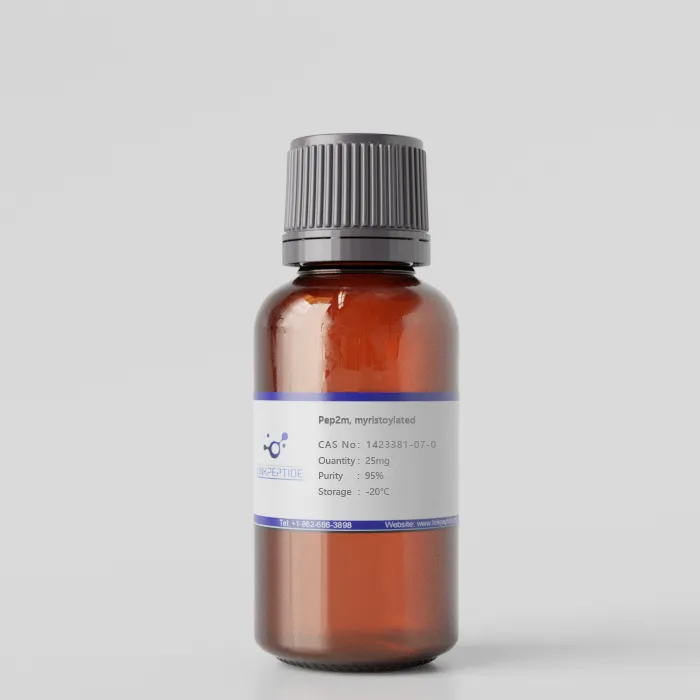
Product Name:Pep2m, myristoylated
CAS No:1423381-07-0
Purity:95%
Molar Mass:1383.81
Chemical Formula:C63H118N18O14S
Storage:Store at -20 degrees Celsius
Sequence:KRMKVAKNAQ
Application:
Pep2m, myristoylated, is a peptide with a myristoyl group attached to its N-terminus. The myristoylation, a type of lipid modification, enhances the peptide's membrane affinity and cellular uptake. Pep2m is known for its role as an inhibitor of the protein-protein interactions involved in cell signaling pathways, particularly those related to viral infections and cancer. The myristoylation increases its stability and efficiency in targeting specific cellular membranes or components. Research involving Pep2m, myristoylated focuses on its potential as a therapeutic agent in disrupting critical interactions in disease processes, including its application in viral and cancer research.
Current Research:
Pep2m, a synthetic peptide, is a well-characterized inhibitor of protein-protein interactions involving synaptic scaffolding proteins. Myristoylation, the covalent addition of a myristoyl group to Pep2m, significantly enhances its cell permeability, making it an invaluable tool for studying intracellular signaling pathways, particularly those associated with AMPA-type glutamate receptors (AMPARs).
Mechanism of Action
Pep2m specifically interferes with the interaction between AMPARs and PDZ domain-containing proteins, such as postsynaptic density protein 95 (PSD-95). By disrupting these interactions, Pep2m influences synaptic receptor trafficking, altering synaptic plasticity and neurotransmission. The myristoylation of Pep2m further increases its hydrophobicity, facilitating its integration into cellular membranes and enhancing its bioactivity in vitro and in vivo.
Applications in Research
Neuroscience: Pep2m, myristoylated, has been widely employed to investigate synaptic plasticity, long-term potentiation (LTP), and long-term depression (LTD). These processes are fundamental to learning and memory, and Pep2m provides insights into the molecular mechanisms underlying these phenomena.
Neurodegenerative Disorders: The peptide is used to model and explore therapeutic strategies for conditions such as Alzheimer’s disease, where AMPAR trafficking plays a crucial role in disease progression.
Drug Discovery: By modulating protein interactions, Pep2m serves as a prototype for designing small-molecule inhibitors targeting similar pathways.
Future Directions
Emerging research focuses on optimizing Pep2m's specificity and stability for therapeutic applications. Studies are also exploring its role in regulating other PDZ domain-mediated interactions beyond AMPARs, expanding its utility across cellular signaling research.
Reference:
Get a Quote
 LinkPeptide