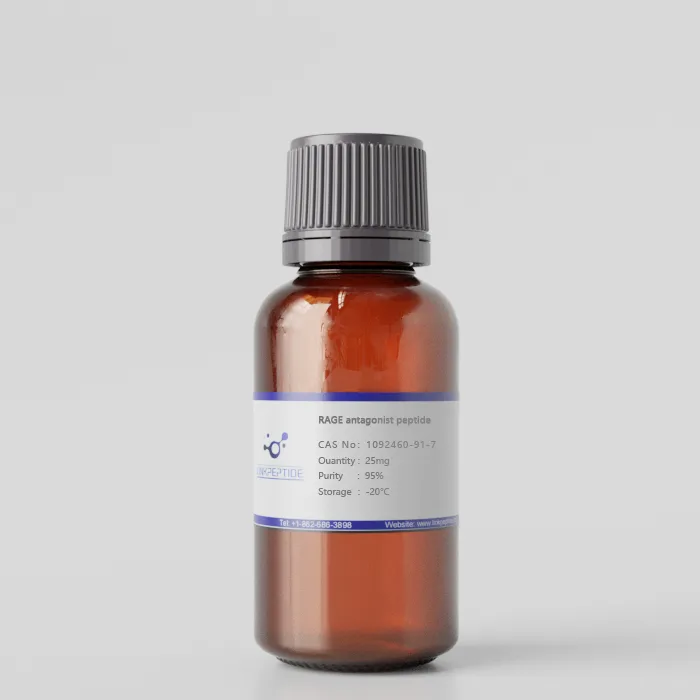
Product Name:RAGE antagonist peptide
CAS No:1092460-91-7
Purity:95%
Molar Mass:1272.56
Chemical Formula:C57H101N13O17S
Storage:Store at -20 degrees Celsius
Sequence:Ac-ELKVLMEKEL-NH2
Target:RAGE
Application:RAGE antagonist peptide is a specialized inhibitor that targets the receptor for advanced glycation end products (RAGE). This receptor plays a crucial role in inflammatory responses and is linked to several chronic diseases, including diabetes, cardiovascular disease, neurodegenerative disorders, and cancer. By blocking RAGE activation, the antagonist peptide helps reduce inflammation and oxidative stress, providing potential therapeutic benefits in conditions where RAGE signaling is detrimental. Researchers use this peptide in studies focused on uncovering mechanisms of inflammation and exploring novel treatments for RAGE-related pathologies. It serves as a powerful tool for advancing research in immunology and disease modulation.
Current Research:
The Receptor for Advanced Glycation End Products (RAGE) is a cell surface receptor implicated in various pathological conditions, including inflammation, cancer, and neurodegenerative diseases. RAGE antagonist peptides are designed to inhibit the interaction between RAGE and its ligands, thereby modulating downstream signaling pathways associated with disease progression.
Mechanism of Action
RAGE antagonist peptides function by competitively binding to RAGE, preventing its interaction with pro-inflammatory ligands such as HMGB-1, S100P, and S100A4. This blockade inhibits RAGE-mediated activation of nuclear factor kappa B (NF-??B), a transcription factor that regulates genes involved in inflammation and cell survival. By disrupting these interactions, RAGE antagonist peptides can attenuate inflammatory responses and tumor growth.
Research Applications
In preclinical studies, RAGE antagonist peptides have demonstrated efficacy in reducing tumor growth and metastasis. For instance, administration of a RAGE antagonist peptide inhibited the growth and spread of pancreatic tumors and gliomas in animal models. Additionally, these peptides have shown potential in mitigating airway inflammation and hyperreactivity in asthma models by decreasing the release of T-helper type 2 (Th2) cytokines.
Clinical Implications
The ability of RAGE antagonist peptides to modulate inflammatory and tumorigenic processes suggests their potential as therapeutic agents in conditions where RAGE signaling is dysregulated. Ongoing research aims to further elucidate their efficacy and safety profiles, with the goal of developing novel treatments for diseases such as cancer, asthma, and other inflammatory disorders.
Conclusion
RAGE antagonist peptides represent a promising avenue in the modulation of RAGE-mediated pathological processes. Their capacity to inhibit critical ligand-receptor interactions positions them as valuable tools in both research and potential therapeutic applications targeting inflammation and cancer progression.
Reference:
Get a Quote
 LinkPeptide